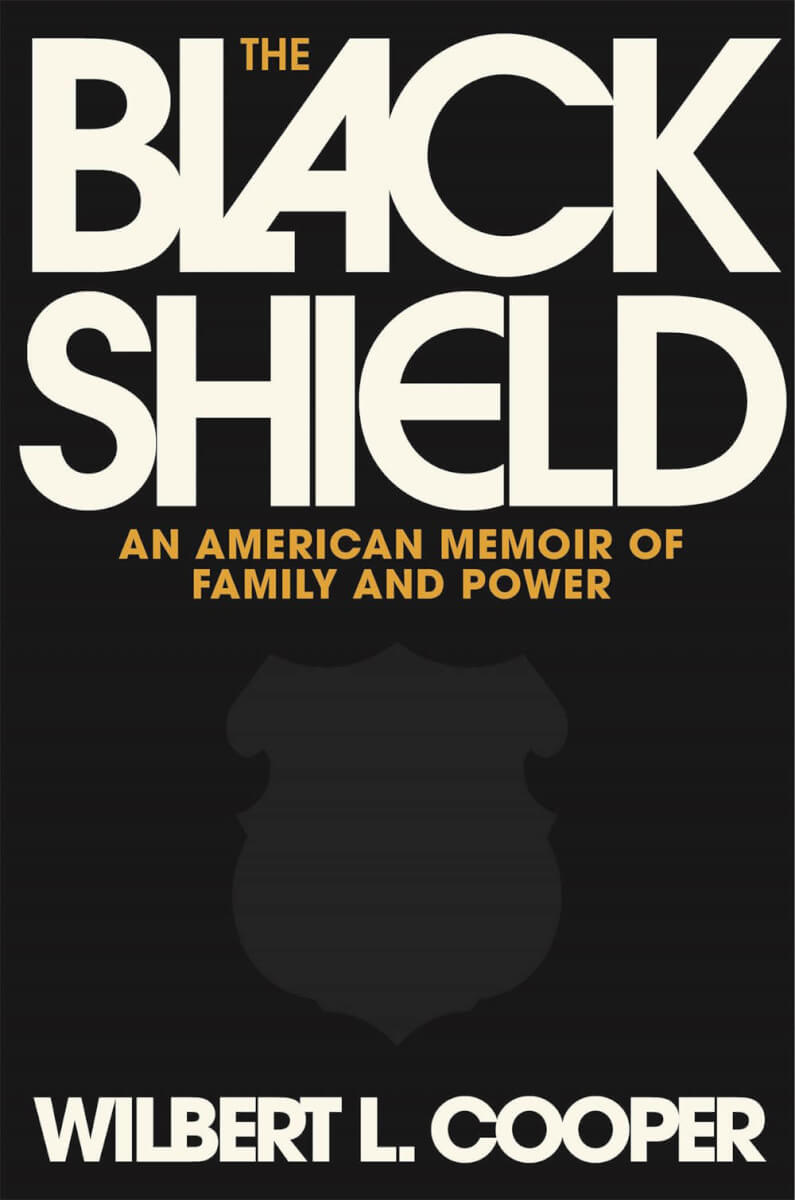
A blend of memoir, history and biography, Wilbert L. Cooper’s The Black Shield: An American Memoir of Family and Power is an exploration of paradox. Cooper’s parents were Black police officers who used their guns and power “as symbols of our freedom in a country that will not stop killing or incarcerating Black folks.” As a child, he didn’t question the contradiction, but becoming an adult “in the America [he] inherited” made understanding that dissonance critical.
Over the course of three generations, Cooper’s family rose from poverty through the police force. His mother, father and sister have all been cops. But he looks back further. In carefully researched detail, Cooper illustrates how “in the beginning it was slavery that begat our policing.” In addition to the torture and debasement colonists used to keep enslaved people in bondage, they began employing patrol and surveillance tactics. It isn’t surprising, Cooper argues, that free Black men sought positions in the city guard in places like New Orleans, where they could be on the other side of that power dynamic. “Unfortunately,” Cooper writes of those forebears and his own family, “having power over someone else’s freedom does not make you free.”
Founded nearly 80 years ago, the Black Shield of the title is both a social club and an advocacy organization for Black Cleveland police officers. Cooper, who is a journalist at the criminal justice-focused nonprofit media company The Marshall Project, traces the organization’s history—from its inception to its 1972 court case against the City of Cleveland to its renewed fight for police reform after the murders of Tamir Rice and George Floyd. At every turn, the dissonance of being Black and an officer of the law continues to build, and Cooper comes to realize that “many of these officers are afraid of the institutions they serve, even more afraid than the average Black person, because they have intimate knowledge of the arbitrary and life-shattering power that they wield.”
Cooper’s exploration is both personal and collective. It’s the story of unique individuals, and it’s also the broader story of the Black American experience of law enforcement—both behind and in front of the badge. Like Sasha Bonét’s The Waterbearers and Bernadette Atuahene’s Plundered, The Black Shield provides an essential look at the systems of oppression that continue to pervade American society.