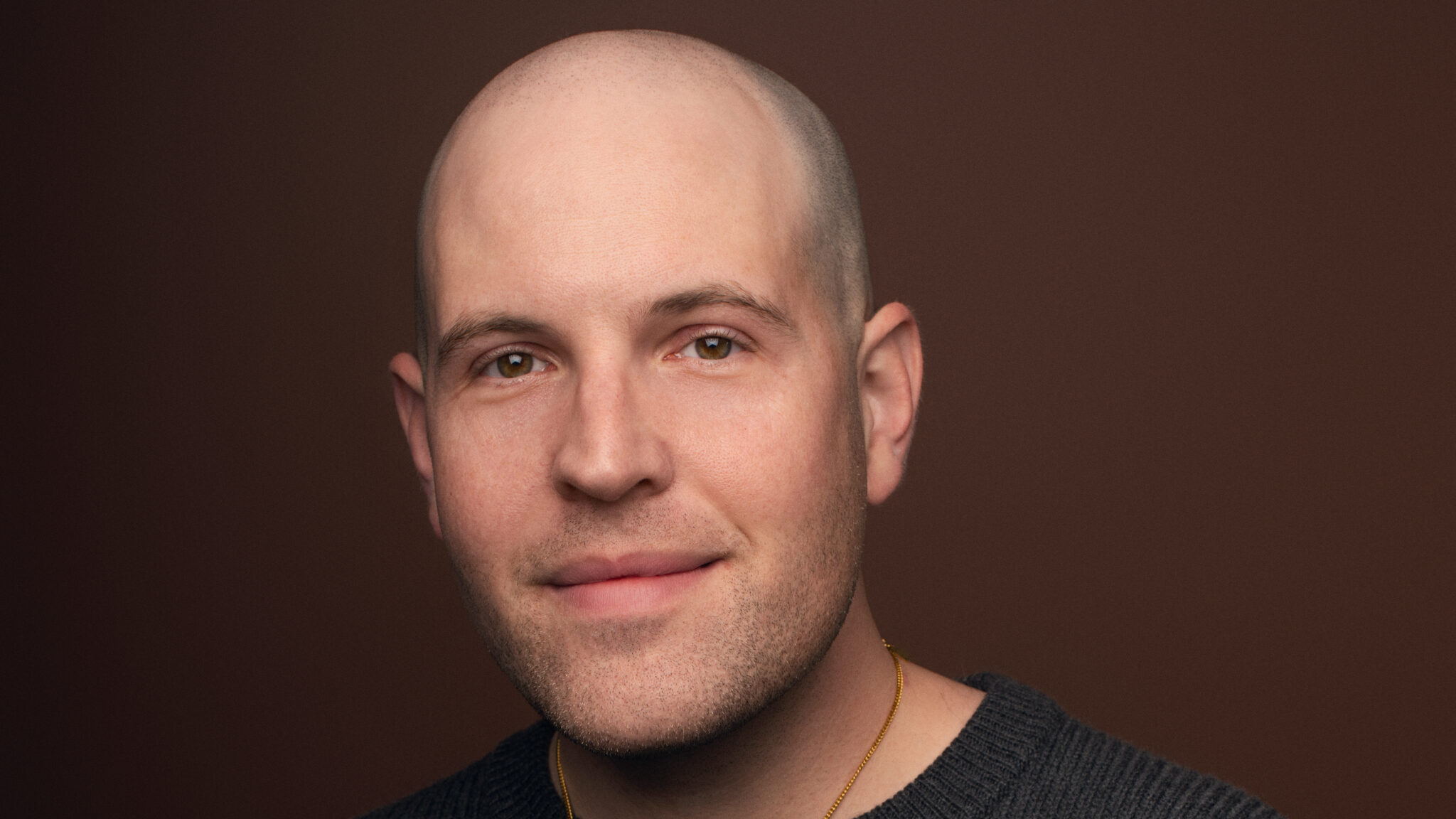
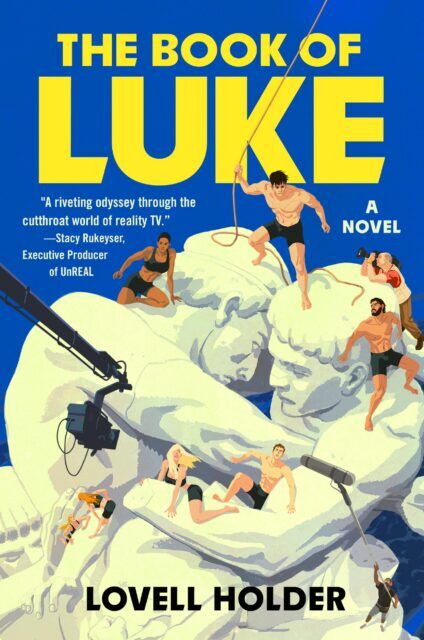
When Lovell Holder sat down to write The Book of Luke, he didn’t intend to create a queer reality TV fever dream packed with cheating scandals, political fallout, emotional spirals, sex, competition, and Bravo-level chaos. But somewhere between drafting a story about Washington insiders and realizing “how bleak and joyless” that version felt, Holder found the perfect setting: reality television.
The result is a novel that feels tailor-made for anyone whose streaming queue swings between Survivor, The Real Housewives, The Challenge, and queer political dramas with messy emotional stakes.
The book follows Luke, a gay father and reality competition veteran whose seemingly stable marriage to an openly gay senator implodes after he discovers a pattern of infidelity. From there, Holder folds readers into a world of televised competition, old relationships, hidden secrets, and public image management.
“My original sketches for the book did all begin with Luke, a gay dad who wakes up to the fact that his idyllic marriage is far less stable than he believed,” Holder told us. “Initially I imagined a story about politicians, lobbyists, and journalists that took place exclusively within the DC scene of the mid-2010s, but as I did more research into that landscape I quickly realized how bleak and joyless a tale I would be telling.”
He pivoted toward reality television instead, a move that completely changed the tone of the project.
“I knew I wanted to invite a conversation about complicity, accountability, and forgiveness… but I also still wanted it to be entertaining for the reader as much as myself,” he said. “It didn’t take long for me to pivot wholeheartedly into the setting of reality television, which provided natural frameworks for a diverse cast and raw drama to co-exist alongside sex, comedy, and globetrotting escapism.”
Queer Visibility And Reality TV
Holder’s connection to reality television runs deep, especially as a queer viewer who grew up watching early unscripted pioneers navigate public scrutiny in real time.
“At first glance, I think there’s an innate tie between the queer community and unscripted television, in that any given reality show might often be someone’s first introduction to a queer person,” he explained.
He pointed to figures like Danny Roberts, Peppermint, and Ami Cusack as examples of queer reality personalities who shaped visibility for an entire generation.
“For the brave queer pioneers who took the leap of showing themselves as authentically as possible, they serve as ambassadors still to this day,” Holder said.
But one of the novel’s biggest goals was correcting a pattern he often noticed across competition shows.
“Famously, many seasons of competitive reality shows result in queer and non-white cast members going home early, even if it’s solely out of unconscious bias,” he said, referencing Xavier Prather becoming the first Black winner of Big Brother after more than two decades on air.
“My goal in the book was thus to only employ ‘familiar’ tropes or strategies from reality television in service of uplifting or highlighting the types of characters who might not normally be afforded those kinds of ‘winner edits.’”
The Bravo Influence Is Very Real
Holder doesn’t hide the fact that he’s a devoted consumer of reality TV chaos.
“I admittedly am a massive fan of both reality competition shows as well as those fabulous Bravolebrities,” he said.
While franchises like Southern Charm and The Real Housewives helped shape the tone, Holder credits MTV’s golden era as the novel’s biggest creative influence.
“This story owes its greatest debts to MTV’s original trifecta of reality glory: The Real World, Road Rules, and The Challenge,” he said. “All three of these shows were indelible influences on any kid like me who was growing up in the 1990s and early 2000s.”
What fascinated him most was the long-term storytelling that reality television accidentally created.
“Now we can see those same young firebrands from MTV twenty years later, experiencing parenthood, divorce, health scares, and grief, still right along with us,” Holder said. “That level of familiarity and history simply can’t be faked.”
That emotional continuity became the backbone of The Book of Luke and its fictional competition franchise, Endeavor, where cast members repeatedly return to the spotlight across years of unresolved tension.
Messy Queer Characters Matter
One reason the novel is resonating with readers is because nobody in it feels sanitized. Luke makes mistakes. Other characters make worse ones. Nobody exists solely to be aspirational representation.
“I would definitely agree that showing the jagged edges of these characters, queer and otherwise, was a chief priority for me in the development of the piece,” Holder said.
The decision to write the story in first person allowed readers to experience Luke’s blind spots in real time.
“I needed Luke to be oblivious about certain aspects of himself and in denial about several past decisions,” Holder explained, “so that when he at last must confront those rocky truths it would be almost as jarring for the audience as for him.”
Holder also pushed back on the pressure historically placed on queer public figures to appear morally flawless.
“I think the queer standard-bearers of that era absolutely were held to higher expectations in public life,” he said, referring to the book’s timeline spanning the early 2000s through the mid-2010s.
“Perhaps a little bit” has changed since then, he added, “but ultimately the voices who demand public representatives from a minority group be virtually ‘perfect’ will never stop raising that bar.”
Camp, Chaos, And Emotional Whiplash
Part of what makes The Book of Luke work is how quickly it shifts from comedy to heartbreak without losing momentum. Holder intentionally leaned into tonal extremes.
“Pathos and farce often go arm-in-arm,” he said. “I wanted to push those tonal extremes right against each other.”
He even compared the structure to reality television itself, where absurd humor can exist moments before devastating emotional honesty.
“As twisty as the plot is, the emotional beats needed to take similar hairpin turns,” Holder said. “Something tragic only proves more poignant when it’s presented via a character who’s thus far served largely comedic purposes.”
That blend of camp, vulnerability, scandal, and emotional fallout has helped position The Book of Luke as one of the more entertaining queer fiction releases to emerge from the past year. It also confirms Holder as a creator who understands exactly why audiences stay glued to both prestige storytelling and absolute reality TV mess.