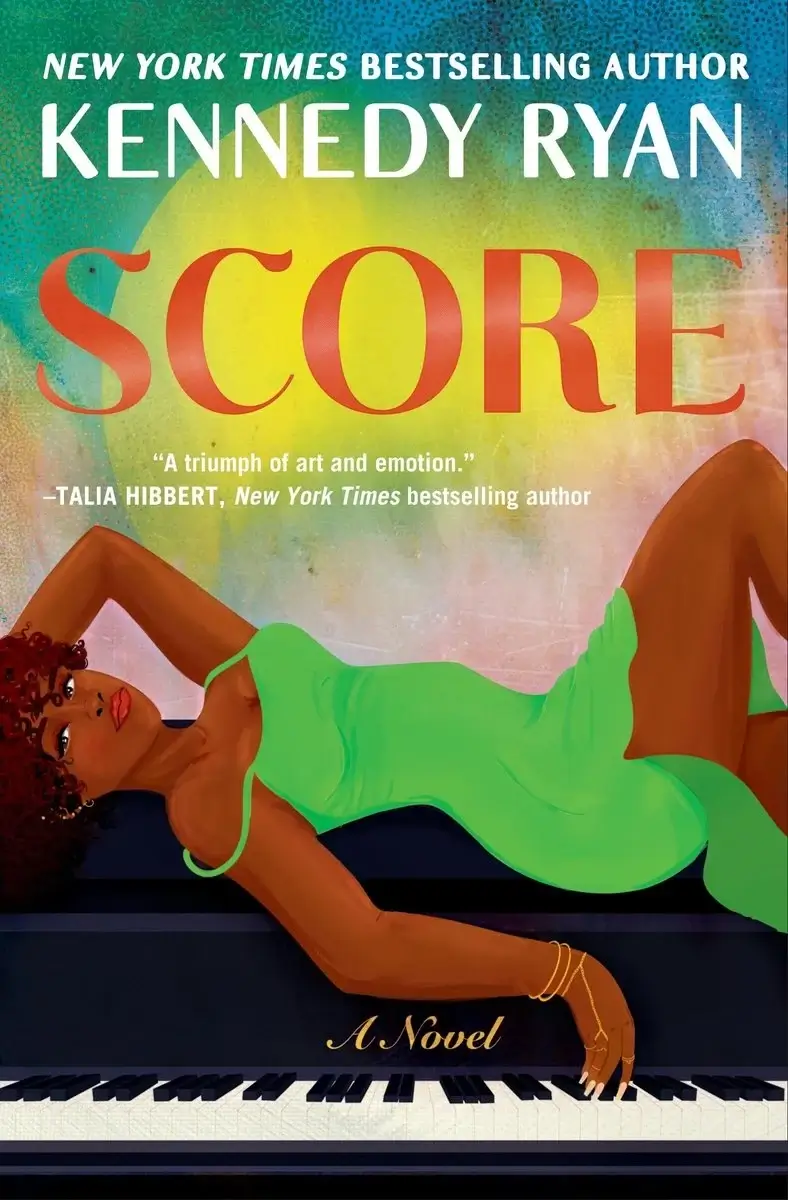
Running parallel to the events in Kennedy Ryan’s first installment of her Hollywood Renaissance series, Reel, second-chance romance Score is a powerful companion piece that shines on its own.
Like Reel, most of Score’s narrative centers on the making of a biopic about the (fictional) Harlem Renaissance singer Dessi Blue, retelling the story behind the scenes from the perspectives of screenwriter Verity Hill and composer Wright Thelonious “Monk” Bellamy. But Monk and Verity’s romance begins with a bittersweet prelude at fictional historically Black college Finley College, more than a decade prior. Verity and Monk met and fell in love hard and fast while she pursued film and African American studies and Monk studied music. Sweet and heated, their spark ignites quickly, burns brightly and flames out with equal velocity when Verity experiences her first major manic episode—unbeknownst to Monk. After a disastrous series of events that nearly culminate in her arrest, Verity is hospitalized, diagnosed with bipolar disorder and drops out of college. The experience, combined with their family histories, breaks both their hearts, convincing Monk and Verity that relationships are best left to other folks.
Years later, when they reconnect on set, Verity has forged a successful life with great friends and a thriving professional track record, and Monk is an award-winning musician halfway to an EGOT. The tension and attraction between them is still thick, and Ryan does not skimp on the details of their sexual or creative relationship. However, Monk still doesn’t know why Verity seemed to betray their relationship and then disappear in college. He’s still nursing old wounds and Verity is just as protective of her privacy, but their chemistry is too tempting to deny. Watching these artists slowly fall back in love under the guise of a casual workplace hookup is irresistible.
The way in which Verity navigates her mental illness under pressure within the workplace is another essential element to the story and one of the novel’s greatest strengths. It’s especially rich thanks to the dual narration, as we see what Verity is going through, but Monk does not. Ryan was a journalist before writing her first novel, and those research and storytelling skills burnish her finest work. The care Ryan takes with Verity’s experience shines through on the page. Passages from Verity’s point of view when she’s in crisis strike a fine balance—visceral and vivid without sensationalizing. The prose and characterization are equally devastating and thrilling. Ryan fans and the many readers of Reel will flock to this powerful portrait of messy, undeniable love.