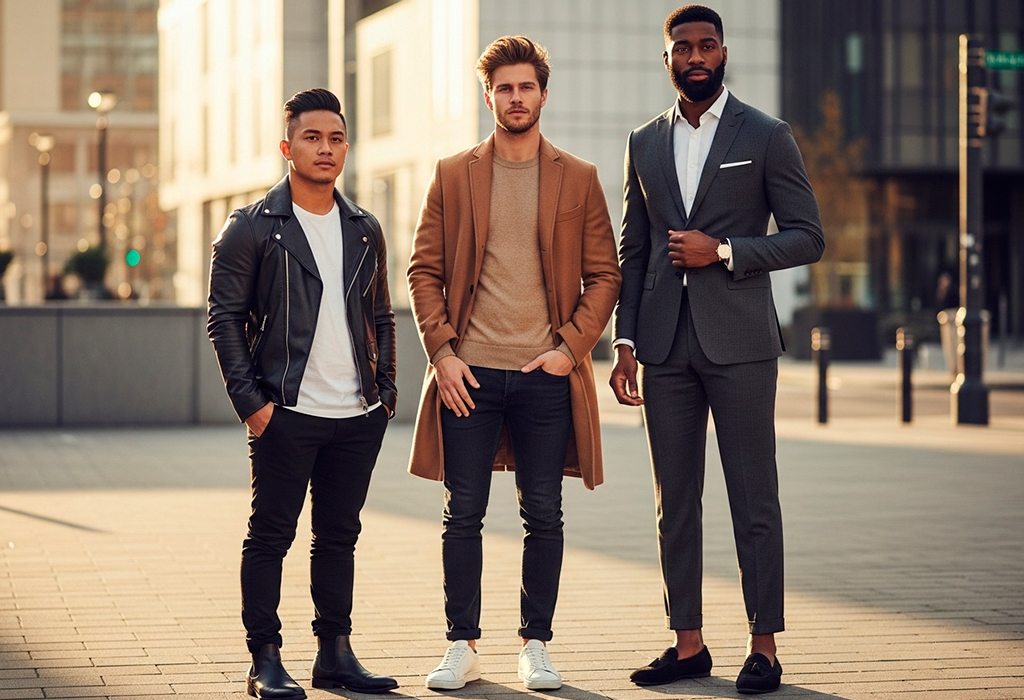
Dressing for your height isn’t just a fashion tip—it’s one of the most overlooked secrets in men’s style.
In fact, I ran a poll in the RMRS community recently, and this was the top-voted comment:
“Does it mean short men shouldn’t wear baggy clothes? Or tall men shouldn’t wear fitted ones?”
Good guesses.
But the truth is: dressing for your height has less to do with rules—and everything to do with proportions.
Let me show you exactly how to do it.
Why Height-Based Style Matters (And What Ancient Builders Knew)

Let’s rewind to 200 BC.
The Greeks were using a principle called the Golden Ratio—roughly 1.618—to construct the Parthenon. Egyptians used it 2,500 years ago when building the pyramids. Renaissance artists used it to depict ideal human beauty.
Leonardo da Vinci even applied it in his Vitruvian Man sketch. Why? Because this ratio appears naturally in the human body—and it’s visually pleasing.
That same logic applies to how your clothes fit.
Whether you’re 5’5” or 6’5”, when your head, torso, and limbs are visually balanced, you look more attractive. Period.
So let’s break this down into something usable.
The Four Style Mistakes That Break Proportions
1. Oversized (or undersized) Head Syndrome

Ever wear a hoodie with no shoulder structure? Your head looks huge.
That’s because jackets with no defined shoulder line remove visual boundaries. If you’re on the shorter side, this makes your head look oversized—like a cartoon character.
Fix it: Wear structured outerwear—jackets or blazers with strong shoulders—to visually rebalance your proportions.
Pro tip: Try on a well-fitted blazer in front of the mirror. Watch how your head suddenly looks “just right.” That’s not an illusion. That’s geometry.
2. Unbalanced Shoulder Width

If your shoulders are too narrow, it throws off your silhouette. If they’re too broad and you wear overly tight shirts, you look like you’re bursting out of your clothes.
Ideal ratio: Shoulders should be about 1.618 times wider than your waist.
Fix it:
- If you’re narrow, wear horizontal patterns, epaulettes, or jackets with subtle padding.
- If you’re broad, go for natural shoulders and skip the extra structure.
3. Leg-to-Torso Imbalance

Here’s the secret most men ignore: leg-to-torso balance is style gold.
- Short legs + long torso? You’ll look “bottom-heavy.”
- Long legs + short torso? You risk looking top-heavy.
Fix it:
- Short legs: High-rise trousers or tucking in your shirt adds length to your legs.
- Long legs: Go with mid-rise pants and untucked shirts that visually lengthen your torso.
4. Mismatched Limb Length

Arms too long? Short? Doesn’t matter—what matters is how your sleeve length, jacket length, and cuff height adjust for them.
Fix it:
- Sleeve cuffs should hit just at the wrist bone, with about ¼” of shirt cuff showing.
- Jacket length? Aim for mid-crotch—no longer than your knuckles when standing straight.
- Pants? A slight break in the front, no fabric puddling at your shoes.
How the Golden Ratio Applies To Style (Yes, Even For You)
Here’s the math:

Let’s say you’re 70 inches tall. Multiply that by 0.618, and you get 43.26.
This means:
- Your ideal jacket length should fall around 43 inches from the crown of your head.
- Your torso vs. leg line should hit that sweet spot as well—making you appear more symmetrical, even if your height isn’t “ideal.”
Fun fact: Comic book artists exaggerate these proportions for superheroes—broad shoulders, narrow waists, long limbs. You can replicate that look in real life—by dressing proportionally.
How to Apply This to Real-Life Outfits
Let’s break it down with clear, practical tips.
Jacket & Shirt Fit

- Short Men: Avoid long shirts. Your hem should not go below the crotch.
- Tall Men: Choose longer torsos, layering pieces that break your vertical line.
Ties & Collars

- Smaller build? Slim tie, slim lapel, and point collar.
- Larger build or taller? Wider tie, wide-spread collar, wider lapels.
Golden Ratio again—tie width should be proportionate to your lapel width.
Pants & Rise

- Shorter men: High-rise pants elongate the legs. Aim for no cuff or just a slight one.
- Taller men: Low to mid-rise balances the leg-to-torso line.
Look at Daniel Radcliffe (5’5”)—he uses high-rise pants and short jackets to look taller. Now compare to Liam Neeson (6’4”) who often wears mid-rise with longer blazers to balance out his towering frame.
Style Details That Make a BIG Difference

Belt color – Match it with your trousers for a lengthening effect (especially for shorter men).
Epaulettes – Great for adding shoulder width (good for narrow frames).
Crotch Fit – Baggy crotch drops the visual center of gravity. Aim for tailored.
Vest Length – Shouldn’t go past the belt buckle.
Necktie Length – Tip of the tie should end at the belt line. Not above, not below.
Trouser Cuff Height – If you’re short, go cuffless. If you’re tall, cuffs can help anchor the outfit.
Real Talk: Find Celebrities Who Are Your Height

Need inspiration?
- 5’6” – Kevin Hart, Kit Harington, Tom Holland.
- 5’9” – Zac Efron, Daniel Craig.
- 6’1”+ – Chris Hemsworth, John Krasinski.
Study how they dress—how they adjust their jacket lengths, rise of pants, tie widths, and how they build visual harmony.
This isn’t about copying. It’s about adapting.
BONUS: The Role of Color in Height Illusion
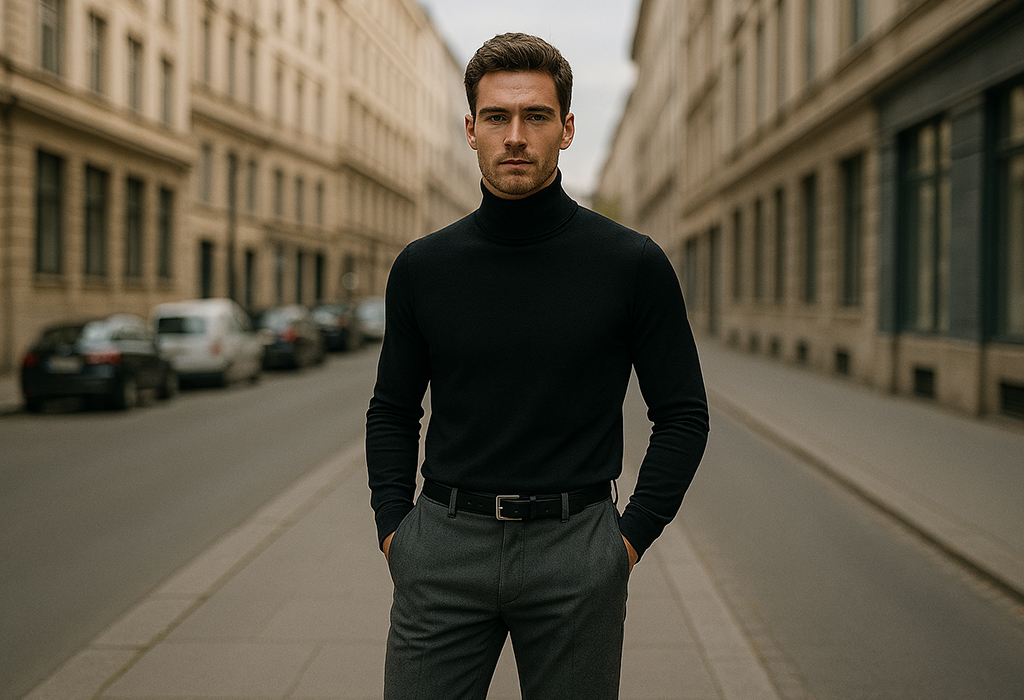
I didn’t dive deep into this in the post—but color matters.
Monochrome outfits, especially in dark shades, elongate the body.
High-contrast separates (e.g., white shirt + black pants) can cut the visual line in half—which is great for tall guys, but bad for shorter ones.
You can learn more about color, contrast, and skin tone matching in this guide.
Style is Geometry + Identity

Dressing for your height isn’t a restriction—it’s a strategy.
When you understand proportions—especially the Golden Ratio—and start applying it to your wardrobe, you look better instantly. You stand taller, command more respect, and project confidence.
Because you’re not just wearing clothes anymore—you’re wearing strategy.
Quick Height-Based Style Tips

- Short Men (Under 5’7”):
- Wear fitted, vertical-friendly clothing.
- Use high-rise pants to elongate legs.
- Avoid large patterns and heavy breaks in pants.
- Tall Men (Over 6’0”):
- Use layers and patterns to break height.
- Choose mid-rise or low-rise pants.
- Jacket length should balance long limbs.
You’ve just unlocked proportion.
Now take the next step—learn how to coordinate color in your wardrobe to amplify your presence.