
Products You May Like
Our goodie bag of gorgeous reviews this week includes S. C. Cornell on Don DeLillo’s Amazons, Lauren Oyler on the stories of Donald Barthelme, Blair Braverman on Daniel Duane’s Yosemite Falls, Ron Charles on Daisy Johnson’s Long Wave, and Lily Meyer on Sophie Kinsella’s Confessions of a Shopaholic.
Brought to you byBook Marks, Lit Hub’s home for book reviews.
*
“The first rule of the sports novel is that it is not actually about sports. In most cases, it’s about sacrifice or greatness—themes of personal interest to writers, who, like athletes, could usually find an easier way to make a living. But writing is hard to dramatize, and for the bespectacled dweeb in the small room who spends his days backspacing and muttering and making trips to the fridge just to stare into its faint light without seeing anything in particular, the tendency is to transpose professional anxiety to flashier arenas.
…
“If the point of End Zone is that sports are an imperfect and inevitable metaphor for war, the point of Amazons is, as DeLillo reminds us several times, that ‘athletes have bodies.’ Cleo’s body is spectacular, with what one lover calls ‘big-league boobs’; her face is just O.K. Sportswriters exert themselves in describing Cleo . . . The book consists mostly of discrete episodes of fantastically crisp DeLillian conversation before Cleo takes a new man to bed—in one case, literally dragging his unconscious body on a rug. ‘This is the second straight chapter that ends with sex and intimate lighting,’ Cleo remarks, at the end of the second chapter. ‘There is a huge tradition behind this, but I’m not sure I want to be part of it. There are other ways to end chapters and I’m determined to find some of them before too long.’ She doesn’t, really.
…
“If sports novels are usually about greatness, erotica is usually about power. In Amazons, this calculation is simple: Cleo has it all. There is none of the usual give-and-take, no real battle of the sexes on the ice or in bed. That she can skate with the boys is never in question, and not a source of particular stress. Cleo is very good at what she does, and yet she thinks about her job the way a store manager facing down Black Friday thinks about his: very little, when not on the clock, except occasionally to contemplate the coming violence.
…
“We may have queer culture to thank for the very fact that we’re reading Amazons in the first place. The Times reported that DeLillo decided to reissue the book amid the buzz around Heated Rivalry and the clamor for hockey erotica. I would prefer not to believe this, because the rather lofty DeLillo of my imagination would never change his mind about a disowned book for such crassly commercial reasons. A major subplot of Amazons involves Cleo refusing to do an ad for a snack food because she prefers a different brand in real life. We are supposed to find this silly but righteous. Still, whatever made DeLillo reissue the book, I’m glad he did. Amazons is so bouncy, so immediately and frankly pleasurable to read, that it could be studied as an example of a book with no payoff which nevertheless leaves the reader satisfied. Amazons won’t teach you anything about womanhood or greatness or hockey, and will teach you only very little about various forms of male longing, an already overexplored subject. But perhaps that’s enough. As this accomplished sports novelist famously put it, ‘Longing on a large scale is what makes history.’”
–S. C. Cornell on Don DeLillo’s Amazons (The New Yorker)
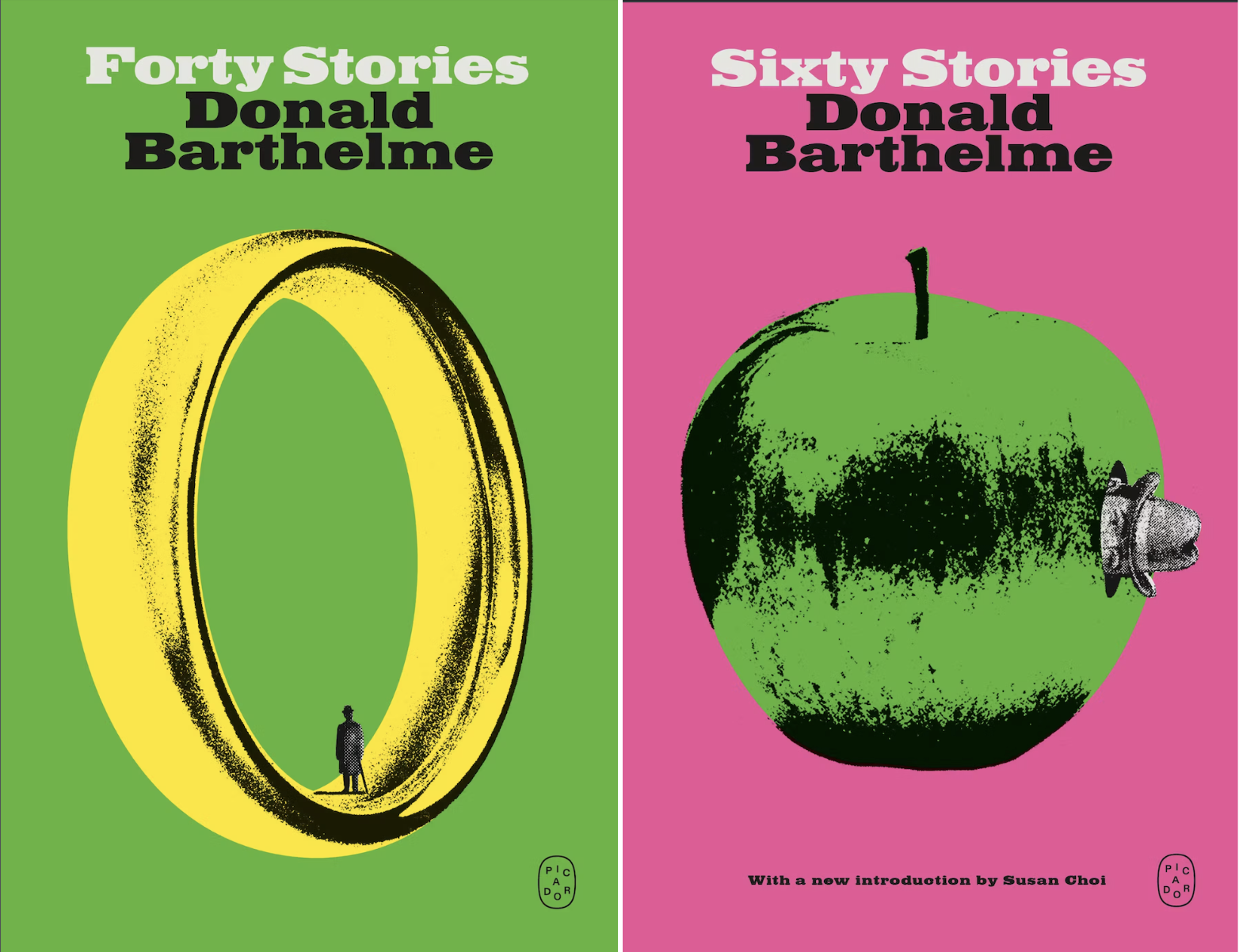
“In May of this year, Picador reissued two short-story anthologies that Barthelme himself compiled while he was alive, Sixty Stories and Forty Stories. The book review is making me state this directly, though I’d prefer to be more oblique, as the subject, an inveterate postmodernist, demands. It’s a little weird that basically no critic or literary journalist seems to have covered these reissues. In the recent past, I don’t think this would have been the case. Many of these stories are beloved by writers and students of writing especially, and he published 129 stories in The New Yorker, plus lots of Comment pieces, before his death in 1989. Because his books are not literally big—most of the stories here are just a few pages long—he has so far avoided the vulgar re[ap]pr[a]isals that have come for many ‘difficult’ male authors of the twentieth century; liking him comes with no social stigma. His difficulty is sort of smoothed over in favor of celebrating the most coherent, and teachable, spots in his oeuvre: the shining stories smudged with just enough oddness to make them easy to love, among them ‘The Balloon,’ ‘Game,’ ‘Some of Us Had Been Threatening Our Friend Colby,’ ‘The School,’ and some of the domestic stories, like ‘Chablis.’ This last is pretty much just a funny, if searching, monologue by an uneasy husband about how his wife wants a dog ‘for that damn baby.’ ‘What’s that baby going to do with that dog that it can’t do with me?’ the narrator wonders. ‘Romp? I can romp.’
Indeed, he can. If you read a lot of Barthelme, you find that these famous stories aren’t totally representative. He is hard, romping dangerously near the edge of a cliff at times. His characteristic maneuvers include relentless irony, formal hyperactivity, and a despairing view of human nature and society that manifests in, among other discomfiting techniques, sudden eruptions of violence, a lack of closure, and the inability to fit the elements of a story into some kind of allegorical or symbolic key to understanding. The question ‘What is going on?’ often arises. Many of the stories don’t necessarily do what is commonly understood as ‘make sense.’ Fragmentation reigns. Figures appear and vanish, their significance uncertain. Unattributed dialogues in which it is hard or impossible to identify a speaker are common. Beyond the rules of grammar, which he tends to follow, though not entirely or consistently, a word or phrase or sentence or paragraph may have no apparent reason for following another. There are questions without answers and answers without questions.
…
“People complain about irony so much, you start to wonder if we’re talking about the same thing. They can’t be talking about my irony. You don’t know him like I do! Irony has long been considered a coolness strategy, in both senses of the word ‘cool.’ Its enemies seem to believe that every writer should be hot. Anatole Broyard wrote that reading Barthelme was ‘rather like going to a Chinese restaurant and eating nothing but appetizers,’ as if that were a bad thing; more than once Broyard could be found in the New York Times complaining that Barthelme didn’t ‘think about’ his stories. (The ironist is often accused of thinking both too much and not enough.)
…
“At its best, postmodern literature directs the reader outward, to more. A collage of references invites research, or at least questions; if this also encourages the kind of paranoia experienced by Don DeLillo’s protagonists, rapid formal shifts prevent you from rabbit-holing too much on any one detail. Detractors may want short stories to deliver what Barthelme dismissed as ‘a tiny insight typically having to do with innocence violated.’ Well, too bad. The distance the postmodern ironist keeps from ‘events’ allows him to actually see them … Complaints about irony, regurgitated as a reflex today, are cries for a simpler, easier literature in which everything ‘makes sense.’ But any sense we can make of life is fleeting and kind of irrelevant; we tend to move on, seeking more problems, quickly. Barthelme may have seen something shameful in art that dwells in the familiar—but shame can be productive, just as self-awareness, or recursiveness, can lead to awareness of the world. It is embarrassing to live myopically, to willfully deny art its mystery, its infinite possibility, in service of simple understanding, and that embarrassment can motivate the struggle to move beyond it.”
–Lauren Oyler on Donald Barthelme’s Sixty Stories and Forty Stories (Harper’s)
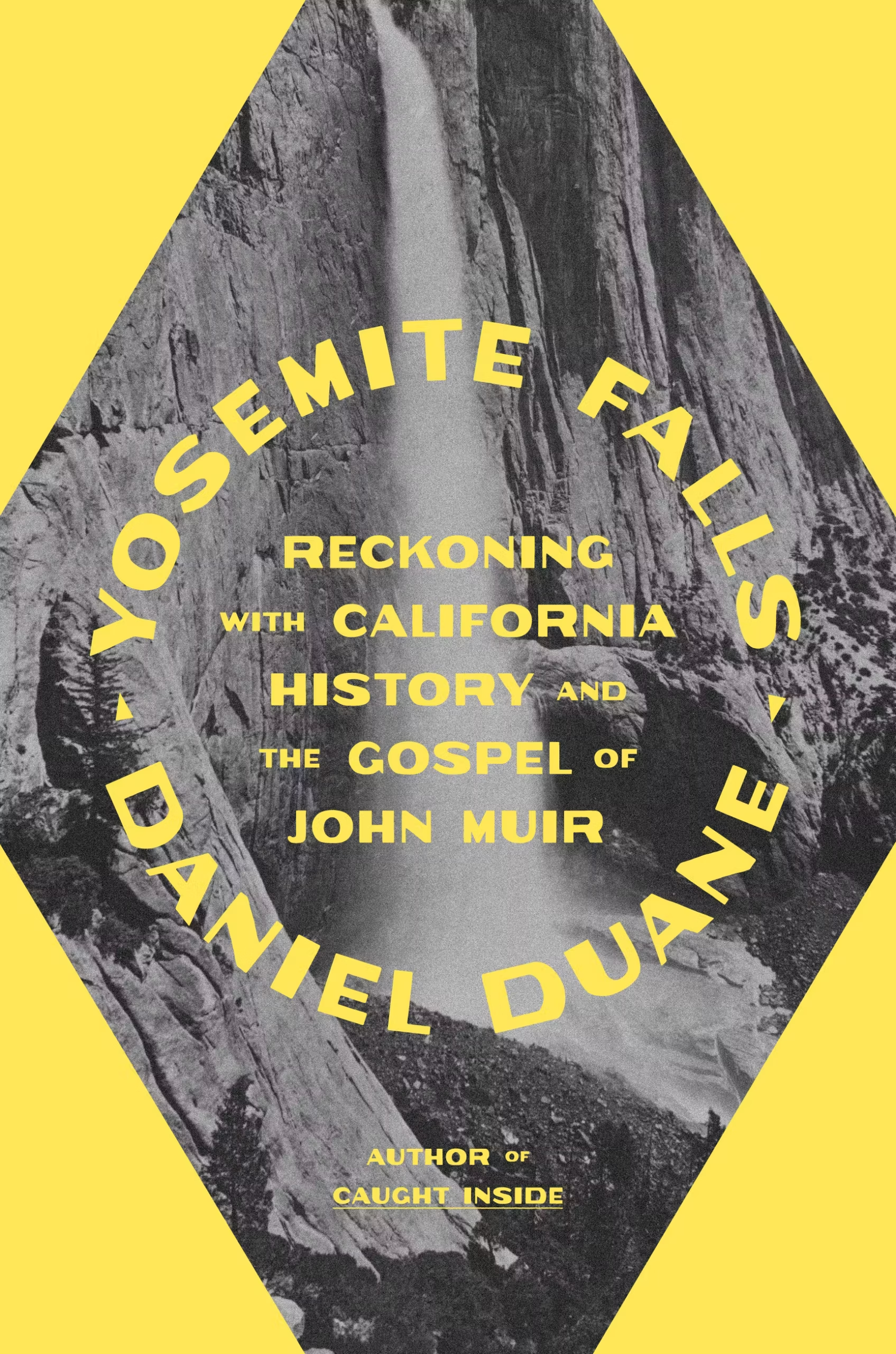
“Awe is cheap; the best nature writing unnerves. Yosemite Falls, Daniel Duane’s new work of combined memoir and journalism, profiles men—including himself—whose lives have orbited Yosemite. It is brilliantly ambivalent. By the end one feels that the park, and maybe nature itself, is an amalgam of countless human projections layered atop one another like colored film. Reading this book is like snapping a lens on your glasses. The mountain before you changes color; you won’t see it the same again.
Weaving a climbing memoir with a history of Indigenous genocide could easily feel off-balance, but in Yosemite Falls, the same themes—ego, solipsism, masculinity, denial—weave so tightly through all its narrative strands that they begin to seem one, and to separate them (and view Yosemite National Park through a single lens) seems both impoverished and naïve.
…
“Throughout, Duane tries repeatedly to hike the 200-mile John Muir Trail, a quest that he keeps self-sabotaging: inviting his flaky father (again), leaving partway through for a wedding, hauling in his pack a veritable library including Moby-Dick and an assortment of global scriptures with which he hopes to ‘figure out, once and for all, why life felt the way it did.’ By the time Duane starts antidepressants for suicidal thoughts, a decision that puts him at odds with his father’s suck-it-up machismo, only the context of his account of his childhood, and his parents’ disappointment when he tells them, make clear the courage of the choice.
The book’s layers are sedimentary; ideas grow deeper by the page, the title gaining in meanings as the story goes on. Duane trusts the reader to be smart; weight-bearing brackets in a passing reference—’Lafayette Burnell, First White Man’ to see El Cap—feel comfortably irritable, like a glance between friends, while even basic descriptions are delightfully precise (‘a fat marmot waggled its plush ass’). The effect, in whole, is complicated, disturbing and unforgettable. One hopes the achievement will earn Duane a few hours—or years—of self-worth.”
–Blair Braverman on Daniel Duane’s Yosemite Falls: Reckoning with California History and the Gospel of John Muir (The New York Times Book Review)
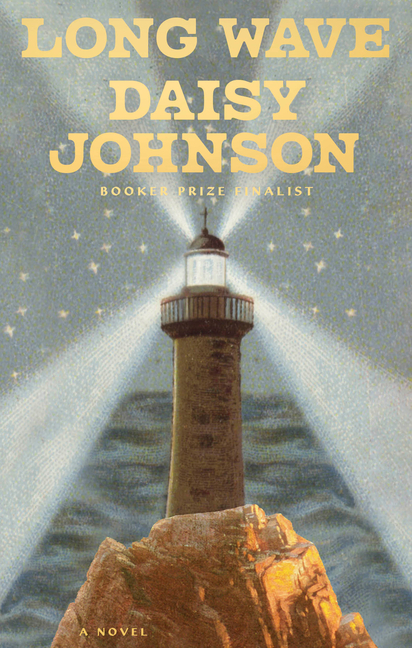
“This is a story heated by the cataclysmic fusion of a mother’s love and dread. Over three deeply wounded generations, Johnson traces the recurrence of trauma generated by loneliness, poverty, and depression. I’ve never felt the gnawing fear of caring for children so powerfully set down on the page. Anyone who’s secretly dared to think, ‘I was a child once and then I had a child and that child killed the child I was’ will find a home here. As one mother admits, ‘I love them but I hate them.’ That sounds harrowing, and it’s meant to, but there’s a tensile line of tenderness strung through this tale that never breaks.
…
“I’ll say no more on that evolving mystery, except that it’s difficult to lure you into this remarkable novel without stomping on the shards of its fractured structure. Given the island motif, I assumed the ‘long wave’ of the title was a reference to the ocean, but as happens so often in this craftily engineered book, there is another meaning vibrating through the ether. Late in the story, a young radio host explains to her mother that long radio waves ‘may struggle to penetrate certain objects or they may bounce off surfaces so that the signal takes different paths and arrives at different times.’
Substituting lines of story for electromagnetic waves, Johnson has created a similarly distorting effect. These incidents, across many decades, take different paths and arrive at different times. We might get to know an abandoned little girl long before we discover what befell her mother; we might wait hundreds of pages to learn the precipitating event of a ghastly marriage. As a narrative tic, such scrambling would be merely irritating, but as an expression of the way time and trauma are folded in on themselves, it’s miraculous.
…
“Is it too much to say that reading this novel is something like motherhood itself—its staggering demands, its sloughs of despair, its unspeakable joys? Ruth’s knocking reverberates through the years, through the generations: ‘I am here, I am here.’Some will never be heard. But others will.”
–Ron Charles on Daisy Johnson’s Long Wave (Ron Charles Substack)
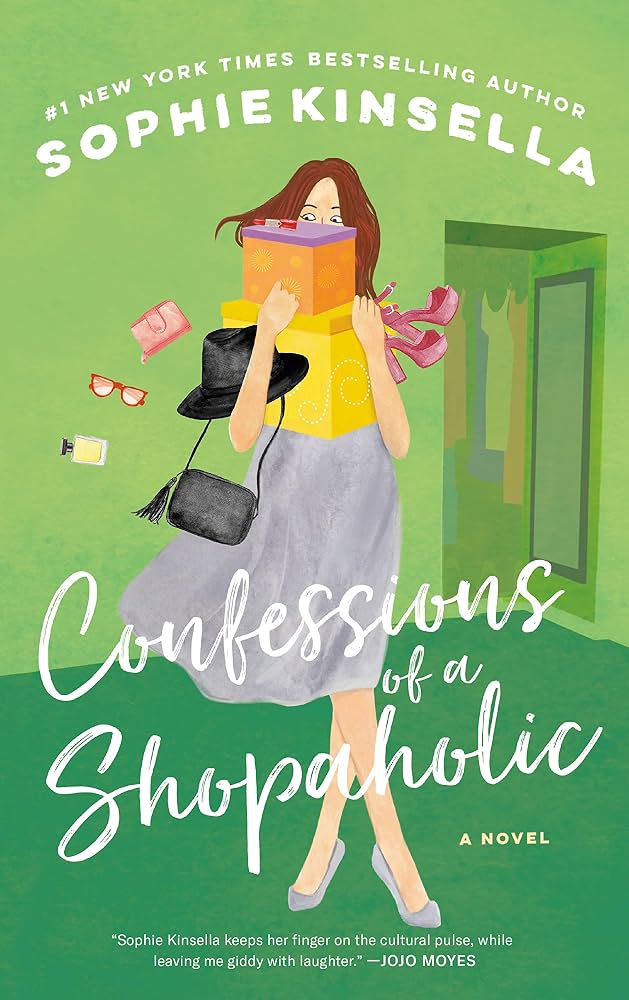
“Confessions of a Shopaholic came out in the United States 25 years ago, and certain aspects of the book haven’t aged at all: Becky’s chatty warmth is as enjoyable as ever, and the debt she racks up will likely be relatable to as many readers now as in the early aughts. But the details and texture of her shopping—physical credit cards swiped, department stores wandered through—are so unlike the reality of today’s consumerism, with its smartphones and scrolling, that the novel is almost a time capsule.
…
“Yet, unlike some of its peers, Confessions of a Shopaholic is a fundamentally solitary, even lonely, book. Becky’s focus on shopping crowds out other characters. Perhaps this is why the novel’s film adaptation hasn’t endured; contrast it with those of Bridget Jones’s Diary and The Devil Wears Prada, which have surpassed the books themselves. Fielding’s and Weisberger’s novels revolve around friendship, romance, or careers that involve collaborating with others—all relationships that are easy to dramatize on-screen. But the central relationship in Confessions of a Shopaholic is Becky’s connection to, and yearning for, material things. She’s at her most emotional when shopping, which, with very few exceptions, she does alone. As a result, the book’s most captivating sections are internal monologues directed at objects that can’t want Becky back. The adaptation, starring Isla Fisher, does its best to create new versions of these moments—in one scene, a mannequin talks to Becky—but it doesn’t capture the book’s real drama, which is inside its heroine’s head.
If Confessions of a Shopaholic had been written in 2026, Becky would be more solitary still—so alone that the novel might not work at all. Kinsella, who died late last year, was gifted at buoying readers along through the sheer power of voice, but even she might not have been able to make a charming, compelling read out of a woman scrolling through pages and pages of buyable things on her phone. In fact, reading the novel today is at once a reminder of how much shopping has changed and a grim preview of what was to come: As consumers, at least, we’re all as alone as Becky Bloomwood now.”
–Lily Meyer on Sophie Kinsella’s Confessions of a Shopaholic (The Atlantic)