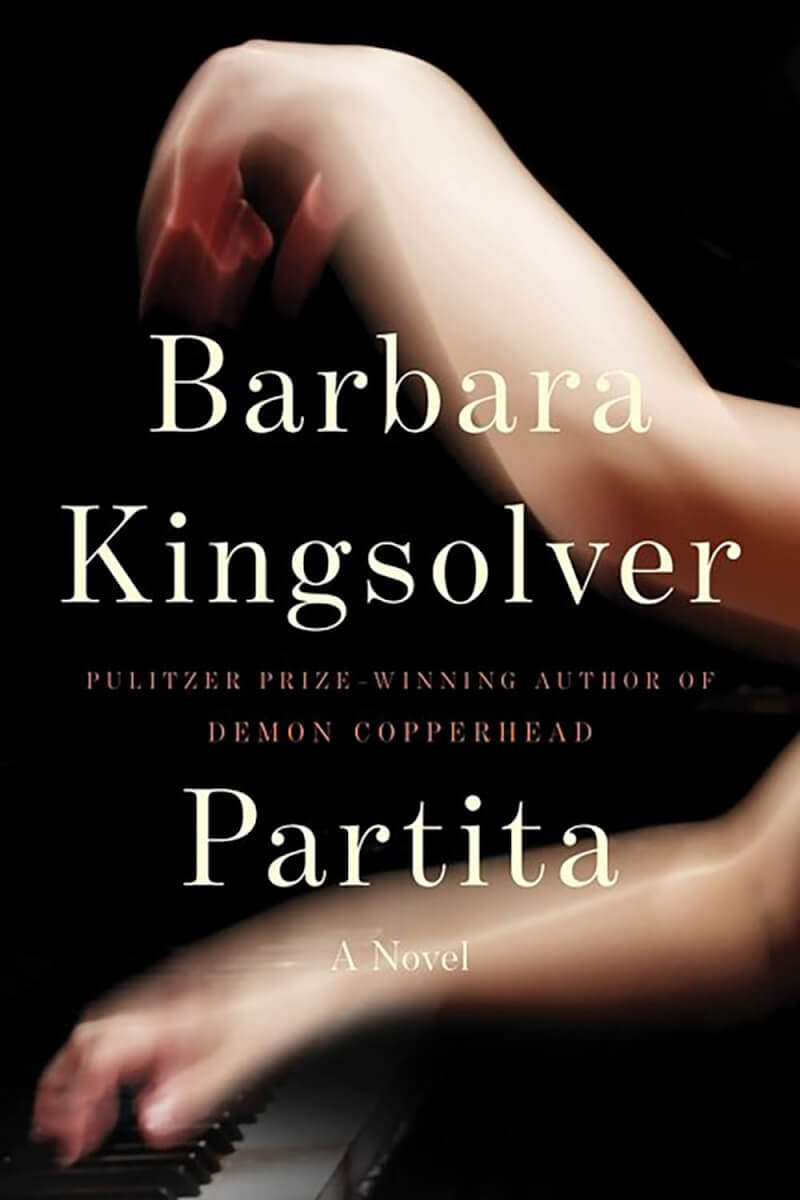
Partita is, in a way, a love story, though the central love in question is not for a person, but for classical piano.
Livia Bohusz grows up on a dairy farm in rural east Tennessee, her most prized possession a copy of the key to the local church where she practices piano day after day. She plays until she feels Bach beat in her fingertips, and is talented enough to earn a scholarship to the Indiana University School of Music. There, accompanist gigs, jury performances and hourslong practice sessions occupy her time, until Livia meets Sigurd—a socialist union organizer who’s come to recruit on campus. All of a sudden, her all-encompassing passion for piano runs into significant competition.
There are many different kinds of beauty to be found in life, and an equal diversity of pain. Livia falls in and out of love, finds and loses her purpose, leaves her hometown and returns to it. By the time the reader meets her, she’s married and has aged over two decades, living next door to where she grew up and teaching the next generation of Appalachian pianists.
Livia’s first-person narrative voice is steady and honest from the very first page. It’s especially visceral when she discusses the pain she endured after the suicide of her brother. By the end of the novel, years of evolution make her incredibly emotionally complex and almost scarily relatable.
Kingsolver is a Pulitzer Prize winner (Demon Copperhead) for a reason, and her ability to switch up topics and styles from bestseller to bestseller is nothing short of spectacular. In Partita, she touches on questions for the ages about what is and isn’t worth settling for while addressing many prongs of American life like class differences, abortion access, political disengagement and education inequality. She is forceful without ever being moralistic.
Partita will surpass the high expectations of Kingsolver’s fans and draw many new readers along for the ride.