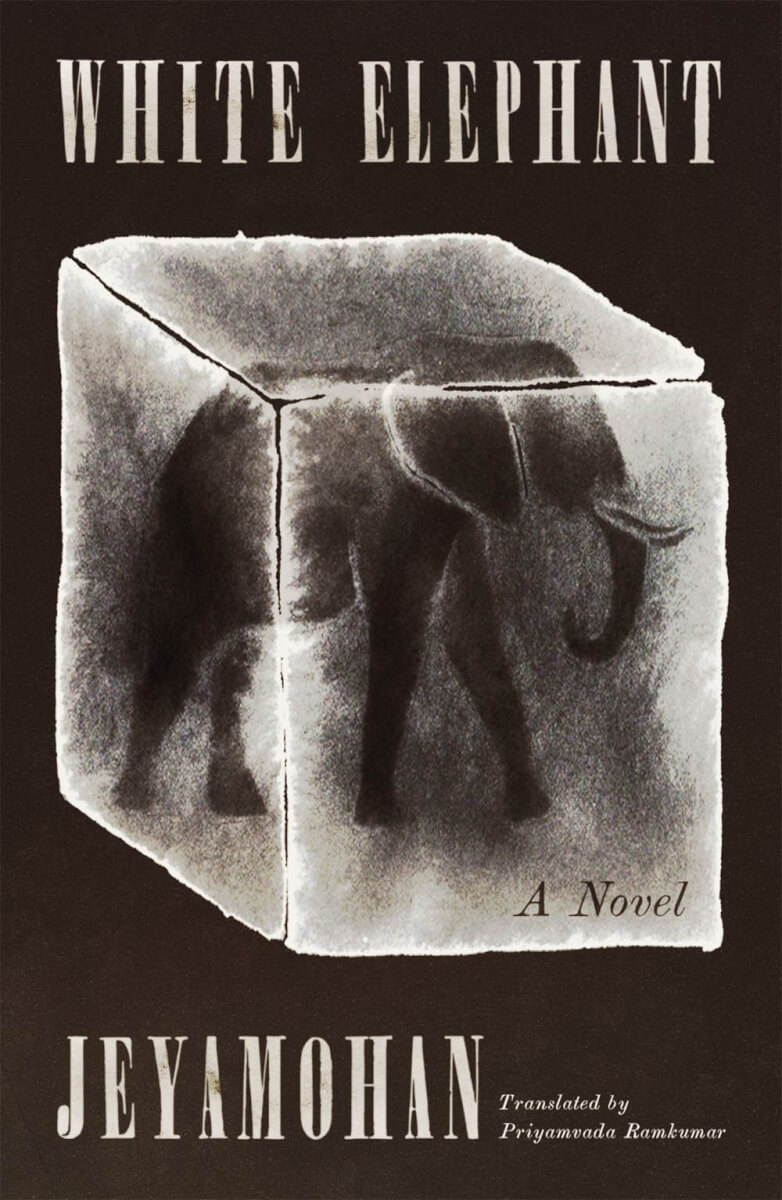
It was the worst of times. Full stop; no romantic Dickensian opening here.
After a disastrous El Nino laid waste to Indian agriculture in 1876, the British colonial government doubled down on the misery, instituting a laissez-faire policy on the price of grain. People who couldn’t afford to buy the crops that they’d grown watched helplessly as over 320,000 tons of wheat were exported to Britain, and an estimated 8.2 million died as a direct result. That’s the backdrop against which Jeyamohan’s novel White Elephant, translated from Tamil by Priyamvada Ramkumar, is set.
Jeyamohan drops into the center of this catastrophe one freshly minted Irish police officer in service to the Raj, Captain Aiden Byrne. After witnessing the savage beating of two Indian workers—who subsequently disappear—Byrne seeks to provide some sort of justice. But what exactly does that look like in a caste-based society, whose lowest rung is regarded as disposable not only by colonial rulers but also by everyone outside that caste?
Kathavarayan, a passionate activist from a stigmatized lower caste, implores Byrne to find the missing pair. When it’s discovered they are not only missing, but murdered, the affair takes on a whole new level of complexity. In the course of seeking redress for his community, Kathavarayan has a bigger plan in mind: India’s first-ever labor strike. Byrne’s attempts to provide help are continually stymied by the Byzantine nature of the ruling class. Clergy, politicians, merchants and the military all have their own agendas and are none too keen on upsetting the existing order, tenuous though it may be.
The parallels between White Elephant and Joseph Conrad’s classic Heart of Darkness are unmistakable; while they take place on different continents, their pointed criticism of colonial rule is very much kindred. Jeyamohan’s portrayal of the horrors of its effects, not only on the large scale, but also on the psyche of a moral individual caught between forces over which he has no control, makes for a mesmerizing, if harrowing, read.