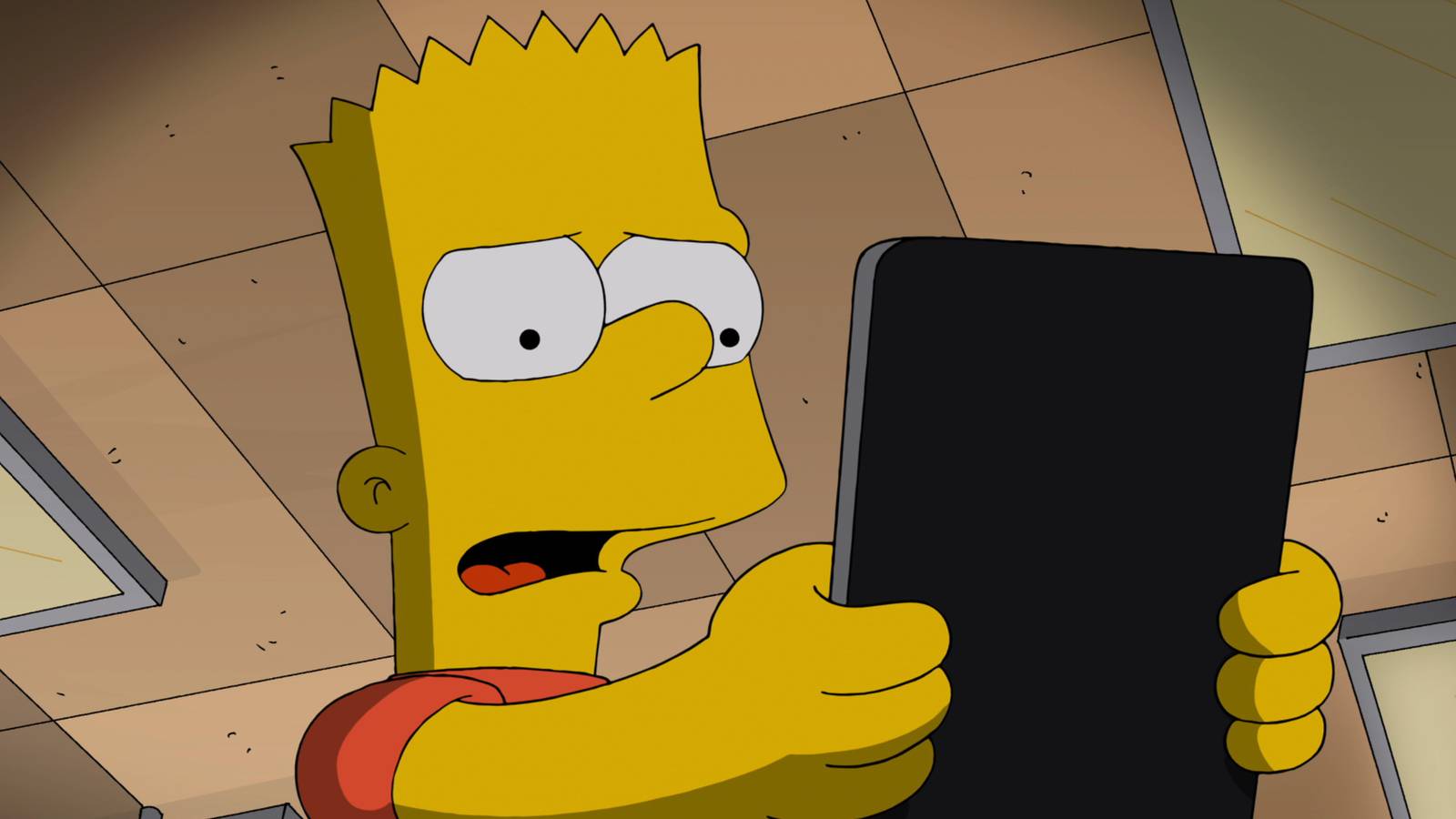
Broadly beloved and irrefutably brilliant, The Simpsons continues to stake a serious claim for being the greatest TV show ever made. Nevertheless, the animated sitcom has its widespread detractors, most of whom first appeared at the tailend of the 1990s, when it seemed to enter into an inexorable decline.
Critics have pointed to particular storylines, characterizations and gags as key indicators of the show losing its way. The best Simpsons episodes have always pushed the boundaries of TV comedy, and continue to do so, 37 seasons into its historic run. Yet, sometimes America’s favorite cartoon family simply goes too far.
Given that over 800 Simpsons episodes have now aired on Fox, it’s inevitable that there are too many missteps to include on this list, just as there are too many examples of the show’s genius to name in one go. Here, we’re sticking to the most egregious instances of the series crossing the line and provoking a backlash.
Among the episodes we’re examining, there are all sorts of offences committed against comedy, common decency, good storytelling, and the canon of the show itself. Social prejudices are stoked, classic Simpsons characters are killed off, longtime fans are taken for granted, and this all-time great of the small screen generally debases itself in ways that are especially hard to stomach.
“Homer And Apu”
Season 5, Episode 13

Since this list is moving chronologically through the Simpsons episodes that went too far, we have to start with one that’s arguably the odd one out. The only genuinely golden-age episode to feature here, “Homer and Apu” is unquestionably a hilariously funny, expertly plotted, and overall heartwarming tale of downfall and redemption.
At the same time, it raises a specter that would come back to haunt The Simpsons two decades later, leading actor Hank Azaria to stop voicing Apu. The episode invokes racist stereotypes about Indian convenience store owners, by depicting Apu selling expired products, and venturing to a guru in the Himalayas to get his job back.
Ironically, Apu himself even suggests that his actions in the story go too far. He’s more right than he realizes, because the episode’s inciting incident and resolution step into dangerously discriminatory territory.
“The Principal And The Pauper”
Season 9, Episode 2

By its ninth season, the definitive adult animated sitcom was clearly beginning to run out of ideas. “The Principal and the Pauper” effectively ended golden age of The Simpsons, by turning a fan-favorite character into an imposter with a far-fetched backstory.
The artistic merits of this storyline, which is a deliberate critique of zealously protective fanbases, can be debated. Still, it remains a key turning point in the history of a sitcom which had previously treated its characters as three-dimensional human beings as much as vehicles for quickfire gags and zany plotlines.
“Saddlesore Galactica”
Season 11, Episode 13

For many viewers, season 11 ought to have been the end of The Simpsons. Funnily enough, the season finale “Behind the Laughter” predicted its sharp decline in quality thereafter, as well as the indefinite continuation of its run on the small screen. But the signs were already there, in what was already a steep dropoff from previous seasons.
The climax of “Saddlesore Galactica”, in which horseracing jockeys are revealed to be a race of demonic elves living in a fiberglass tree, feels like a definitive “jump the shark” moment for the series. Besides punching down at sporting professionals and little people alike, this detour into the fantasy genre is completely incongruous with the canonical world of The Simpsons.
“Alone Again, Natura-Diddily”
Season 11, Episode 14

The episode that immediately followed “Saddlesore Galactica” arguably commits an even worse crime against the canon of The Simpsons. Large sections of the show’s fanbase still feel betrayed by the death of Maude Flanders, which outdid even the bigamy committed by her husband in season 10’s “Viva Ned Flanders”.
It doesn’t help that Maude is killed off in the most carelessly absurd way imaginable, by a T-shirt fired out of a cannon. The Simpsons tried its best to repair the damages this episode does, by dealing with Ned’s grief over his wife’s death and his subsequent romantic relationships more sensitively. Regardless, it’s impossible to forget this callous character death.
“Homer Vs. Dignity”
Season 12, Episode 5

Things didn’t get any better for The Simpsons in season 12. “Homer vs. Dignity” is an all-round bad episode which emphasizes the descent of Homer Simpson from bumbling, simple-minded but well-intentioned family man into an aggressively stupid character of himself.
If the overarching storyline of Mr. Burns making Homer his “prank monkey” isn’t bad enough, then one scene of the episode in particular plunges The Simpsons to new depths. This scene suggests that Homer is being sexually violated by a panda offscreen in a zoo enclosure, while an exhibit emcee cheerfully commentates along. Undignified isn’t the half of it.
“Simpson Safari”
Season 12, Episode 17

The golden age of The Simpsons did feature the odd travel episode, with “Bart vs. Australia” being the most prominent among them. But from season 10’s “Thirty Minutes over Tokyo” the show developed a bad habit of vacation episodes predicated entirely on lazy national stereotypes and sightseeing checklists, with few laugh-out-loud moments to speak of.
“Simpson Safari” is the worst of the lot, precisely because it ventures beyond surface-level prejudices onto even shakier ground. From a poorly-crafted gag that whimsically confuses the habitats of various savannah-dwelling animals, to a bizarre and deeply unsettling conclusion involving a diamond mine run by enslaved chimpanzees, this episode gets just about everything wrong.
“Large Marge”
Season 14, Episode 4

While The Simpsons has recently produced some great writing for Marge as a character, the show’s second decade represented a low point in her development. Several examples could have made this list, from “The Strong Arms Of The Ma”, in which she forces herself on Homer due to roid rage, to “Mommie Beerest”, where she has an emotional affair with Moe Syzlak.
“Large Marge” takes the crown, though, as quite possibly the show’s most misjudged Marge storyline of all time. It involves her accidentally getting a boob job, to the delight of most men in her life. Rather than serving as a critique of sexism, though, the episode has Marge save the day by taking her top off in its climactic scene.
“That ’90s Show”
Season 19, Episode 11

The Simpsons has spent the last 20 seasons rewriting almost every element of backstory behind its titular family. Season 25’s “Days of Future Future” even went as far as retconning other retcons, alongside a disturbing scene in which Bart sleeps with Lisa’s teacher Ms. Hoover. Meanwhile, The Simpsons season 36 features an equally confusing Grampa retcon.
Yet, no Simpsons episode treats the show’s canon with less respect than season 19’s “That ‘90s Show”, which predates the similarly flawed live-action sitcom of the same name. By relocating a young Homer,Marge and baby Bart to an apartment in the 1990s, the episode rides roughshod over golden-age flashback classics like “I Married Marge” and “Lisa’s First Word”.
“Lisa Goes Gaga”
Season 23, Episode 22

Despite containing one of the many Simpsons predictions to have come true in real life, “Lisa Goes Gaga” is a celebrity-focused episode without any genuine merit or purpose. It feels like its paper-thin plot could have been penned by Lady Gaga herself, or perhaps her publicist, as it essentially serves as a gratuitous promotional vehicle for the flamboyant pop icon.
The sitcom that used to knock major stars down a peg or two, when it wasn’t working them cleverly into heartfelt storylines without us noticing, has become increasingly reliant on sycophantic guest-star cameos down the years. But this episode makes some of the other more cynical guest appearances in Simpsons history look positively wholesome by comparison.
“Simpsorama”
Season 26, Episode 6

Although Matt Groening is the creator of both shows, the idea that The Simpsons and Futurama share the same fictional universe would have been laughed out of the writers’ room by Groening in decades gone by. This crossover episode’s self-effacing tagline does nothing to redeem its vandalism of Springfield as a relatively grounded story-world.
Futurama is set in the year 3000, and, unlike The Simpsons, none of its human characters are yellow. Whereas the Simpson family’s contemporaneous non-canon Family Guy crossover did more damage to Seth MacFarlane’s animated sitcom, Bender and Homer sharing a beer within canon feels like pure sacrilege.

- Release Date
-
December 17, 1989
- Network
-
FOX
- Showrunner
-
Al Jean
- Directors
-
Steven Dean Moore, Mark Kirkland, Rob Oliver, Michael Polcino, Mike B. Anderson, Chris Clements, Wes Archer, Timothy Bailey, Lance Kramer, Nancy Kruse, Matthew Faughnan, Chuck Sheetz, Rich Moore, Jeffrey Lynch, Pete Michels, Susie Dietter, Raymond S. Persi, Carlos Baeza, Dominic Polcino, Lauren MacMullan, Michael Marcantel, Neil Affleck, Swinton O. Scott III, Jennifer Moeller
- Writers
-
J. Stewart Burns, Michael Price, Brian Kelley, Bill Odenkirk, Dan Vebber, Kevin Curran, Stephanie Gillis, Dan Castellaneta, Deb Lacusta, Billy Kimball, Jessica Conrad, Cesar Mazariegos, Daniel Chun, Jennifer Crittenden, Conan O’Brien, Valentina Garza, Elisabeth Kiernan Averick, Christine Nangle, Broti Gupta, Loni Steele Sosthand, Megan Amram, Bob Kushell, David Isaacs, David Mandel
-

Homer Simpson / Abe Simpson / Barney Gumble / Krusty (voice)
-

Marge Simpson / Patty Bouvier / Selma Bouvier (voice)