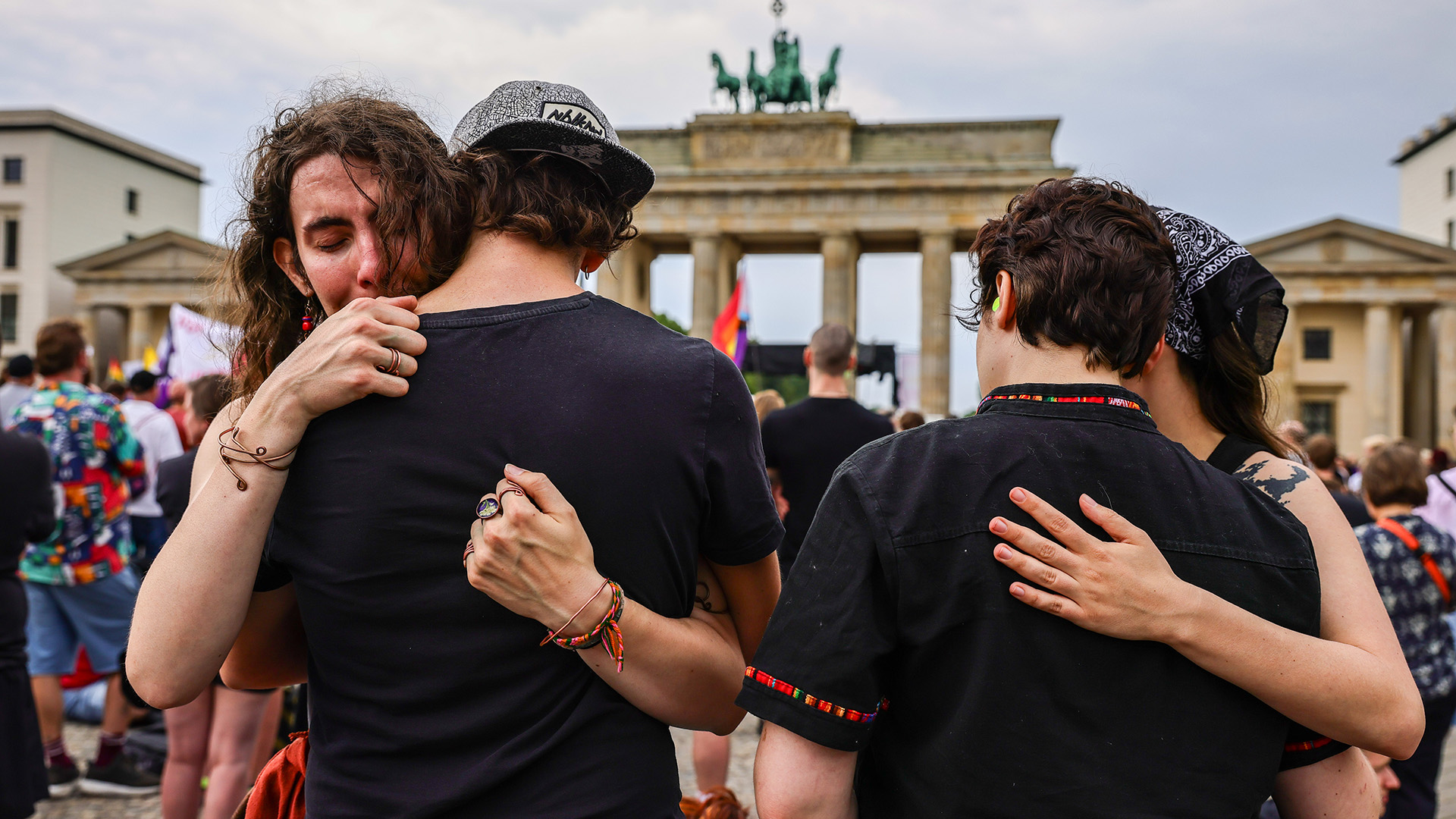
What began as a celebration of LGBTQ+ visibility in Berlin ended in violence Saturday night when a driver rammed a minivan into crowds gathered near the city’s annual Christopher Street Day Pride celebrations.
One person was killed, and 29 people were injured in the attack near Berlin’s Tiergarten park, according to authorities. The celebration, one of Europe’s largest Pride events, had drawn hundreds of thousands of people to the German capital.
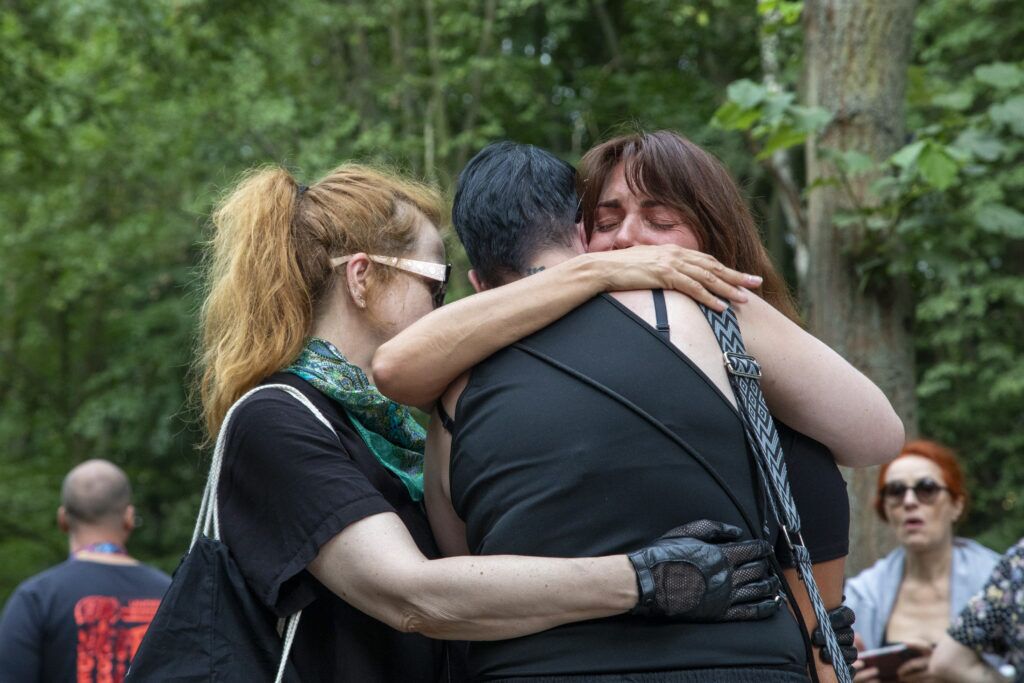
In the hours that followed, celebration gave way to mourning.
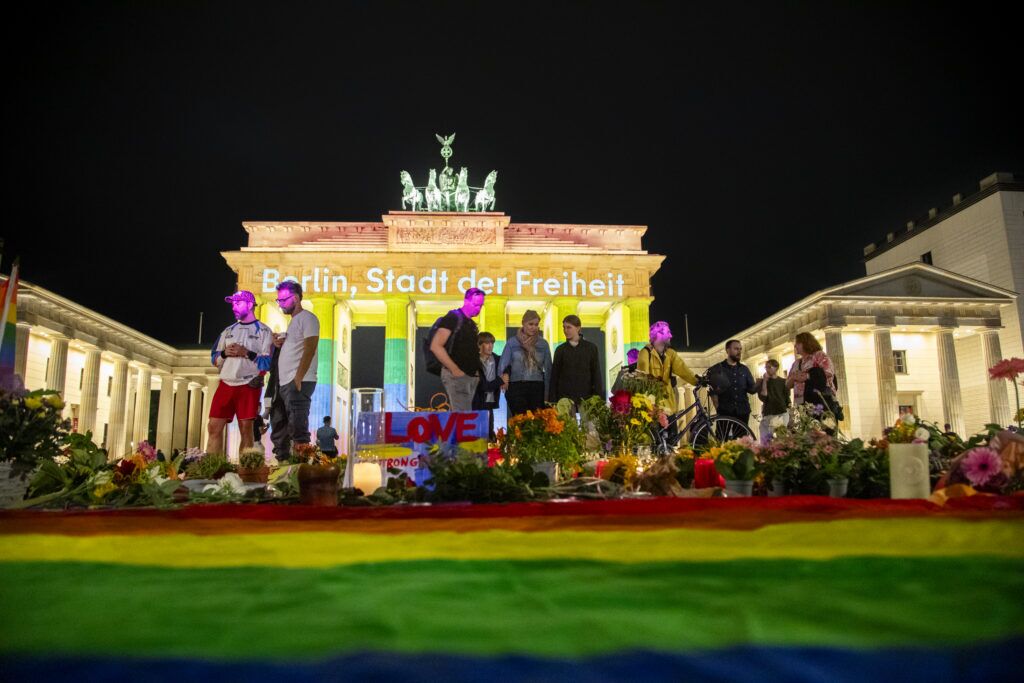
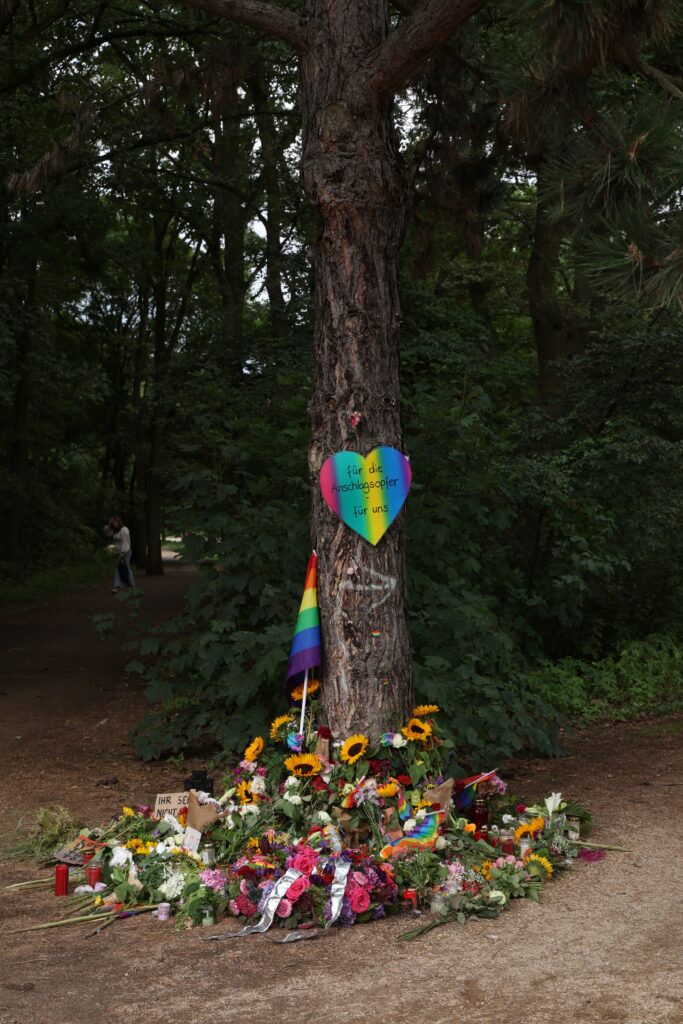
Vigils were organized across Berlin, with community members gathering near the Brandenburg Gate to leave flowers, candles and Pride flags in remembrance of the victims. The landmark was illuminated in rainbow colors as the city mourned.
Berlin’s LGBTQ+ Affairs Commissioner Alfonso Pantisano acknowledged the fear rippling through the community.
“I know that many of you are afraid right now,” Pantisano wrote. “But you are not alone in this fear, in your grief, and in your anger.”
Authorities Point to Islamist Extremism
German authorities have described the attack as an act of Islamist terrorism.
Interior Minister Alexander Dobrindt said the 21-year-old suspect had previously come to authorities’ attention because of numerous criminal offenses and radicalization. Officials said he had ties to Berlin’s Islamist scene, while reporting indicates he had previously been convicted after attempting to join ISIS.
Police located the suspect Sunday at an allotment garden complex in Berlin’s Spandau district. Authorities said he approached officers with a bladed weapon before police opened fire. He died at the scene despite attempts to resuscitate him.
This Is Not An Isolated Incident
The attack in Berlin is a devastating reminder of something LGBTQ+ communities around the world have experienced before: Simply gathering openly can make queer people a target for extremists.
The ideologies behind that violence have not always looked the same.
Pride marchers in Moscow faced violence from nationalist and religious protesters between 2006 and 2009; armed neo-Nazis appeared at Detroit Pride in 2019; far-right mobs attacked marchers with rocks, bottles and firecrackers in Białystok, Poland, that same year; and in Jerusalem, a Haredi extremist stabbed Pride attendees in 2005 and again in 2015, killing 16-year-old Shira Banki.
The circumstances behind these attacks are different, but the target remains the same: LGBTQ+ people gathering openly.
In Berlin, authorities say the suspect had ties to Islamist extremism. That should be acknowledged without blaming an entire religion for one person’s actions.
Anti-LGBTQ+ violence does not belong to one religion, country or political movement. It has been fueled by different forms of religious extremism, white nationalism and far-right ideology.
Queer People Deserve to Gather Without Fear
It is important to be clear about what happened in Berlin. German authorities say the suspect had a history of Islamist radicalization and are treating the attack as Islamist terrorism.
It is equally important not to turn one extremist’s actions into justification for hatred toward an entire religious community.
People should be free to practice their religion in peace. LGBTQ+ people should also be free to march, celebrate, protest, dance and gather together without fearing that their visibility will make them targets for violence.
Governments and institutions have a responsibility to protect both freedoms.
Ahead of a memorial service in Berlin, German Chancellor Friedrich Merz vowed that the country would not allow the attack to intimidate its people, pledging to defend Germany’s freedom, openness and liberal society.
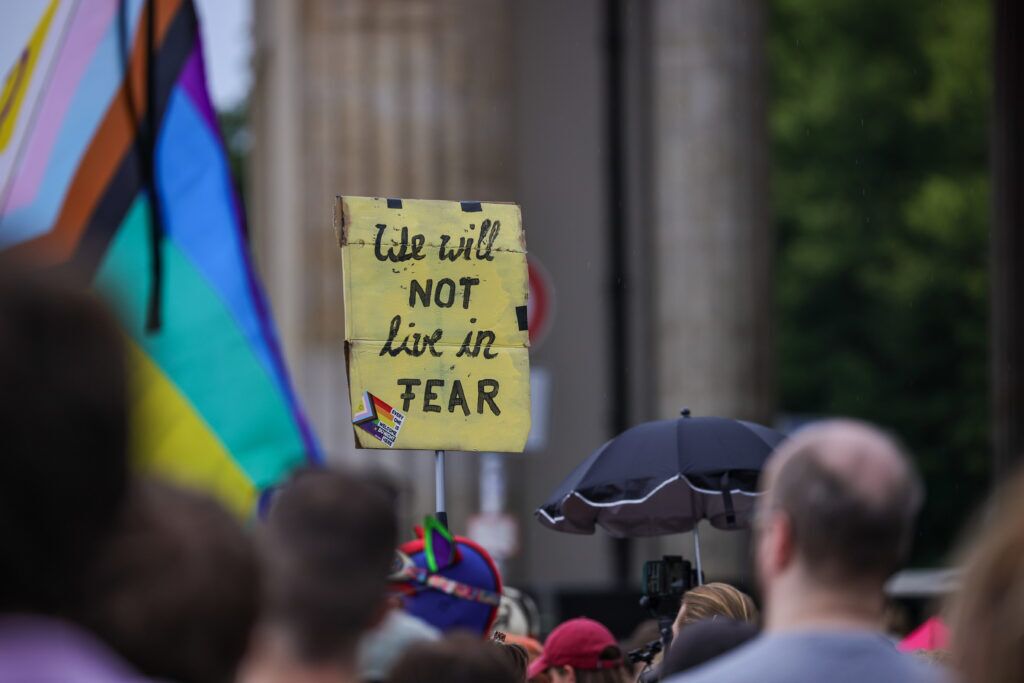
Pride has never only been a party. Its roots are in protest, resistance and the insistence that queer people have the right to occupy public space without hiding who they are.
We mourn the life lost in Berlin and stand with those who were injured, their loved ones and everyone whose sense of safety was shattered by the attack.