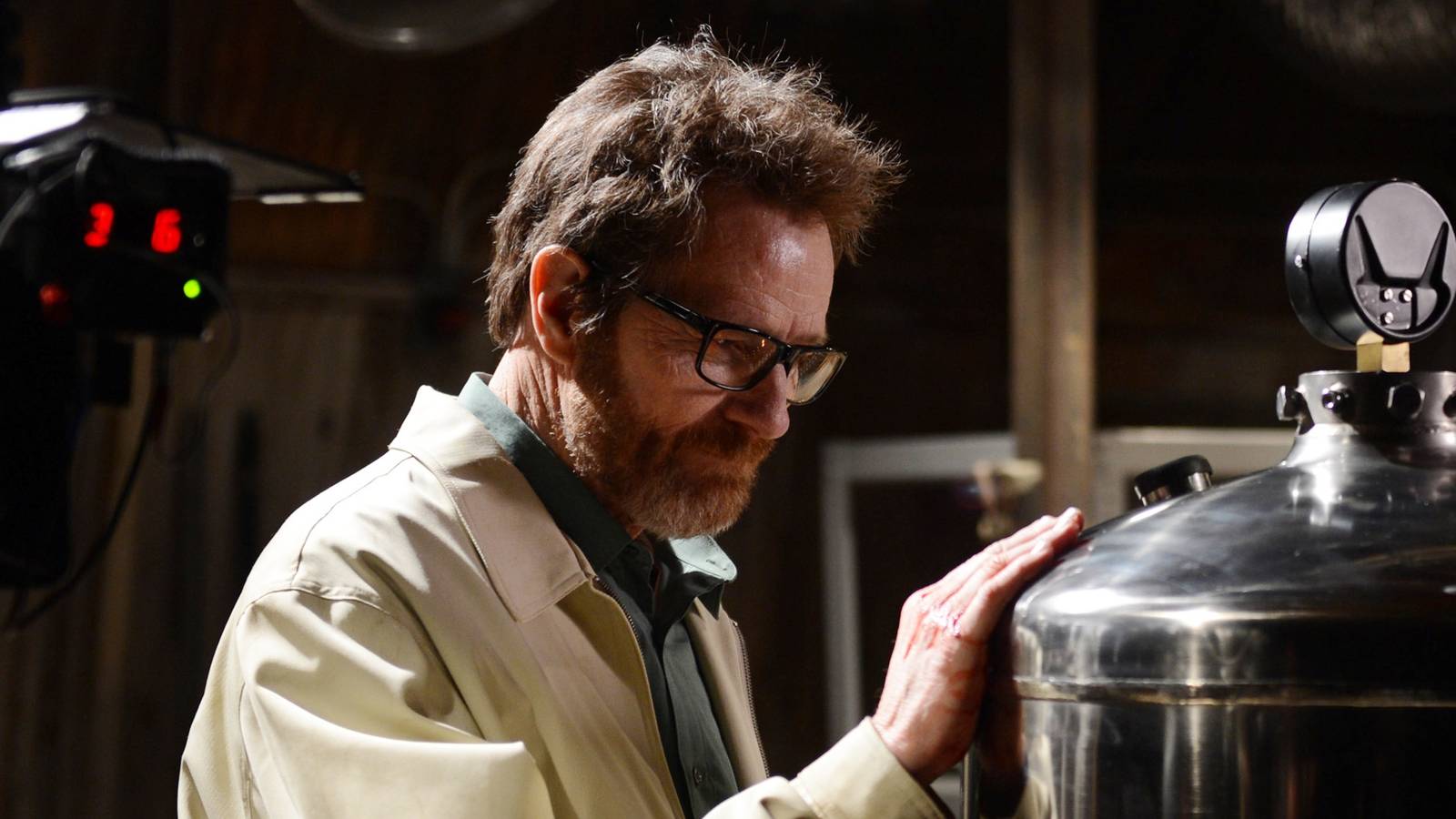
While Breaking Bad might seem like one of the bleakest character studies in TV history, one pivotal line from Bryan Cranston’s Walter White reframes the entire plot of the show. Although Bryan Cranston’s later crime series Sneaky Pete is superb, it is no surprise that the show isn’t quite the equal of his most famous series, Breaking Bad. Even Breaking Bad creator Vince Gilligan’s own Apple TV series Pluribus struggles to live up to the earlier show’s towering critical reputation.
Alongside The Sopranos and The Wire, Breaking Bad is often listed as one of the greatest TV shows of all time and certainly one of the best crime dramas in the medium’s history. However, there is one thing that separates Breaking Bad and its prequel series, Better Call Saul, from those earlier contemporaries. While hardly as outright comedic as Apple TV’s Dope Thief or HBO Max’s The Flight Attendant, Breaking Bad’s entire story is somewhat tongue-in-cheek.
Both The Sopranos and The Wire offer non-judgmental, but also unflinching, portrayals of their amoral criminal characters and the world they inhabit. In contrast, as Walter White’s life spins out of control, and he becomes increasingly identified with the monstrous Heisenberg, Breaking Bad has a lot of fun with his fate. From Hank discovering his secret while sitting on the toilet to an absurdly unlikely airplane crash making life harder for Walt in season 2, Cranston’s character appears to be in a permanent battle with karma.
Breaking Bad’s Best Line Is Its Most Positive Message

This sense of pitch-black is something that the better shows inspired by Breaking Bad, such as Apple TV’s Your Friends and Neighbors and Netflix’s Ozark, learned from. Most retrospectives on the series focus on Walt as a classic antihero whose hubris comes back to bite him, but there is an iconic comment from the character that highlights a very different interoperation of his five-season story.
In season 2, episode 8, “Better Call Saul,” Walt offers some unlikely reassurance to Jesse with an unexpectedly uplifting speech. Per Cranston’s antihero: ”I have spent my whole life scared, frightened of things that could happen, might happen, might not happen. I spent fifty years like that. Finding myself awake at three in the morning. But you know what? Ever since my diagnosis, I have slept just fine. What I came to realize is that fear, that’s the worst of it. That’s the real enemy.”
This line jars with many interpretations of Breaking Bad’s Walter White as an almost Shakespearean tragic figure whose need for control derails his once peaceful life. In his own retelling, Cranston’s character never cared for or appreciated his humdrum suburban existence before he became Heisenberg, since he had always operated from a place of fear instead of courage.
Breaking Bad’s Best Line Puts A Different Spin On Walt’s Evolution

This explains why Walt is so obsessed with becoming the meth king of New Mexico as the show’s story progresses, a pursuit that has less to do with money and more to do with his newfound fearlessness. It’s unfortunate for Cranston’s character that he has inextricably linked his self-determination with his work as a drug dealer, since this eventually, inevitably leads to his bloody downfall.
However, Walt’s reframing of his story in this scene proves this isn’t necessarily the unambiguously tragic fate viewers might have assumed. Compared to the cartoonish-ly unstoppable, super-tough heroes of the Yellowstone franchise, Walt is a genuinely complicated and flawed figure whose obsession with power is fueled by a relatable desire to live without fear. His willingness to give up his wife and children in pursuit of a criminal empire makes a lot more sense when viewers realize that he never wanted them in the first place.
Walt’s life story is a tragedy when the audience views him as an ordinary man driven to murder by greed, who is eventually killed as a result of his criminal misdeeds. However, the character’s best line opens up a new, intriguing interpretation of Breaking Bad as a story of a man whose desire to escape fear drives him to increasingly wild, misguided extremes.

- Release Date
-
2008 – 2013-00-00
- Showrunner
-
Vince Gilligan
- Directors
-
Vince Gilligan, Michelle Maclaren
- Writers
-
Peter Gould, Gennifer Hutchison, Vince Gilligan, George Mastras, Moira Walley-Beckett, Sam Catlin, Thomas Schnauz