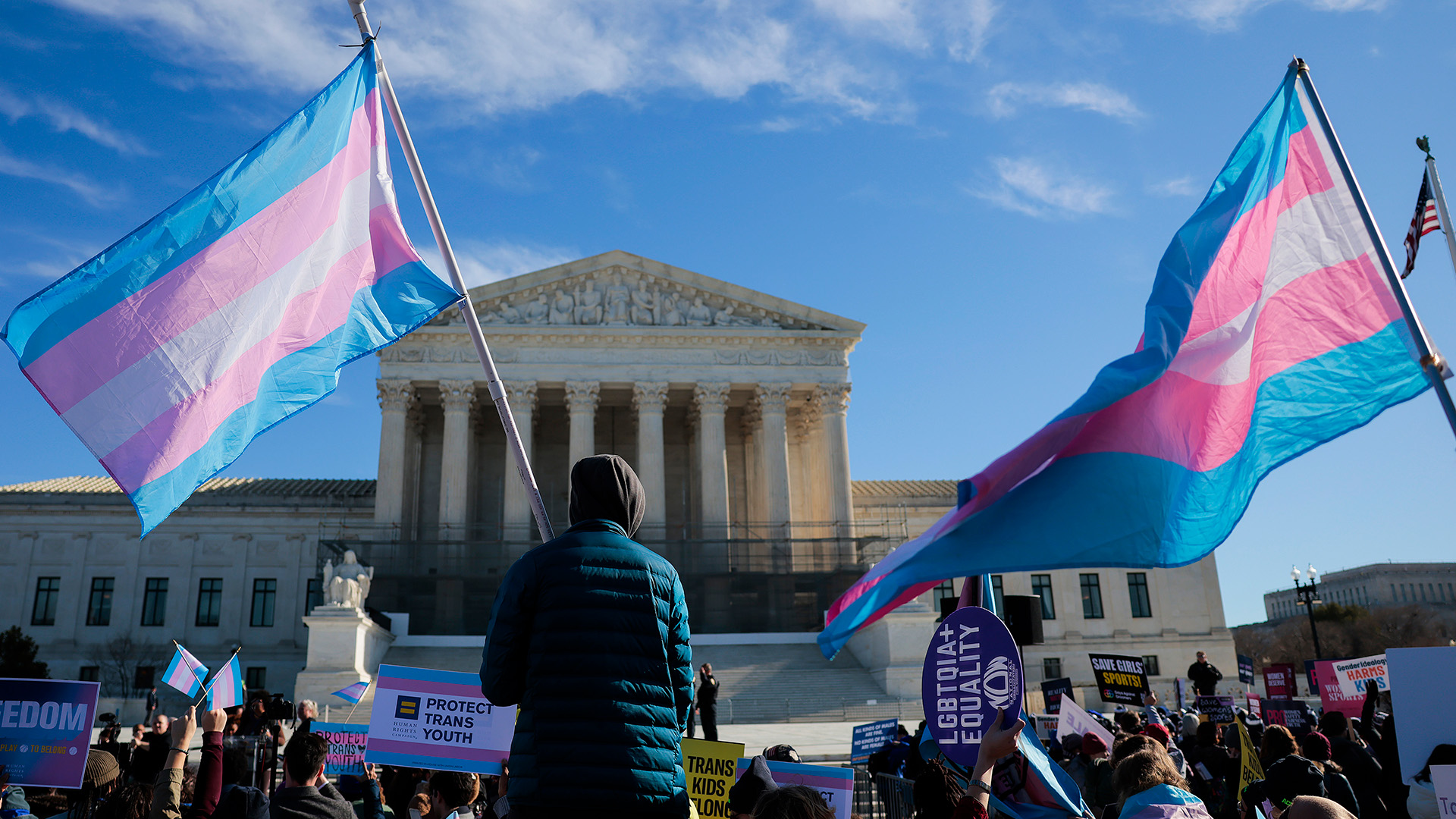
The U.S. Supreme Court ruled Tuesday that states can continue enforcing laws that prohibit transgender girls and women from competing on girls’ and women’s school sports teams, a decision that marks another major legal setback for transgender Americans.
The ruling upholds laws in Idaho and West Virginia, finding that the restrictions do not violate the U.S. Constitution. The court also unanimously concluded that the laws do not conflict with Title IX, the federal civil rights law that prohibits sex discrimination in education.
Writing for the majority, Justice Brett Kavanaugh said states may reserve girls’ and women’s sports for athletes based on biological sex.
Behind the Case
The decision is expected to strengthen similar laws already on the books in more than two dozen states. It stems from lawsuits brought by two transgender students who challenged the restrictions in Idaho and West Virginia.
One involved Becky Pepper-Jackson, a West Virginia high school student who has publicly identified as a girl since childhood, has received puberty-blocking medication, and has a state-issued birth certificate recognizing her as female. The second centered on Boise State University student Lindsay Hecox, who challenged Idaho’s first-in-the-nation ban on transgender women participating in women’s collegiate sports.
Recent Challenges to Transgender Rights
The ruling continues a recent trend from the Supreme Court’s conservative majority. Last year, the justices upheld state bans on gender-affirming medical care for transgender minors, and earlier this year, the NCAA and the U.S. Olympic & Paralympic Committee revised their policies restricting transgender women from competing in women’s sports following an executive order signed by President Donald Trump.
Beliefs supporting restrictions on transgender rights have grown in recent years as transgender issues have become a major focus of political campaigns and legislative efforts across the country. According to the Pew Research Center, 66% of U.S. adults say transgender athletes should compete on teams that match their sex assigned at birth rather than their gender identity.
One argument frequently cited in support of these bans is the idea that transgender athletes are becoming increasingly common in organized sports. However, available data paint a very different picture. Transgender people are estimated to make up roughly 1% to 2% of the U.S. population, while fewer than 0.002% of NCAA athletes are transgender. During congressional testimony in 2024, NCAA President Charlie Baker said he was aware of only 10 transgender athletes competing among more than 500,000 student-athletes nationwide.
What the Decision Means Nationwide
The decision carries significant implications beyond Idaho and West Virginia. Currently, 27 states have laws restricting transgender girls and women from participating on girls’ and women’s school sports teams based on their gender identity. Those laws affect an estimated 117,400 transgender youth ages 13 to 17, and the Supreme Court’s ruling is expected to reinforce many of those existing restrictions.
The decision also arrives amid a broader wave of legislation targeting transgender people across the country. Since 2020, each year has set a new record for the number of bills introduced that would restrict transgender rights. In 2025 alone, lawmakers introduced more than 800 anti-trans bills, the highest number ever recorded.