It’s 94 degrees. You’re walking from your car to a client lunch, and by the time you sit down, you can feel it — that cold, damp ring spreading under each arm. You spend the next hour trying not to lift your elbows above the table.

I’ve been there. Every guy has. And after years of fitting suits on men in Texas summers, Wisconsin Augusts, and one memorable wedding in Phoenix where I watched the groom’s blue shirt turn navy from the armpits down, I can tell you this: sweat stains aren’t a hygiene problem. They’re a gear problem.
By the end of this article, you’ll know exactly which products to buy, which ones to skip, and how to layer them so you walk into a 90-degree day looking like the temperature doesn’t bother you. Let’s get into it.
TL;DR — The Quick Hits
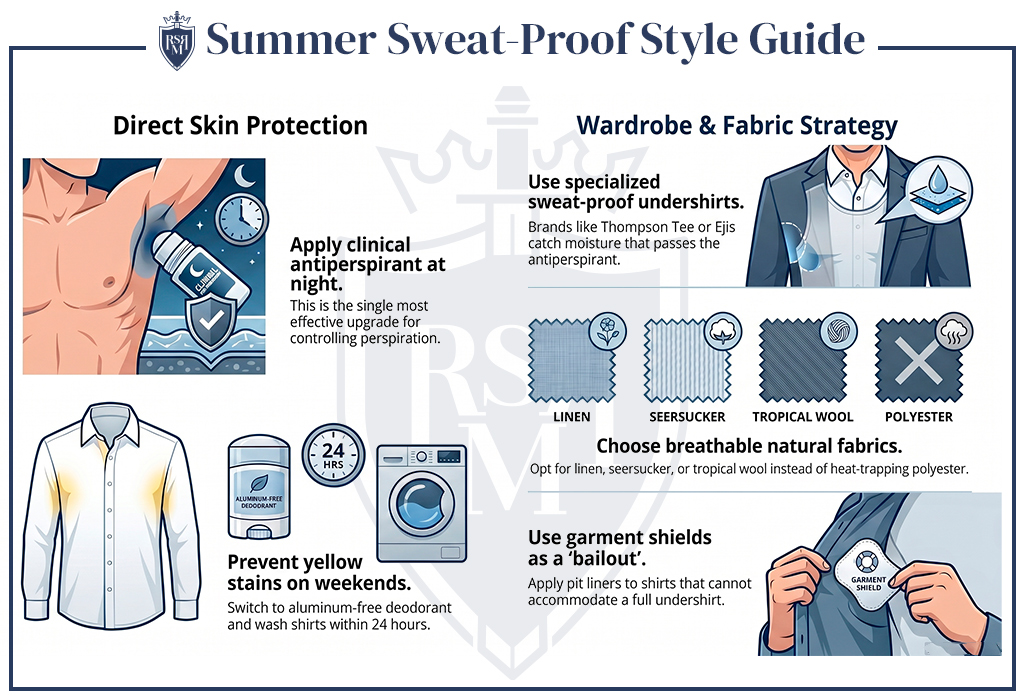
- Clinical-strength antiperspirant applied at night is the single biggest game-… sorry, the single biggest upgrade you can make. Nothing else comes close.
- Sweat-proof undershirts (Thompson Tee, Ejis) catch what gets past the antiperspirant.
- Fabric matters more than you think — linen, seersucker, and tropical-weight wool breathe; polyester traps heat.
- Garment shields and pit liners are the bailout option for shirts you can’t undershirt.
- For yellow stain prevention, switch to an aluminum-free deodorant on weekends and wash shirts within 24 hours.
Why Most Guys Get This Wrong
Here’s the thing most men don’t realize: by the time you put on antiperspirant in the morning, it’s already too late.
Antiperspirant works by forming little plugs in your sweat ducts. Those plugs need time to form, and they form best when your sweat glands are quiet — meaning at night, when you’re cool, dry, and not running for the train. Apply it at 7 a.m. on already-warm skin and you’re getting maybe 30% of its potential.
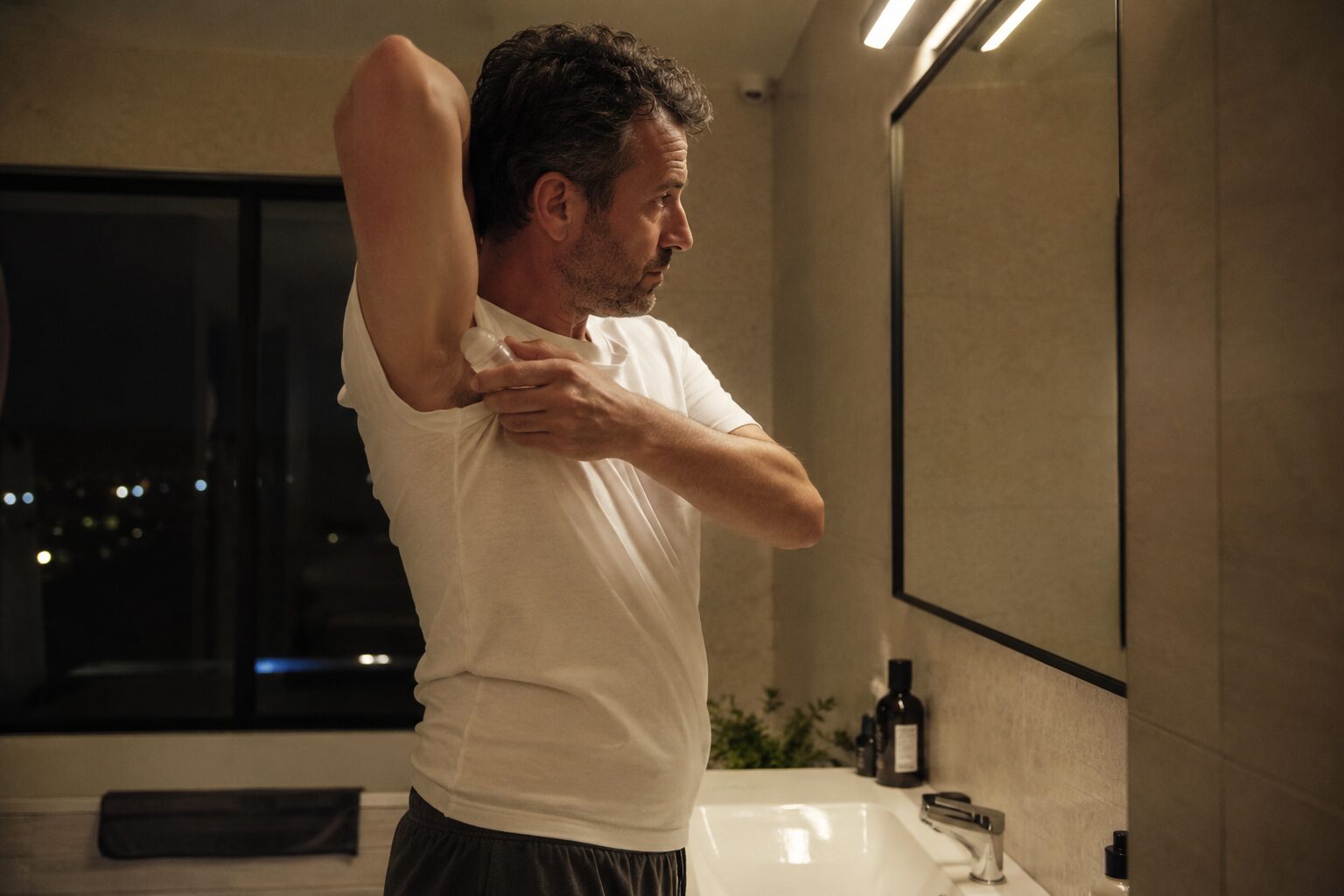
I learned this from a dermatologist client of mine back in my A Tailored Suit days. The guy was a heavy sweater, ruined two custom shirts in a month, and finally told me, “Antonio, the antiperspirant isn’t the problem. It’s when I’m using it.” He was right.
So before we even get to the nine products, internalize this: apply antiperspirant to dry skin before bed. Shower in the morning if you want — it won’t wash off. That alone will cut your sweat output by half for a lot of guys.
Now let’s talk gear.
Product #1 — Certain Dri Prescription Strength (The Heavy Hitter)
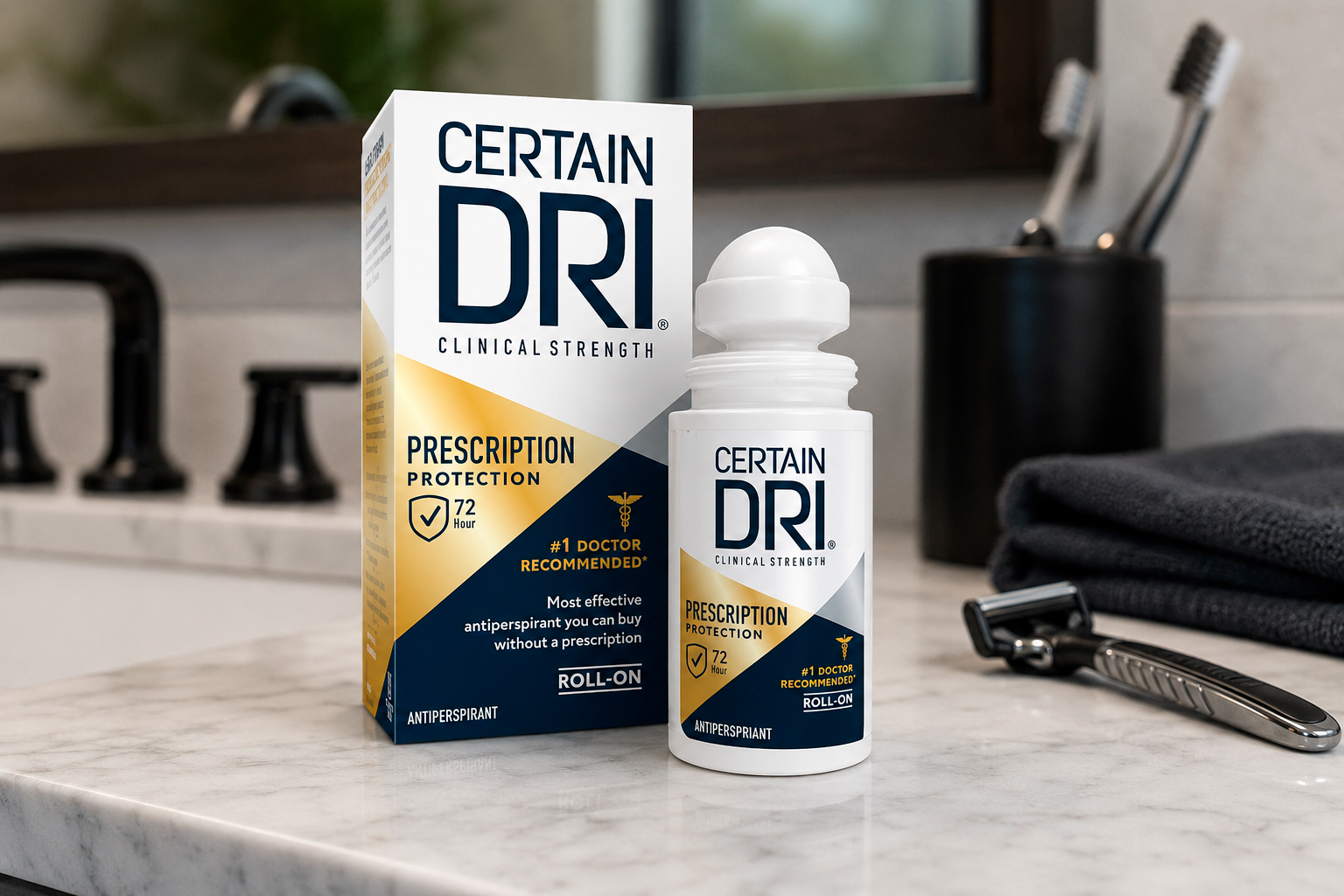
If you sweat a lot — like, change-your-shirt-at-lunch a lot — this is where you start. Certain Dri is 12% aluminum chloride, which is the same active ingredient dermatologists prescribe. You can buy it at any drugstore for about eight bucks.
A word of warning. It can sting and itch the first week, especially if you apply it to freshly-shaved or damp skin. Start with two nights a week, work up to every other night, and most guys can drop down to twice a week as maintenance.
Who it’s for: Heavy sweaters, guys in client-facing roles, anyone who’s tried regular antiperspirant and watched it fail.
Who should skip: Guys with sensitive skin or eczema in the underarms.
Product #2 — Duradry 3-Step System (The Premium Option)
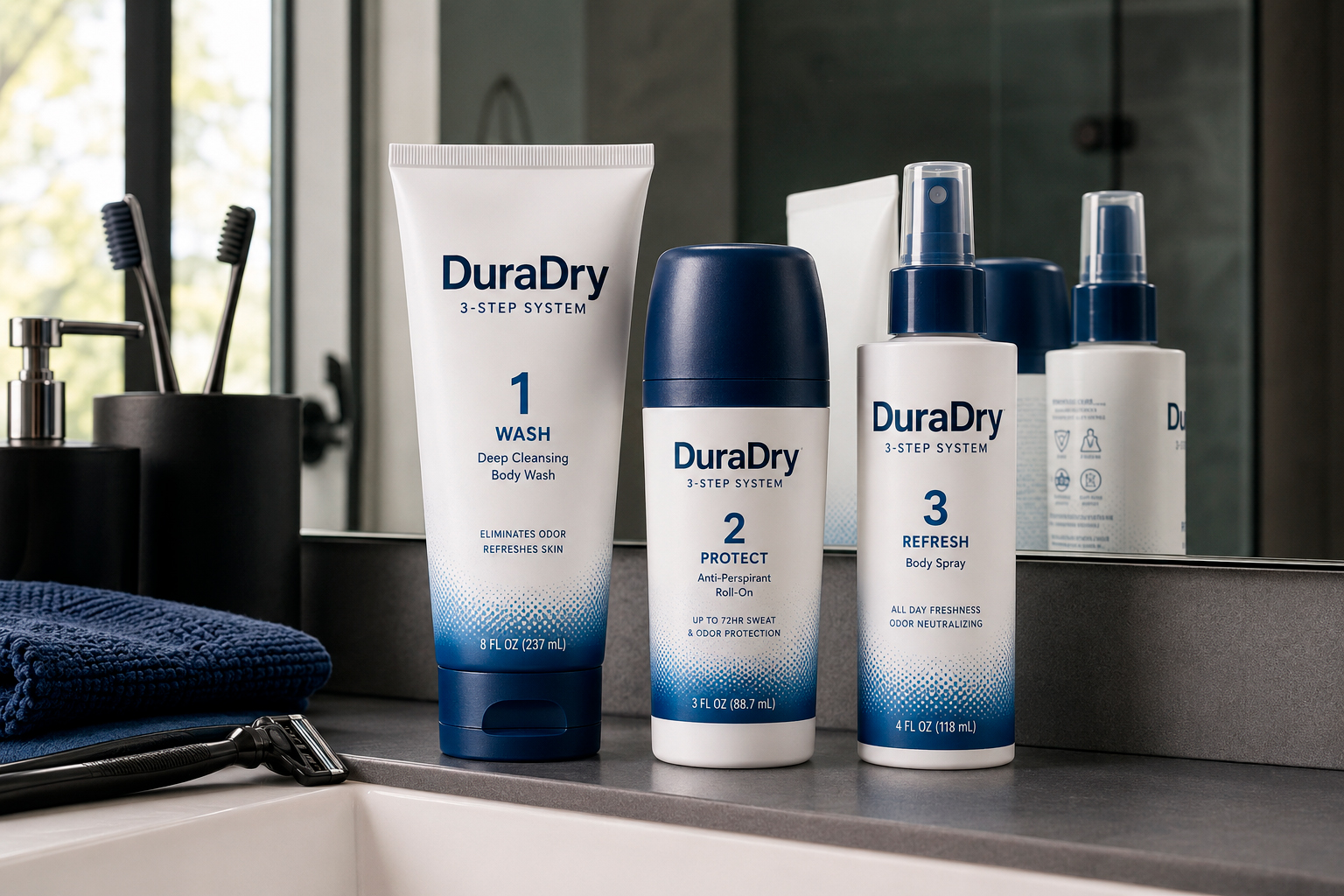
Duradry costs more — about $30 for the system — but it’s the only one I’ve seen that actually packages the science correctly. You get a nighttime antiperspirant, a morning deodorant, and a body wash that’s pH-balanced for the underarms.
The reason it works: the nighttime formula uses aluminum zirconium tetrachlorohydrex, which is gentler than Certain Dri’s aluminum chloride but still strong enough to shut down hyperhidrosis-level sweating. I had a reader email me last summer — Mike, a trial lawyer in Atlanta — who said this system was the only thing that got him through a two-week jury trial without changing shirts at lunch.
The catch: It’s a routine. Skip a couple nights and you’ll feel the difference.
Product #3 — The Thompson Tee (Sweat-Proof Undershirt)

This is where we move from chemistry to engineering. The Thompson Tee has a built-in sweat barrier in the armpits — a hydrophilic layer that absorbs sweat and a hydrophobic layer that keeps it from passing through to your dress shirt.
I’ve tested these in my truck on a 95-degree day hauling lumber. The shirt did its job. My dress shirt stayed dry. The undershirt itself? Soaked, sure, but that’s the whole point — it’s a sponge, not a barrier.
A few things to know:
- They run snug. Order true-to-size, not the size you wear in a Hanes V-neck.
- The V-neck disappears under a dress shirt. The crew-neck doesn’t.
- They cost about $30 a piece, but they last years if you don’t tumble dry them.
Who it’s for: Office guys, wedding guests, anyone wearing a tucked-in dress shirt in summer.
Who should skip: Guys who only wear polos or tees — you’ve got nothing to protect.
Product #4 — Ejis Sweatproof Undershirt (The Premium Alternative)
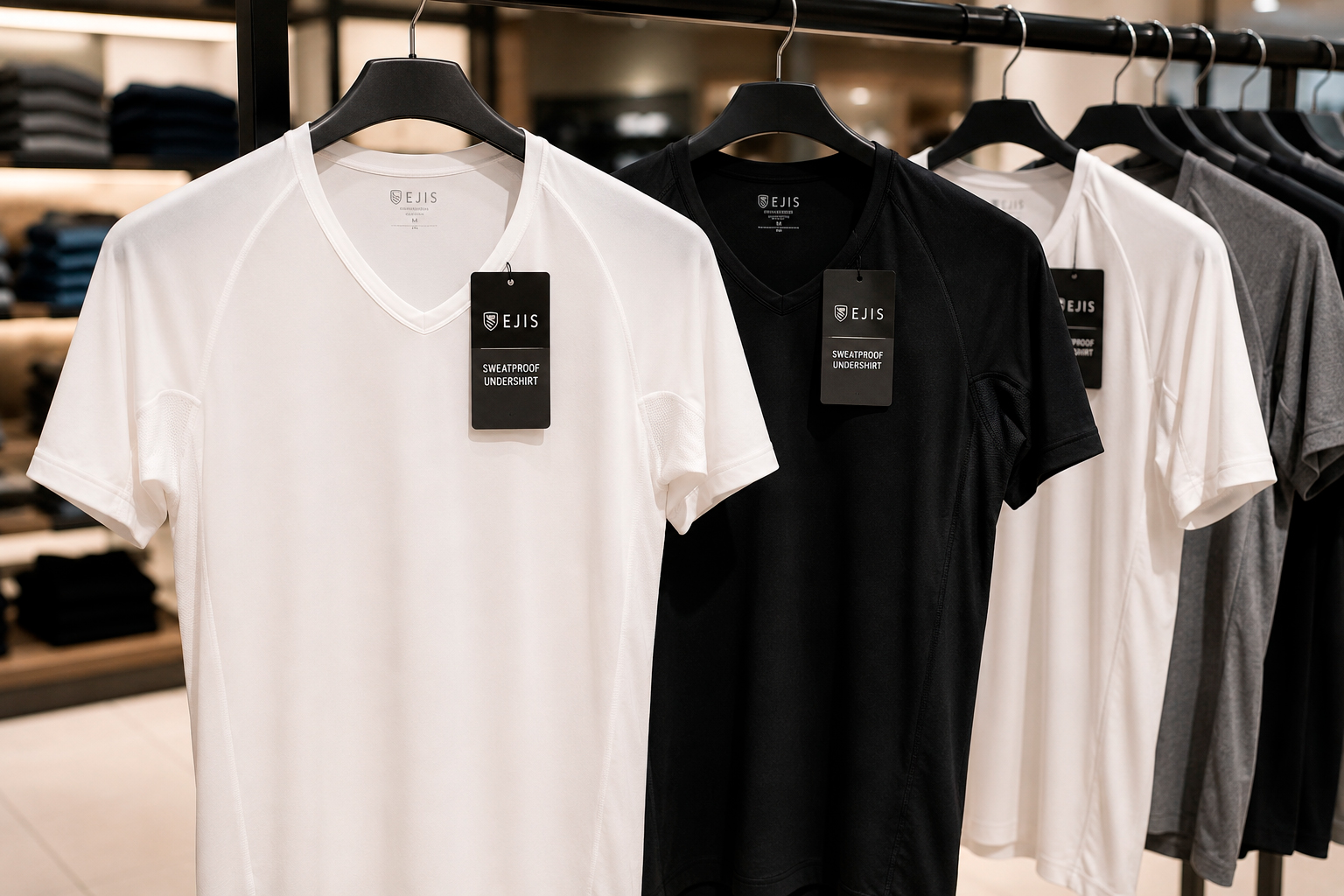
Ejis is the higher-end version of the Thompson Tee. The sweat barrier wraps further around the torso, the fabric is a softer modal blend, and they offer a deep V-neck that works under unbuttoned collars.
Honest comparison: Ejis is more comfortable. Thompson Tee is more bulletproof. If you’re wearing it under a thin white dress shirt where every wrinkle shows, go Ejis. If you’re going into a 10-hour trade show, go Thompson.
Both companies offer a money-back guarantee, which tells you they stand behind the product. I’d buy one of each, wear them a week, and see which fits your body better.
Product #5 — Garment Guard Disposable Underarm Shields
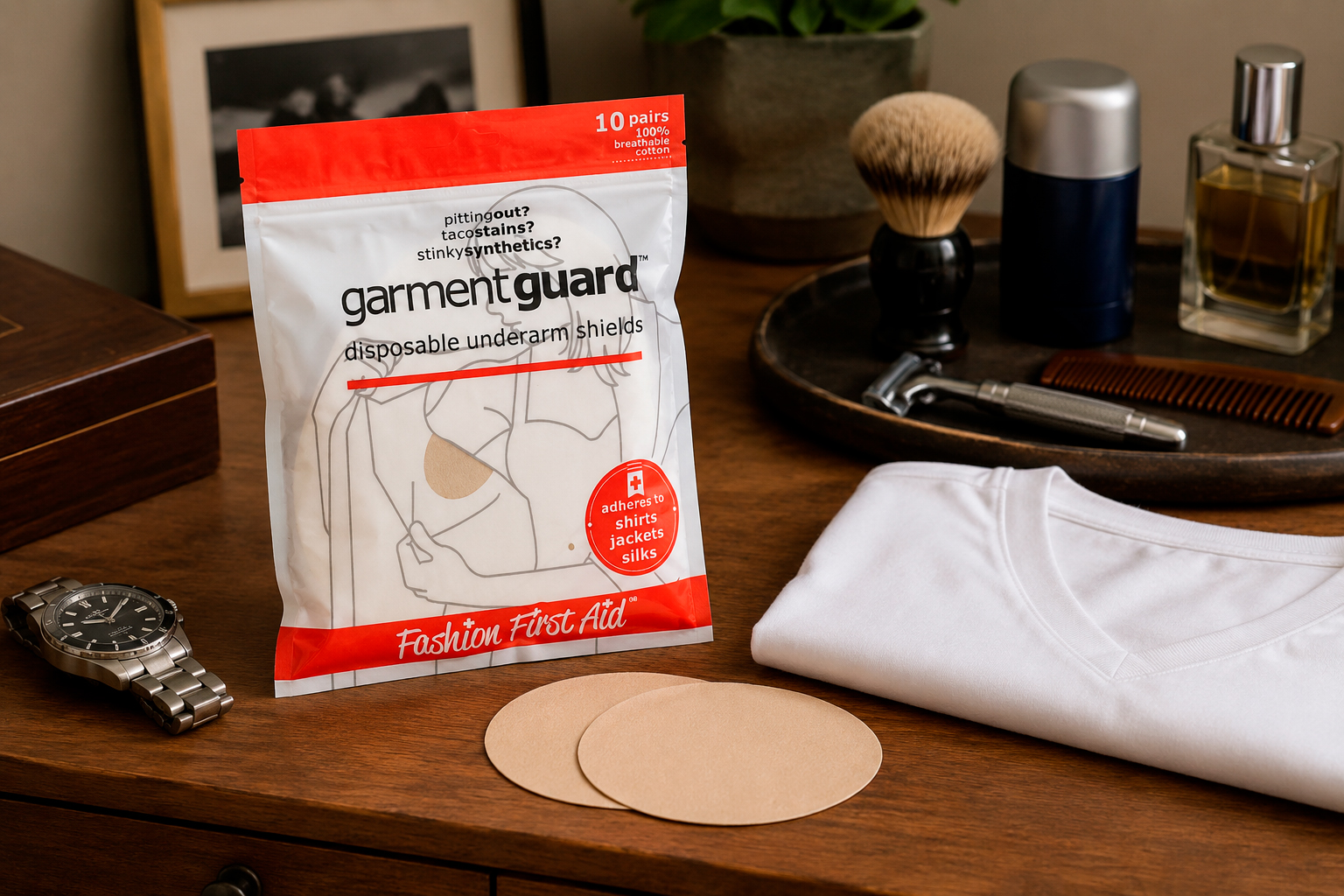
Sometimes you can’t wear an undershirt. Think: linen blazer with nothing under it, a thin summer dress shirt where the undershirt would show through, or a costume situation like a tux at a beach wedding.
That’s where stick-on underarm shields come in. Garment Guard is the brand I’ve used. They’re adhesive crescents that stick to the inside of your shirt at the armpit and absorb sweat before it hits the fabric.
A few honest notes:
- They work. Not as well as a Thompson Tee, but they work.
- They can shift around if you’re really moving.
- A box of 30 runs about $15. Cheap insurance.
I keep a pack in my truck and another in my travel bag. When I did a speaking gig in Phoenix two summers ago, these saved a charcoal blazer I had no business wearing in that heat.
Product #6 — Kleinert’s Reusable Cotton Pit Liners
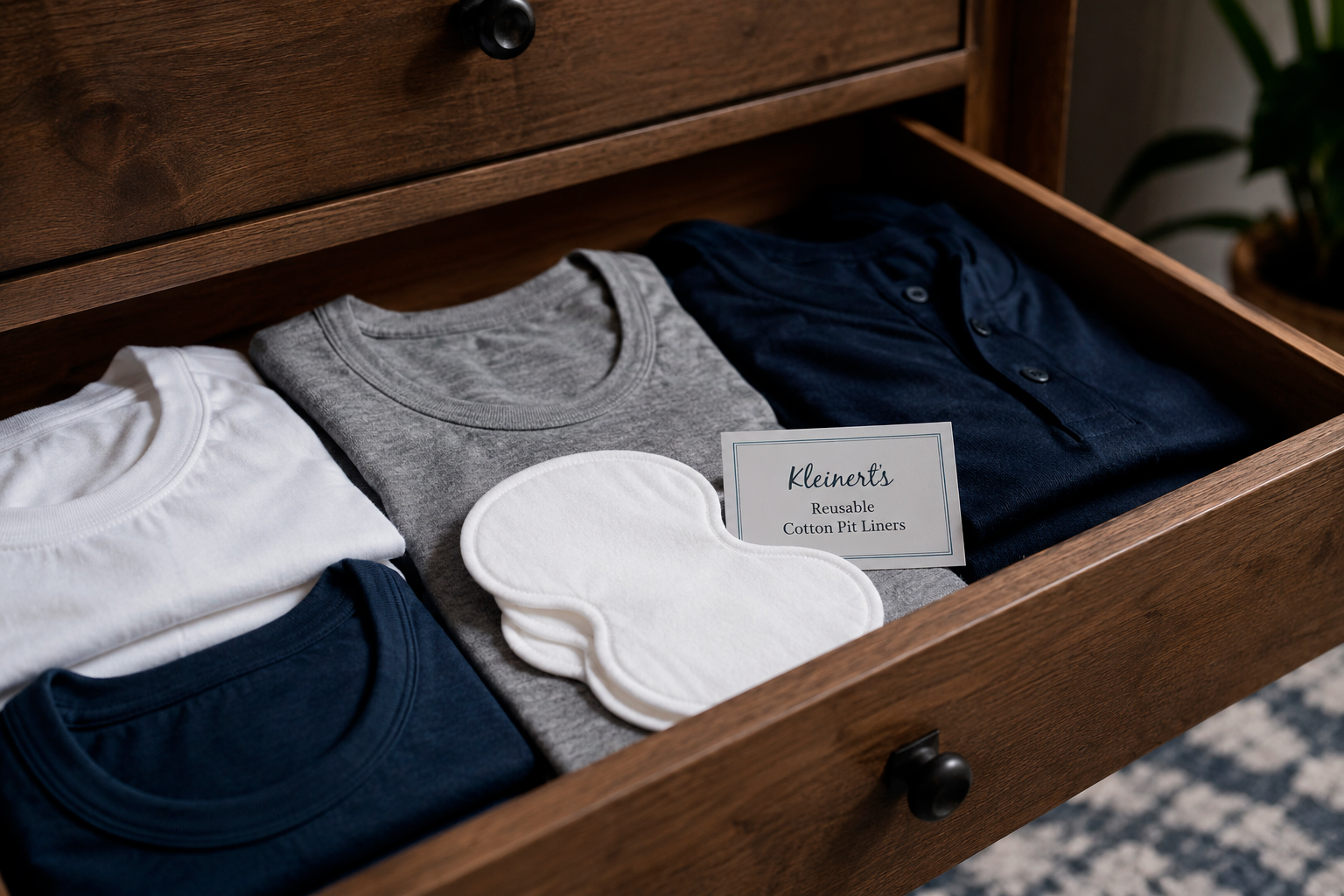
Same concept as Garment Guard, but reusable and made of cotton. They strap on with elastic loops that go over your shoulders.
I’ll be straight with you: these feel a little old-school. Like something your grandfather would have used. But that’s because your grandfather did use them, and they worked then for the same reason they work now — cotton is incredibly absorbent and dries out between wears.
Pro tip: Soak them in cold water with a half-cup of white vinegar before the first wear. It sets the cotton and makes them more absorbent.
Product #7 — Fabric Choice (Your Most Important “Product”)
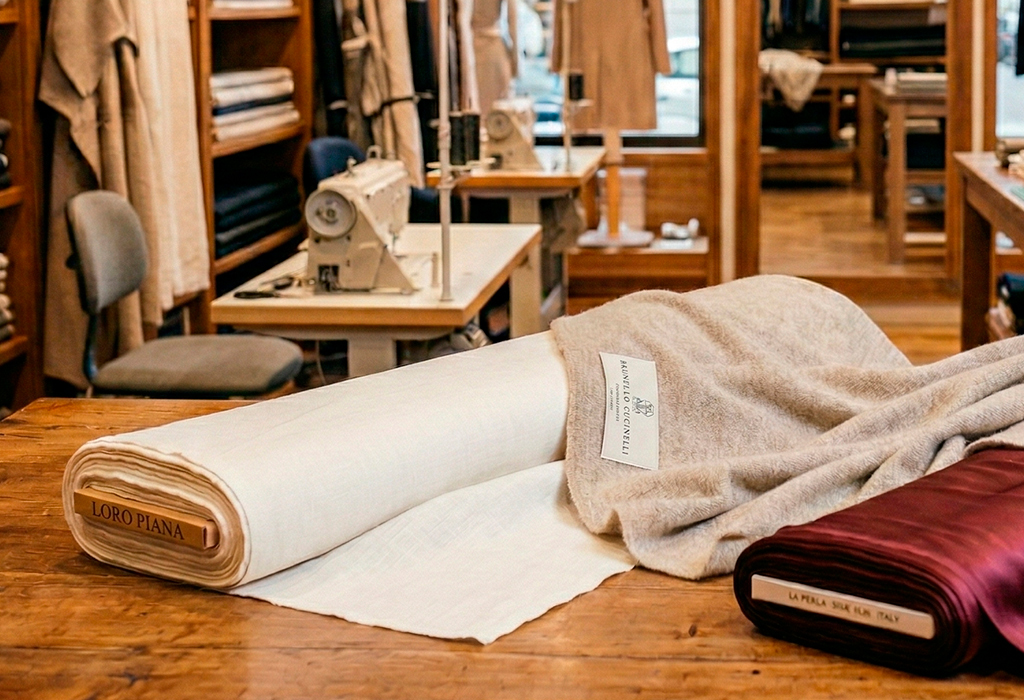
This isn’t a thing you buy in a box, but it might be the most important item on this list.
The fabric of your shirt and your suit determines whether sweat shows. A 100% cotton dress shirt in a poplin weave will breathe and dry. A polyester-blend “performance” dress shirt will trap heat against your body and turn every armpit damp patch into a glowing beacon.
Here’s my honest fabric ranking for summer:

- Linen — best breathability, but it wrinkles. Embrace the wrinkles.
- Seersucker — the puckered weave holds the fabric off your skin. Brilliant design.
- Tropical-weight wool (anything under 9oz) — for suits, this is the only answer.
- Cotton oxford — workhorse. Breathes well, doesn’t show sweat as easily as poplin.
- Cotton poplin — fine for AC offices, not great for outdoor heat.
- Polyester anything — avoid. I don’t care what the tag says about “moisture wicking.”
For dress shirts, Spier & Mackay and Charles Tyrwhitt both make solid cotton options at fair prices. For summer suits, I’d point you toward Spier & Mackay’s tropical wool or, if budget allows, a J.Press seersucker.
Product #8 — Color Strategy (Free, But Most Guys Miss It)
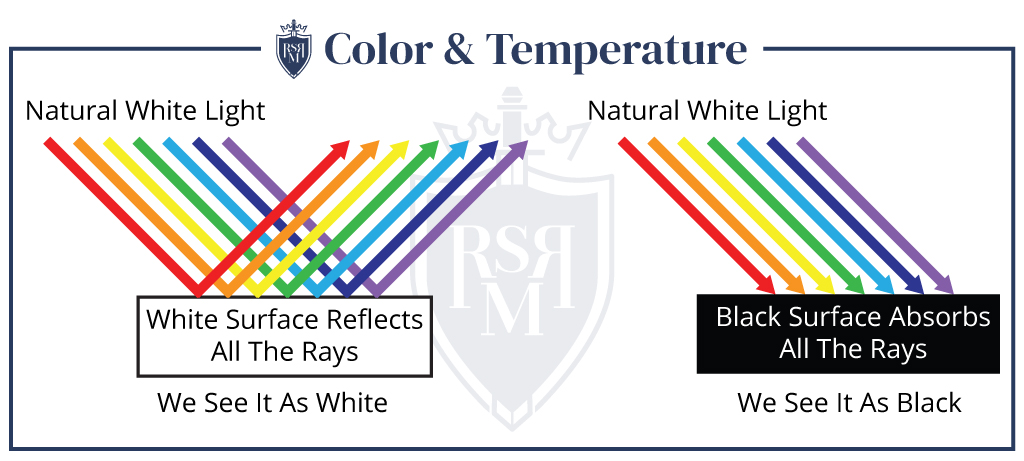
Light blue dress shirts are the worst possible color for hiding sweat. I know, I know — light blue is a classic. But the moment moisture hits it, that powder blue turns navy and broadcasts your sweat to the world.
So what colors actually hide sweat?
- White. Counterintuitive, but true. White doesn’t darken when wet because it has nowhere to go.
- Black. Same logic.
- Charcoal patterns — gingham, mini-checks, anything with visual texture breaks up the wet spot.
- Dark navy with a subtle pattern works too.
What to avoid: light blue, light gray, light pink, lavender, and any pastel solid. These are the colors that betray you.
When I was fitting clients for summer wedding season, I made it a rule — if the wedding is outdoor and after 3 p.m., we’re putting the guy in white, light tan, or a patterned shirt. Never a solid pastel.
Product #9 — Gold Bond Body Powder (The Underrated Finisher)
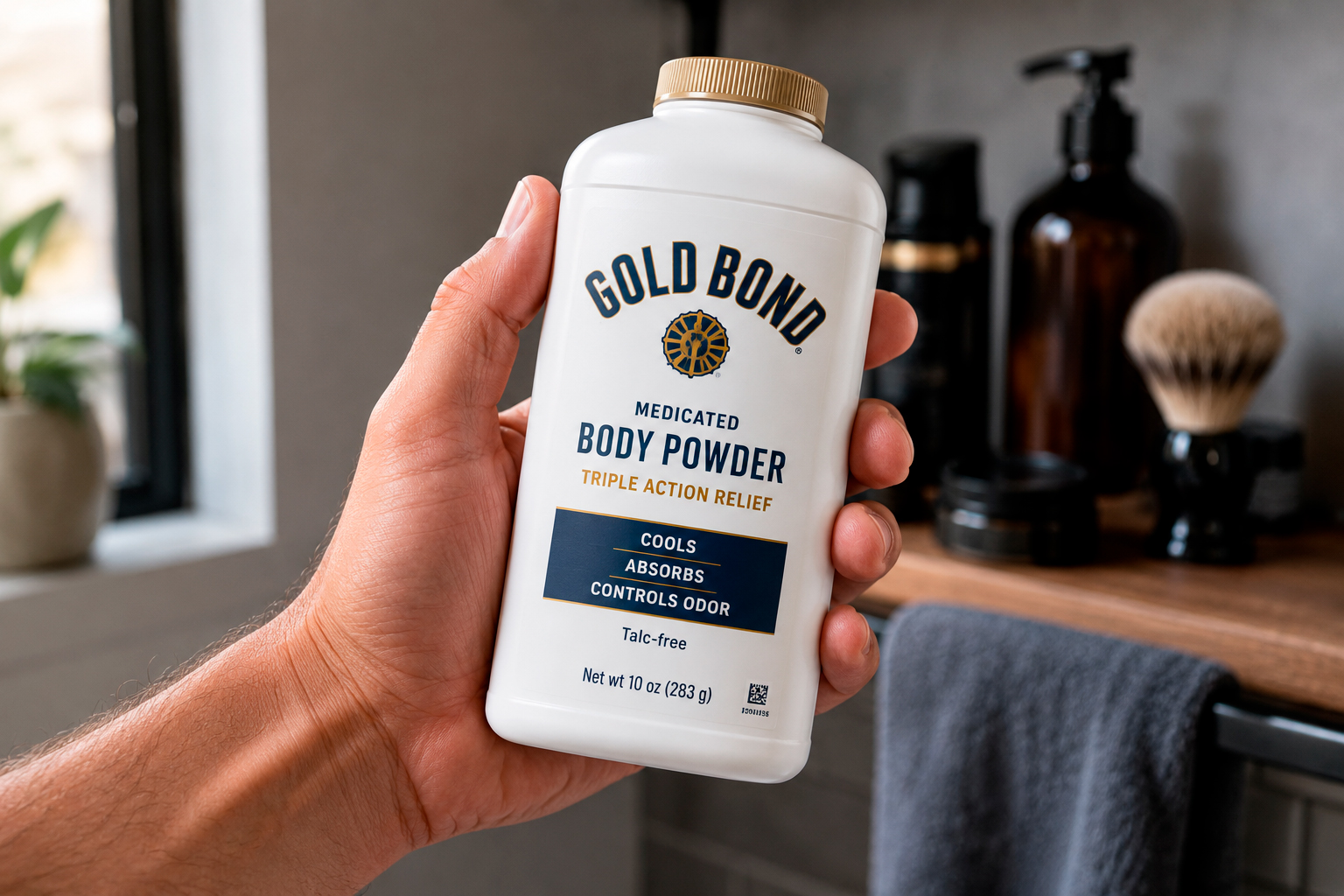
This is the one nobody talks about, and it might be my single favorite trick. After your morning shower, after your antiperspirant has set overnight, after you put on your undershirt — dust a little Gold Bond or plain cornstarch baby powder into the armpit of the undershirt.
It does three things:
- Absorbs residual moisture before it builds up.
- Cuts down on friction, which reduces the sweat response in the first place.
- Keeps you smelling neutral all day.
Cost: about $5. Effect: surprisingly noticeable. My father-in-law, who’s lived through 70-plus summers, swears by this. He used to think I’m soft for using antiperspirant at all (his words, translated through my wife with some editorial commentary).
How To Layer All This (The System That Actually Works)
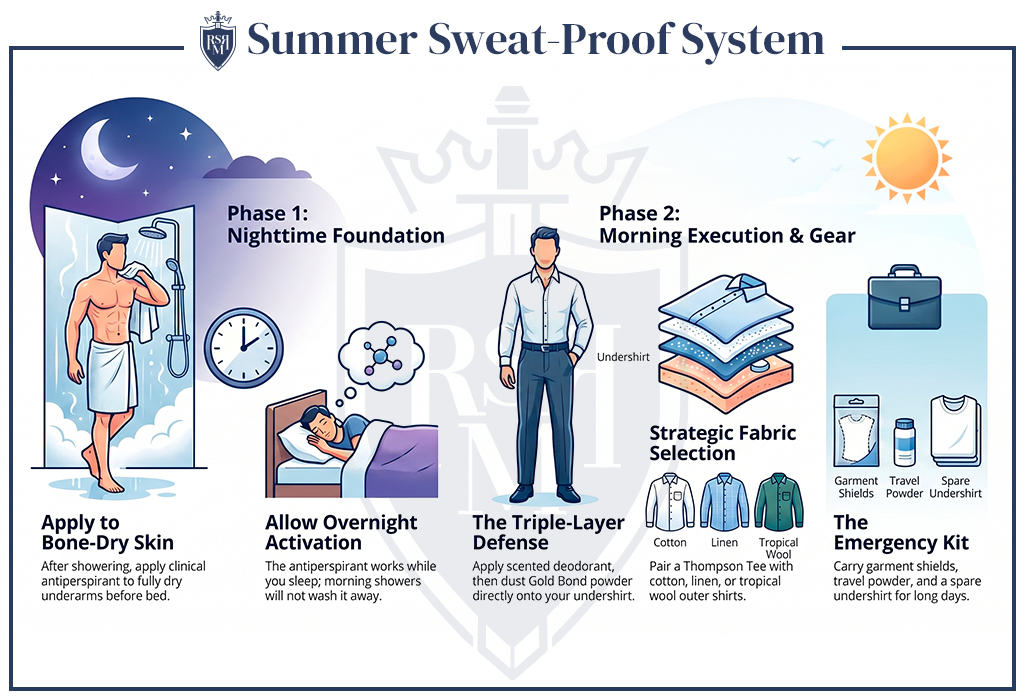
Owning the products is half the battle. Stacking them right is the other half. Here’s the system I run for a long, hot summer day:
The night before:
- Shower. Towel off completely dry.
- Apply Certain Dri or Duradry nighttime to fully dry underarms.
- Go to bed.
Morning of:
- Shower (yes, you can — the antiperspirant has already done its work).
- Apply a regular deodorant for scent only — Old Spice, Native, whatever you like.
- Dust Gold Bond into the armpits of your Thompson Tee.
- Put on the undershirt.
- Put on a cotton, linen, or tropical wool dress shirt.
In your bag:
- A pack of Garment Guard shields for emergencies.
- A spare undershirt if you’ve got a long day.
- A travel-size powder.
That’s it. Not complicated. But almost nobody actually does all five steps, which is why almost every guy you see in a summer suit is suffering.
Common Mistakes Guys Make
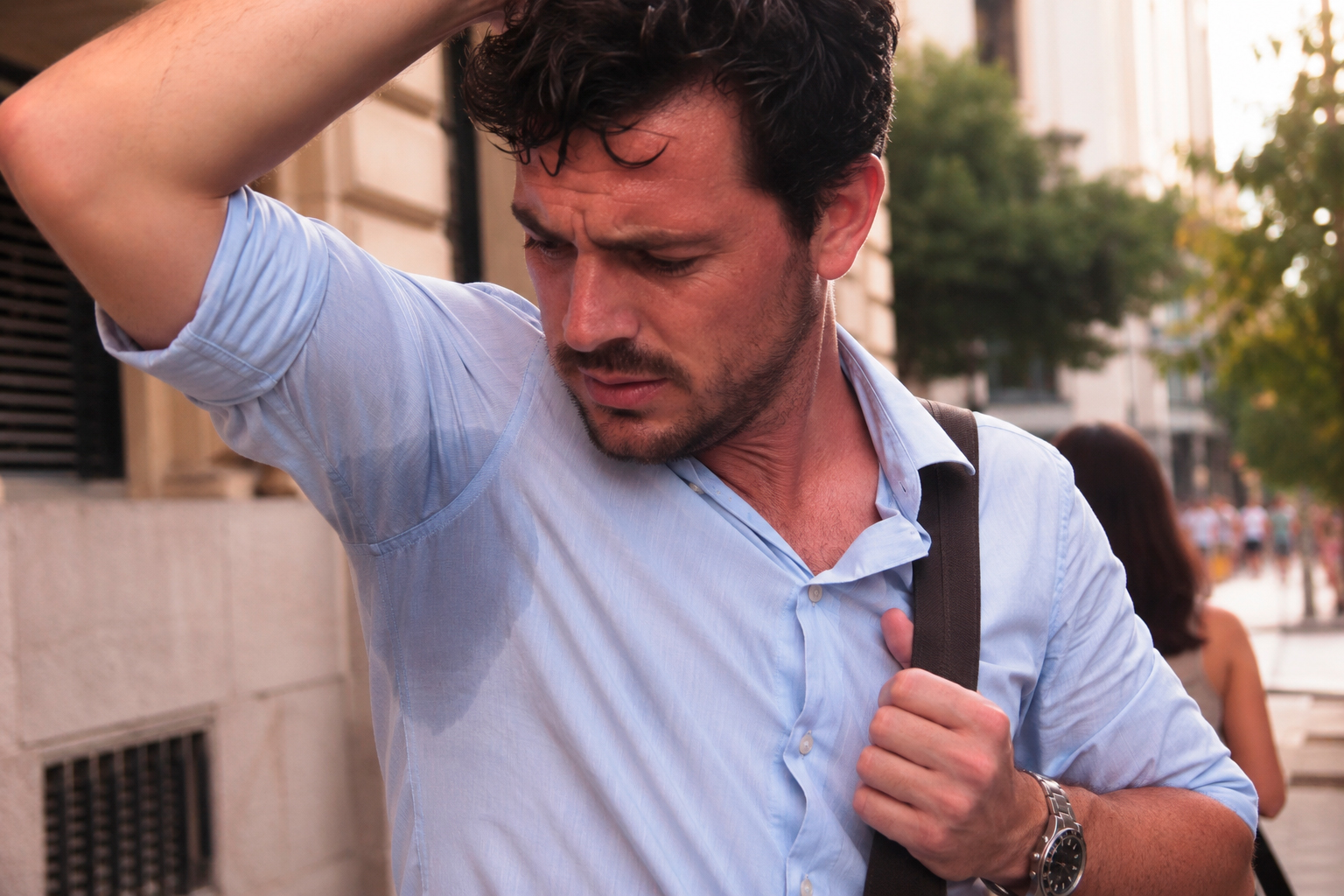
After fielding thousands of reader emails on this topic, here are the mistakes I see over and over.
Applying antiperspirant in the morning to wet skin
We covered this, but it bears repeating because it’s the #1 mistake. Wet skin neutralizes the active ingredient. Apply at night, dry skin only.
Wearing a “moisture-wicking” undershirt instead of a sweat-proof one
These are not the same thing. Moisture-wicking pulls sweat through the fabric — straight onto your dress shirt. Sweat-proof traps it. Read the labels.
Letting deodorant build up on your shirts
That yellow staining on the armpits of your white shirts? That’s not sweat. That’s the reaction between aluminum-based antiperspirant residue and your sweat over time. Wash shirts within 24-48 hours of wearing them. Pre-treat with OxiClean or a 50/50 mix of hydrogen peroxide and dish soap.
Buying performance dress shirts
Those polyester “performance” dress shirts marketed to traveling salesmen? They’re a trap. They don’t breathe, they hold odor, and the second sweat hits them they look damp in a way cotton never does.
Ignoring the suit jacket
Your jacket matters too. A fully canvassed jacket breathes. A fused (glued) jacket traps heat against your back and chest. If you’re shopping summer suits, pay the extra for half-canvas at minimum.
Skipping the undershirt because “it’s hot”
I hear this constantly. “Antonio, it’s 90 degrees, why would I add a layer?” Because the undershirt is your sweat barrier and your insulator against the dress shirt sticking to your skin. You’ll actually feel cooler wearing one. Trust me on this — try it for a week.
My Bottom-Line Recommendations
If you’re starting from zero, here’s exactly what I’d buy, in order of importance:
- Certain Dri ($8) — apply tonight. You’ll see results by Wednesday.
- Two Thompson Tees in your size ($60) — V-neck for under dress shirts.
- Gold Bond Body Powder ($5) — keep one at home and one in your bag.
- A pack of Garment Guard shields ($15) — for emergencies.
- Replace your worst summer dress shirt with a cotton oxford or linen from Spier & Mackay or Charles Tyrwhitt ($50-90).
Total damage: under $200, and you’ll have a system that lasts years.
If money is no object, swap the Certain Dri for Duradry’s full system and the Thompson Tees for Ejis. You’re spending maybe $300 total. For something you’ll use every day for the next decade? That’s nothing.
A Real Story From The Field

A few summers back, I had a reader — call him Dan — who emailed me before his daughter’s outdoor July wedding. He was the father of the bride. He’d already bought a beautiful mid-gray suit and was panicking because every photo he’d ever seen of himself in summer showed sweat rings down to his belt.
We built him a plan. Certain Dri starting two weeks before the wedding. A Thompson Tee under his dress shirt. We swapped his solid light blue dress shirt for a white cotton oxford. Gold Bond in the morning. Two backup shields in his jacket pocket.
He sent me the wedding photos. Dry as a bone. The man walked his daughter down the aisle in 88-degree Carolina heat and looked like he’d just stepped out of an AC’d town car. His exact words: “I felt like I had a secret.”
That’s what good gear does. It gives you a secret.
FAQ
Will antiperspirant really last all day if I apply it at night?
Yes. The aluminum compounds form mechanical plugs in your sweat ducts that last 24-48 hours regardless of when you shower. The morning shower doesn’t wash them out. This is well-documented dermatology, not a marketing claim.
Are aluminum-based antiperspirants safe?
The scares you’ve read about aluminum and breast cancer or Alzheimer’s have been studied to death and didn’t pan out. The American Cancer Society and FDA both consider them safe. That said, if you want to skip them on weekends or rest days, switch to an aluminum-free deodorant like Native or Schmidt’s. Your underarms get a break and you still smell fine.
Can I wear a Thompson Tee in 95-degree weather without overheating?
You’ll actually feel cooler. The undershirt absorbs sweat and lets it evaporate, which is your body’s natural cooling system. Going shirtless under a dress shirt traps sweat against your skin and feels muggier. Try it for a week and you’ll never go back.
How do I get yellow stains out of my existing dress shirts?
Mix equal parts hydrogen peroxide, baking soda, and dish soap into a paste. Scrub it into the stained area with a soft brush. Let it sit for an hour. Wash in cold water. Repeat for stubborn stains. For prevention going forward, switch to an aluminum-free deodorant or let your antiperspirant fully dry before getting dressed.
What’s the single best thing I can do if I only buy one product?
A bottle of Certain Dri, applied at night, every other night, for two weeks. Costs eight dollars. Will change your summer. If you only do one thing on this list, do that.
Closing
Look — sweat is not a character flaw. It’s a thermoregulation system that worked great for our ancestors hunting on the savanna and works less great when you’re trying to close a deal in a glass conference room in July.
The good news is the problem is completely solvable. Eight bucks worth of Certain Dri, thirty bucks worth of undershirt, and a smarter approach to fabric. That’s it. Most of the guys you see sweating through their shirts in August have never been told this stuff exists.
Now you have. Use it. And the next time some buddy at a summer barbecue asks how you stay so dry while he’s wringing out his shirt, you can either share the system or just smile and say it’s a secret.
For more on dressing for hot weather, check out my guide to summer fabrics and the breakdown on building a hot-weather wardrobe over at the site.