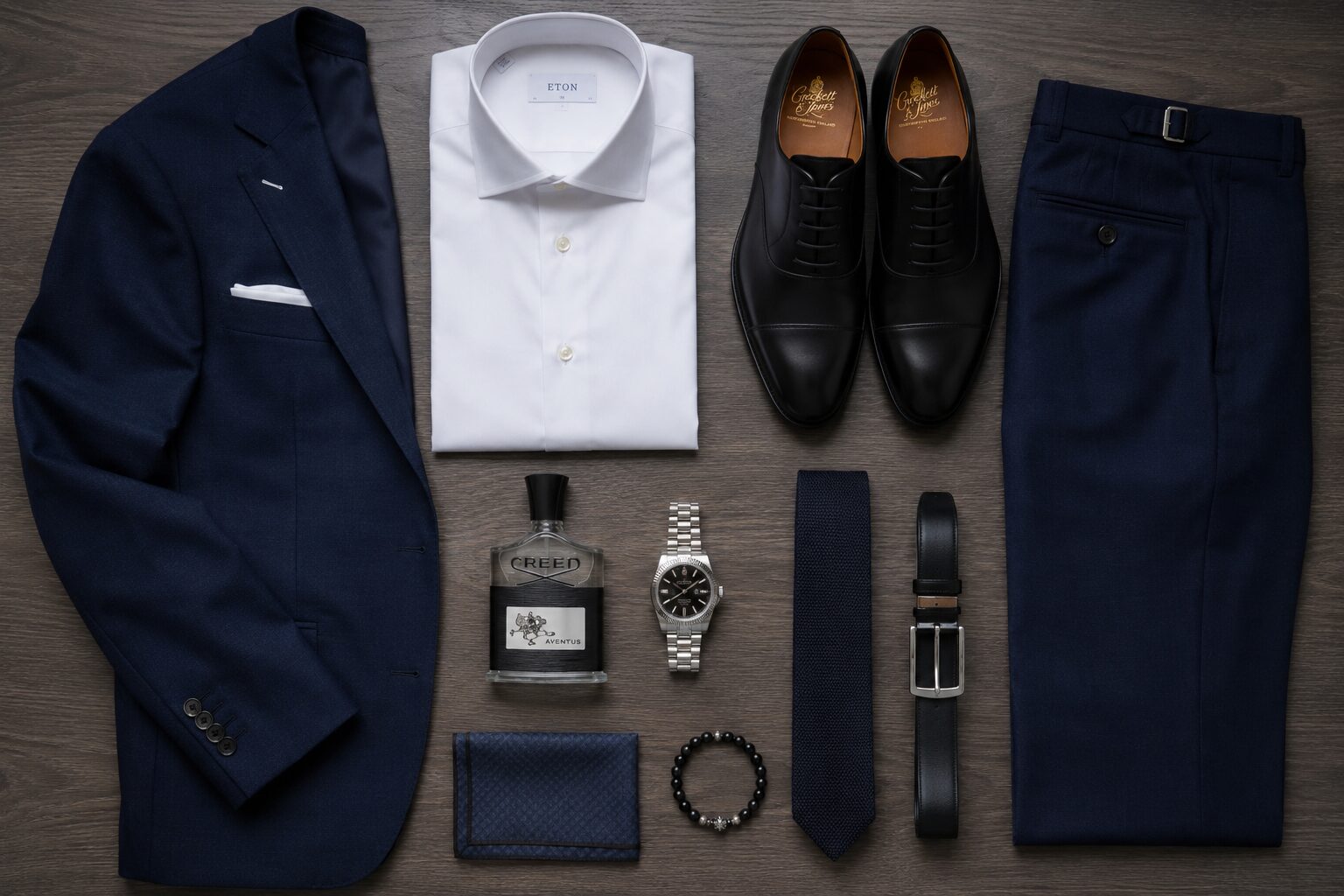
What accessories should a man wear with a navy suit?
A navy suit pairs best with mid-brown leather shoes, a matching brown leather belt, a burgundy or navy tie, a white or pale blue shirt, a brown-strap or steel dress watch, silver cufflinks for French-cuff shirts, and a white linen or patterned silk pocket square. Warm-toned accessories contrast the cool navy and pull the outfit together.
Looking good in men’s formalwear isn’t as easy as throwing on an old jacket and a pair of pants. Bespoke or off-the-rack — the same rules apply. Get the accessories right and you become the best-looking guy in the room. Get them wrong and people notice.
This guide breaks down the accessory rules I learned fitting bespoke clients for 20 years. Shirts, ties, shoes, watches, cufflinks, pocket squares, belts, tie bars, and socks — what works with a navy suit, what fights it, and what to spend.
What’s Covered
- Why The Navy Suit Punishes Lazy Pairings
- Best Shirts To Wear With A Navy Suit
- 5 Tie Styles That Work With A Navy Suit
- Pairing Shoes With A Navy Suit: 4 Styles That Work
- 3 Watch Styles That Match A Navy Suit
- Cufflinks With A Navy Suit: When And How To Wear Them
- Pocket Squares With A Navy Suit
- Belts With A Navy Suit
- Tie Bars With A Navy Suit
- Socks With A Navy Suit
- The One Anchor That Solves Half The Outfit
- FAQ: Common Navy Suit Accessory Questions
Why The Navy Suit Punishes Lazy Pairings
Most men buy a navy suit because they hear it’s “the most versatile.” That’s half true. Navy works with more shirt, shoe, tie, and accessory combinations than any other suit color — but that flexibility cuts both ways. A bad pairing on charcoal looks dull; the same pairing on navy looks loud.
When I was fitting bespoke clients, the navy suit was the one where guys made their most expensive mistakes. A $1,200 navy two-piece paired with cheap black square-toe shoes. Perfect drape, killed by a polyester sheen tie. The math is brutal — you can sink $800 into the suit and $60 into the shirt and tie, and the $60 is what the room sees.

Navy is a stage. Whatever you put on it gets a spotlight. Here’s what nobody told you — the reason navy looks so sharp is the same reason it exposes mistakes. It sits on the cool side of the color wheel, so warm contrasts (mid-brown shoes, burgundy ties, gold watches) light up against it. Cheap fabric and bad fit get the same spotlight.
Get one piece wrong and the whole outfit reads off-balance. The pairings below aren’t fussy preferences — they’re how you avoid spending $1,200 on a suit and looking like you spent $200.
Best Shirts To Wear With A Navy Suit
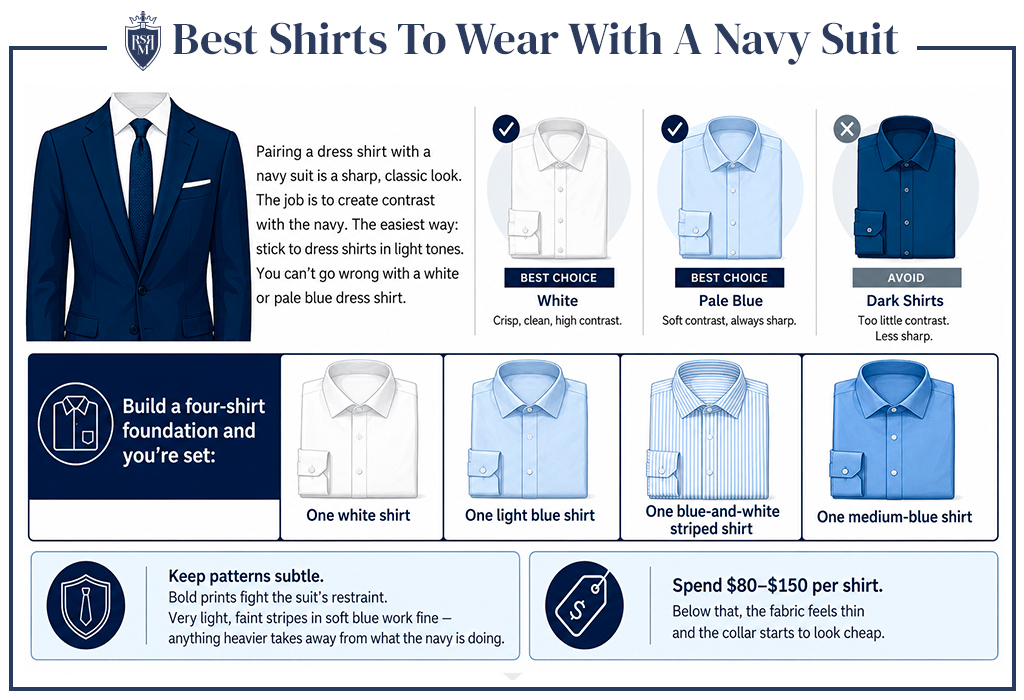
Pairing a dress shirt with a navy suit is a sharp, classic look. The job is to create contrast with the navy. The easiest way: stick to dress shirts in light tones. You can’t go wrong with a white or pale blue dress shirt.
Build a four-shirt foundation and you’re set:
- One white shirt
- One light blue shirt
- One blue-and-white striped shirt
- One medium-blue shirt
Keep patterns subtle. Bold prints fight the suit’s restraint. Very light, faint stripes in soft blue work fine — anything heavier takes away from what the navy is doing.
Spend $80–$150 per shirt. Below that, the fabric feels thin and the collar collapses by the second wear. Above $200, you’re paying for branding, not better cotton.
5 Tie Styles That Work With A Navy Suit
1. Solid Neckties
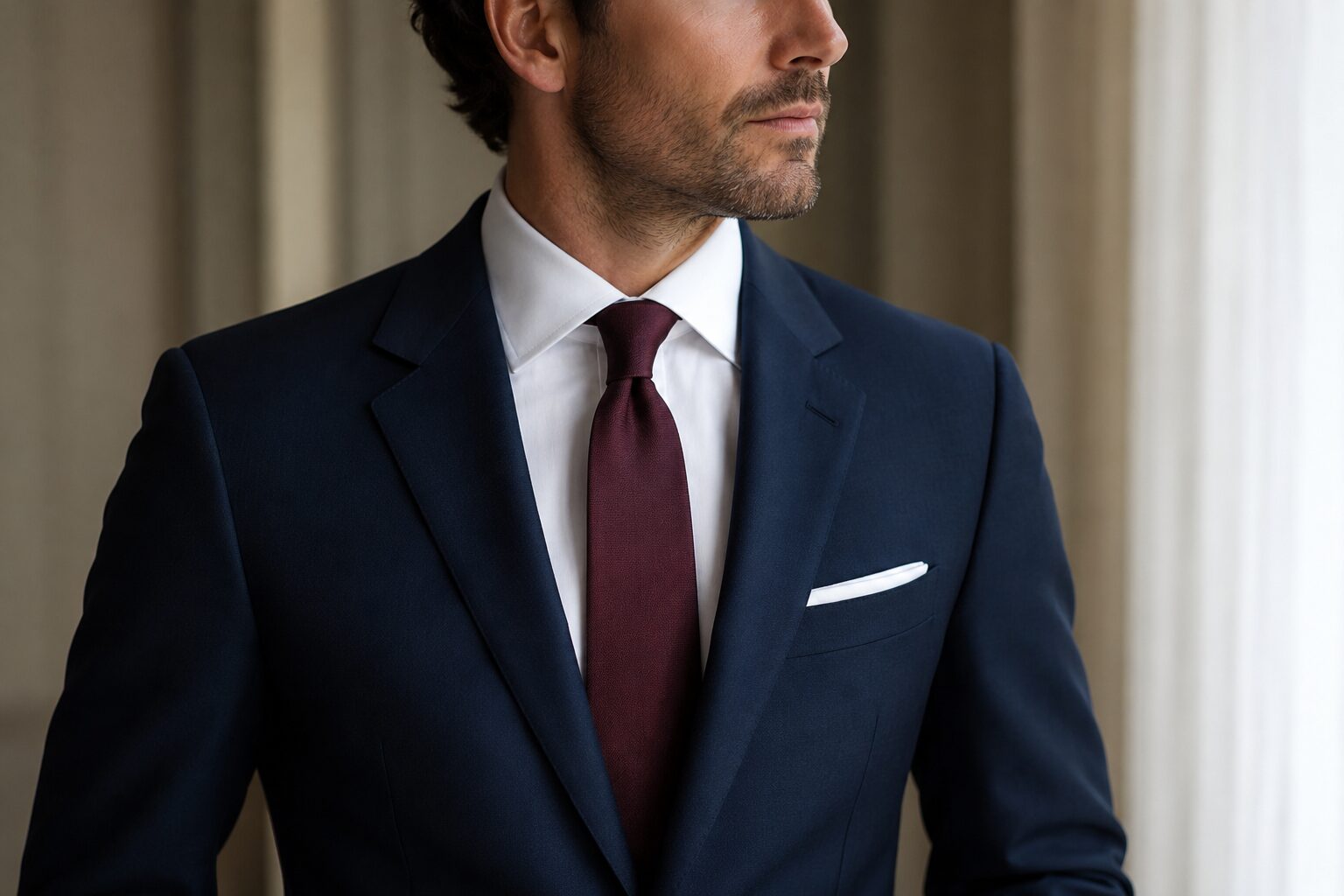
This is the first tie a man should buy. Dark blue is the safest. Dark greens, burgundies, and for some complexions, deep purples also work.
Steer clear of bright colors and shiny surfaces. You want something smooth and matte — not a polyester sheen that catches every overhead light. For most men, sticking to colors roughly opposite navy on the color wheel balances the outfit. Dark reds and shades of blue lead. If you’re wearing a light blue shirt, a darker blue tie also works.
2. Polka Dot Ties

Dotted ties are not what most guys reach for — and that’s the point. Polka dots don’t show up anywhere else in menswear, so they can’t clash with your shirt or suit.
Pick something with a muted background and fine, wide-spaced dots. Not the right choice for a top-formality board meeting, but excellent for daily office wear.
3. Paisley Ties
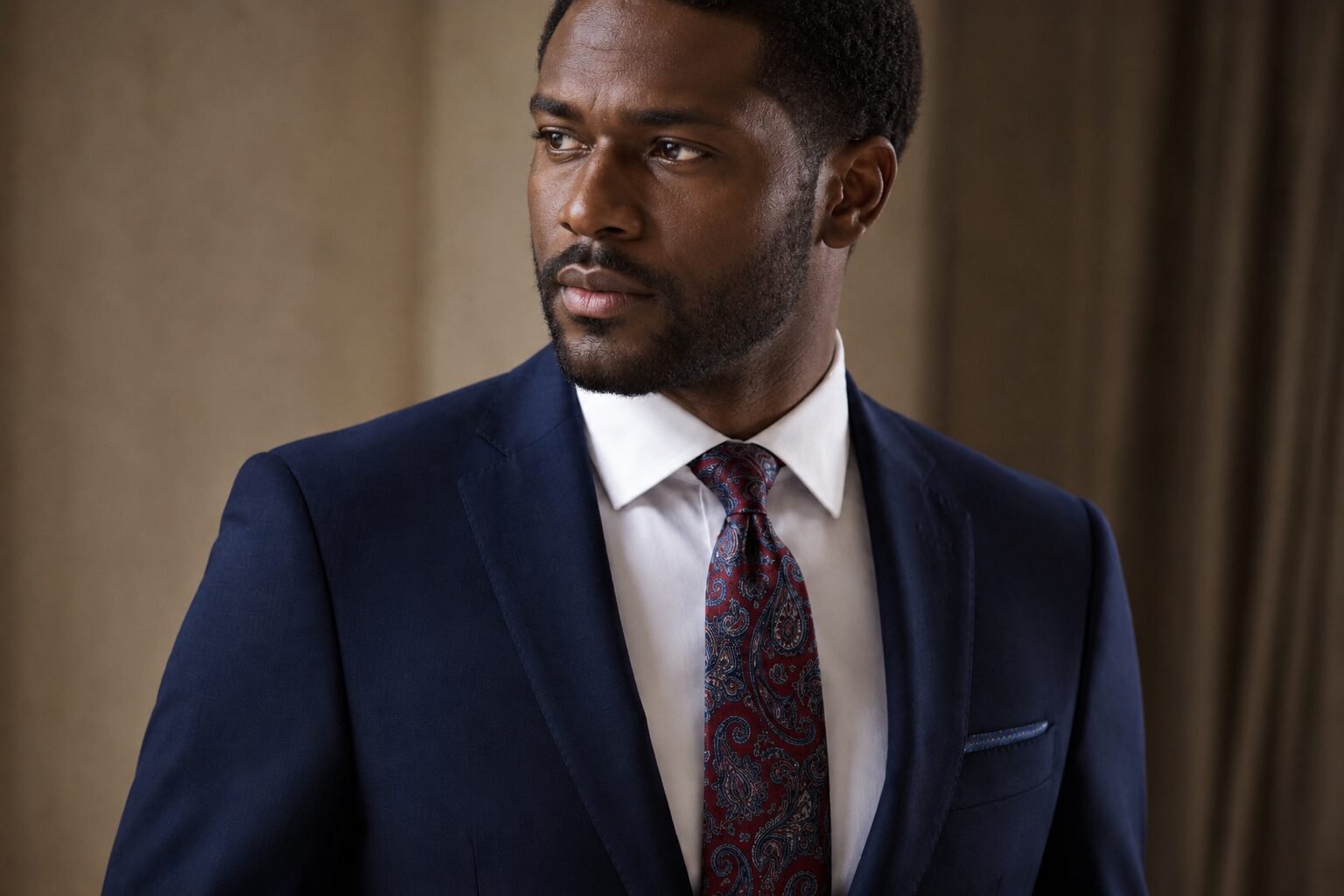
Paisley is a curved, repeating design with Middle Eastern roots — abstract figures bordered against a solid background, sometimes broken up by smaller floral motifs.
This skews casual but works for the same reason polka dots do: paisley doesn’t echo any design that’s likely to be in your shirt or suit, so the pattern doesn’t fight anything else in the outfit.
4. Knit Ties
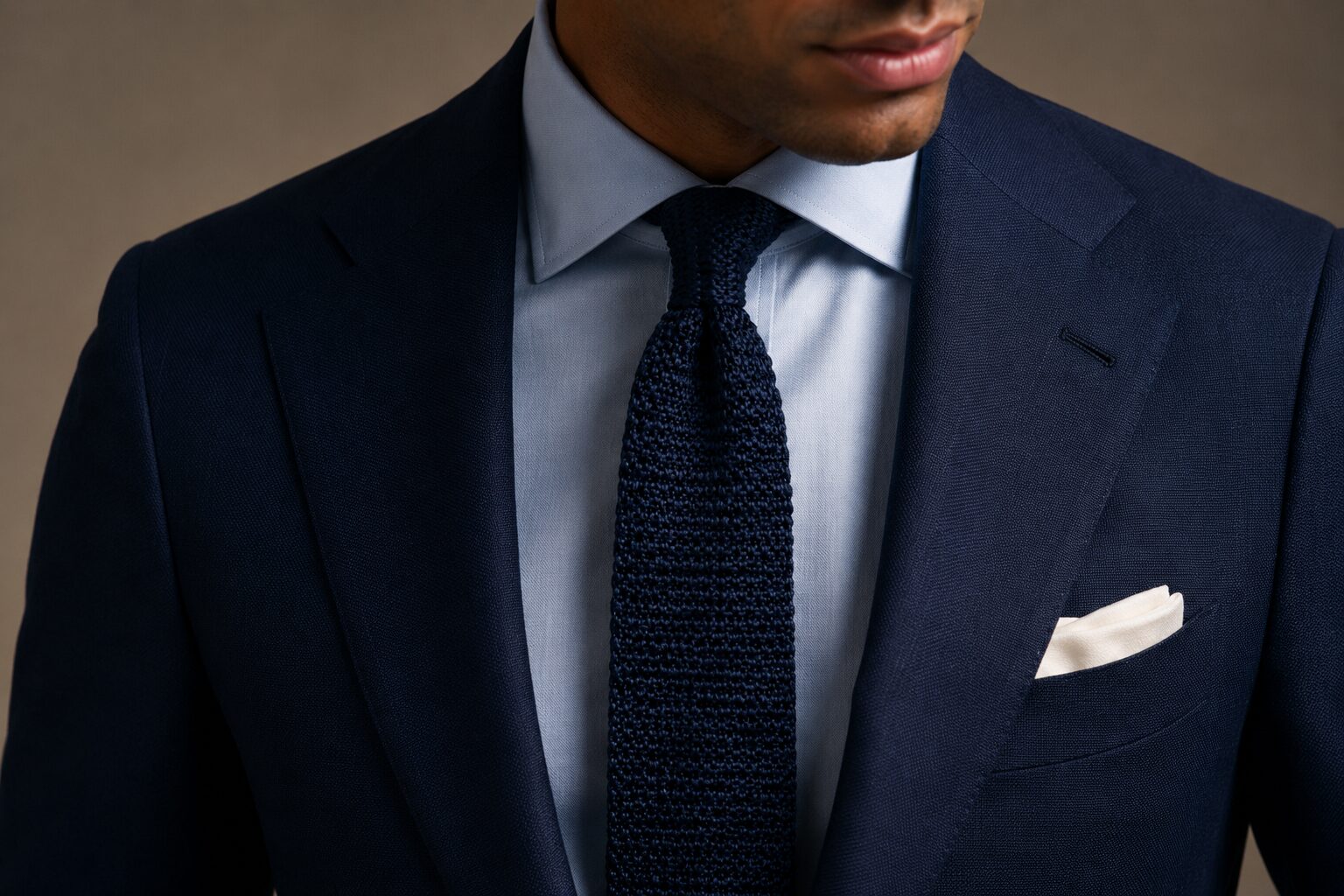
Knit ties come back into fashion often enough to keep a few on hand. They’re bulkier than woven versions, with a visibly bumpy texture and sometimes visible gaps in the fabric.
The thickness makes for a nice, hefty knot — great for bigger guys and broader faces, tough to pull off if you’re skinny. Wear them when you want a vintage feel or when an outfit needs texture to break up a flat look.
5. Striped Ties (University & Regimental)

Colored ties with diagonal stripes — often in the colors of a school or military regiment. A quirk worth knowing: university ties slant downward from left to right. Regimental ties slant from right to left. To most eyes they look identical, but British military men recognize the regimental color schemes immediately.
Ties designed to look regimental are fine for business wear. Actual ties from official military regiments — don’t wear one unless you served in that regiment. Few people will notice, but the people who do will care a lot.
Read: How To Tie A Tie – Tying 18 Different Necktie Knots
Pairing Shoes With A Navy Suit: 4 Styles That Work
When wearing a navy suit, the shoes carry more weight than most guys give them credit for. They sit at the bottom of the line of sight, so they’re what your eye lands on after taking in the suit.
Shades of brown work best with navy. Black has a stark contrast against navy that reads off if you don’t pull it off carefully. For most guys, brown is the safer bet — it warms up the cool navy and balances the rest of the outfit.
Four shoe styles deliver:
1. Brogue Derbies

Think of the derby as a “casual dress shoe.” A brogue Derby works at the office, at a wedding, and on the weekend — it covers more navy-suit ground than any other style.
2. Monk Straps
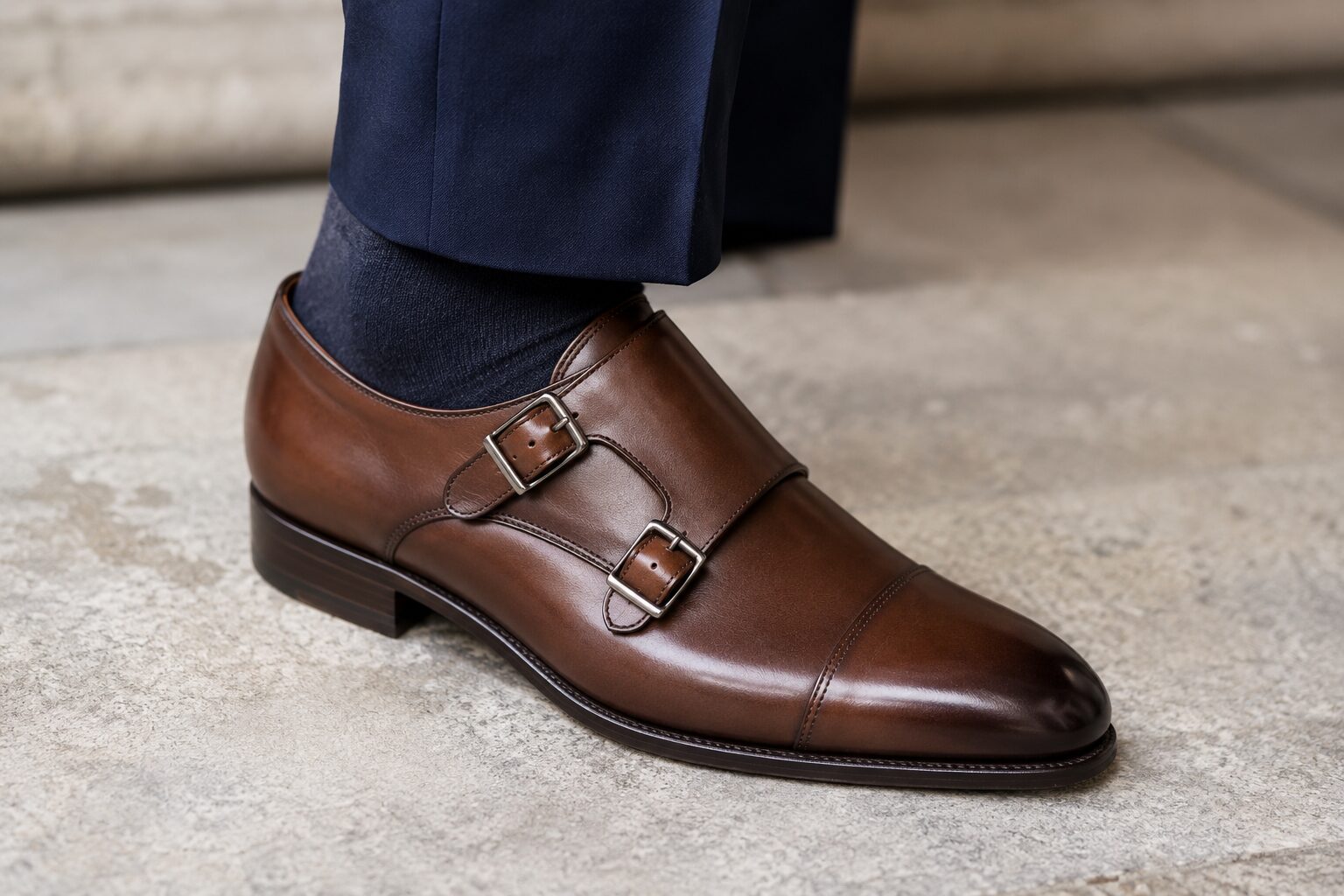
Single or double, both work. Monk straps have a buckle and leather enclosure instead of laces — the lack of lacing reads casual. Brown shades give you the most pairings with trousers.
3. Chelsea Boots

A semi-casual boot that looks great with a navy suit. Suede plays casual; leather steps up the formality. Brown suede Chelseas with a navy suit at a relaxed wedding is one of the most-underused looks in menswear.
4. Brown Oxfords
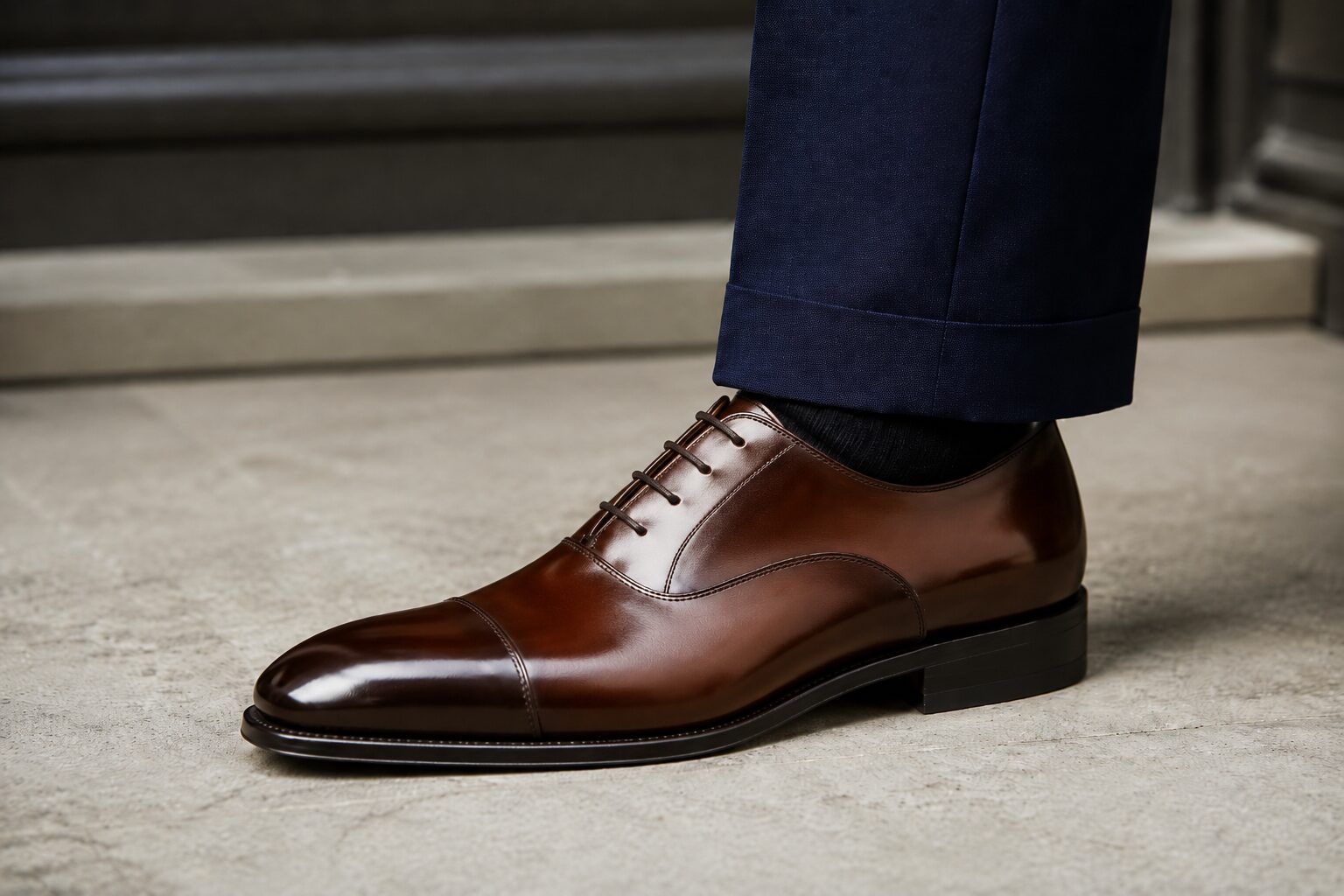
The most formal shoe on this list. Oxfords are best reserved for occasions where a brogue Derby would look out of place — formal weddings, courtrooms, board meetings. You can wear them at the office, but only if you’re already in a position of power.
3 Watch Styles That Match A Navy Suit
The watch is a quiet accessory — most people won’t consciously notice it, but they will register whether it looks right. Three styles cover almost every navy suit occasion.
1. Aviator Watch
Aviator watches were built for pilots — high-contrast dials and numerals for reading the time at a glance, oversized crowns that adjust without removing gloves, long straps to fit over flight jackets. The design DNA is still in modern aviator watches today.
When you wear an aviator with a navy suit, mind the strap and dial size. A brown leather strap is ideal — it says “I know how to dress for the occasion, but a dress watch would be too formal here.” Excellent for a 21st-century wedding where the dress code is fuzzy. Match the brown of the strap to your belt and shoes.
2. Dive Watch
Dive watches were built for underwater work — water-resistant to 660–980 feet, with a unidirectional rotating bezel for timing dives and a domed sapphire or mineral crystal that resists pressure. They’re now the most popular men’s watch style in the world, which means most guys default to one.
The factory rubber strap is too casual for a navy suit. Swap it for a metal bracelet — that one change pulls the watch into business territory and lets it sit under a dress shirt cuff without snagging.
3. Dress Watch
The dress watch is the simplest and most elegant watch a man can own. It tells the time and nothing else. Thin case (so it slips under a dress shirt cuff), simple dial (no complications beyond a date window), face under 42mm, leather strap.
Dress watches are traditionally worn with tuxedos and represent the height of watch formality. Swap the traditional black leather strap for brown, and the dress watch becomes the right formal option for a navy suit.
Cufflinks With A Navy Suit: When And How To Wear Them
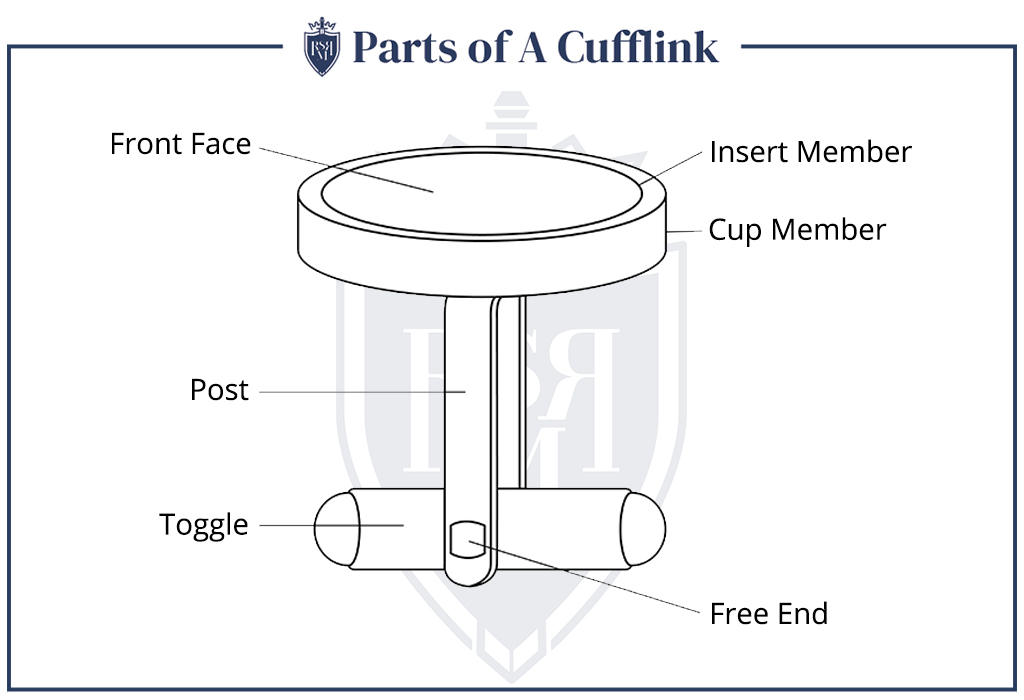
Cufflinks are tools for fastening shirt cuffs. They’re an alternative to buttons — the defining feature is that cufflinks are separate objects. Sew it onto the shirt and it’s a button. If it’s fully removable, it’s a cufflink.
Cufflinks come in many shapes and materials. They’re more ornamental than buttons, but they’re not inherently more or less formal — what makes them formal is the shirt cuff they go into.
You only need cufflinks if you’re wearing a shirt with French (double) cuffs or single cuffs with holes on both sides. For a standard navy business suit with a regular button-cuff shirt, cufflinks aren’t in play. Reserve them for weddings, evening events, or any setting where the suit is doing more than business-as-usual.
The Three Cufflink Styles Worth Owning
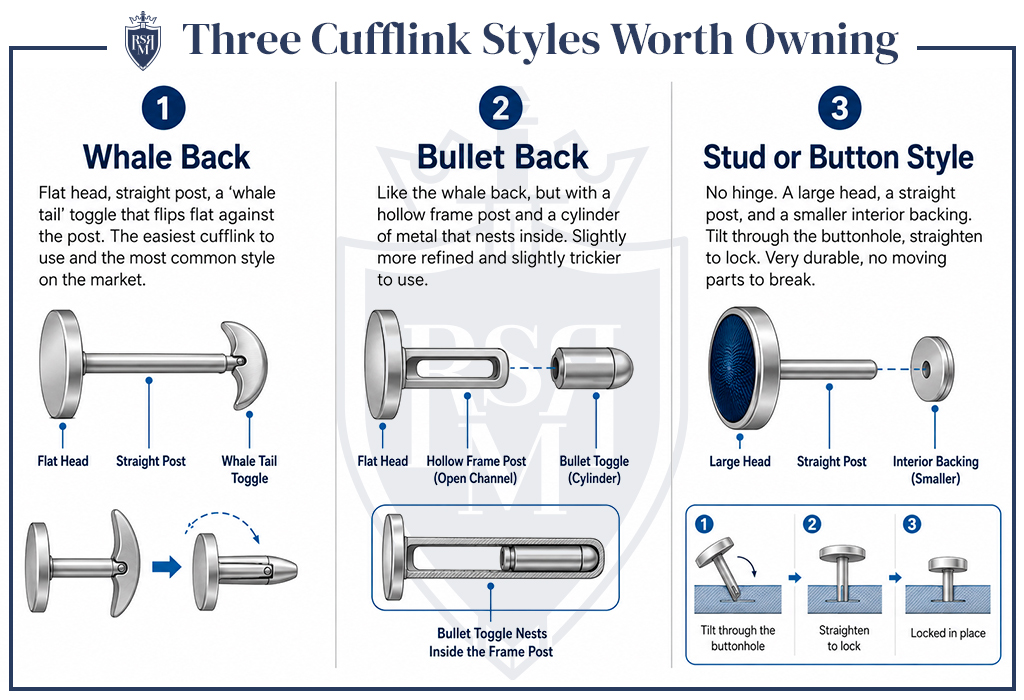
- Whale Back. Flat head, straight post, a “whale tail” toggle that flips flat against the post. The easiest cufflink to use and the most common style on the market.
- Bullet Back. Like the whale back, but with a hollow frame post and a cylinder of metal that nests inside. Slightly more refined and slightly trickier to use.
- Stud or Button Style. No hinge. A large head, a straight post, and a smaller interior backing. Tilt through the buttonhole, straighten to lock. Very durable, no moving parts to break.
For a navy suit, silver or stainless steel cufflinks are the safest bet. Gold reads dressier and works for formal evening events. Avoid novelty cufflinks (your company logo, a sports team) for anything more formal than a casual office — they read juvenile.
How To Wear Cufflinks
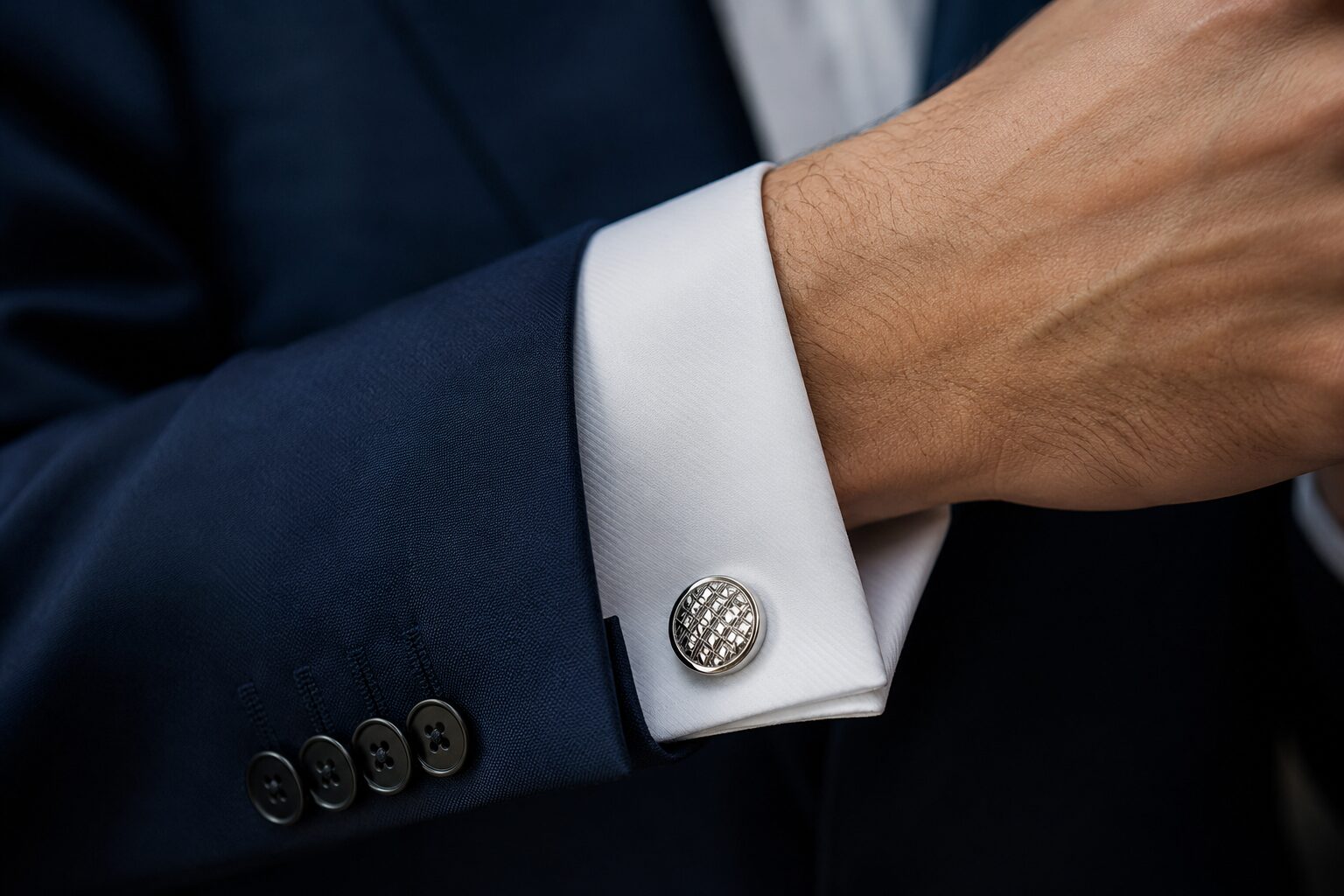
Line up the holes on both sides of the cuff opening, run the cufflink post through, then set the toggle into its closed position. The post holds everything in place, and the decorative face of the cufflink sits on top of the buttonholes.
Most men fasten the cuff “kissing” — interior faces touching, with the hemmed edges turned outward. The alternative is “barrel” style, with one edge overlapping the other. Barrel reads slimmer and more business-like; kissing reads more ornamental. Neither is wrong — it’s a personal preference.
Pocket Squares With A Navy Suit
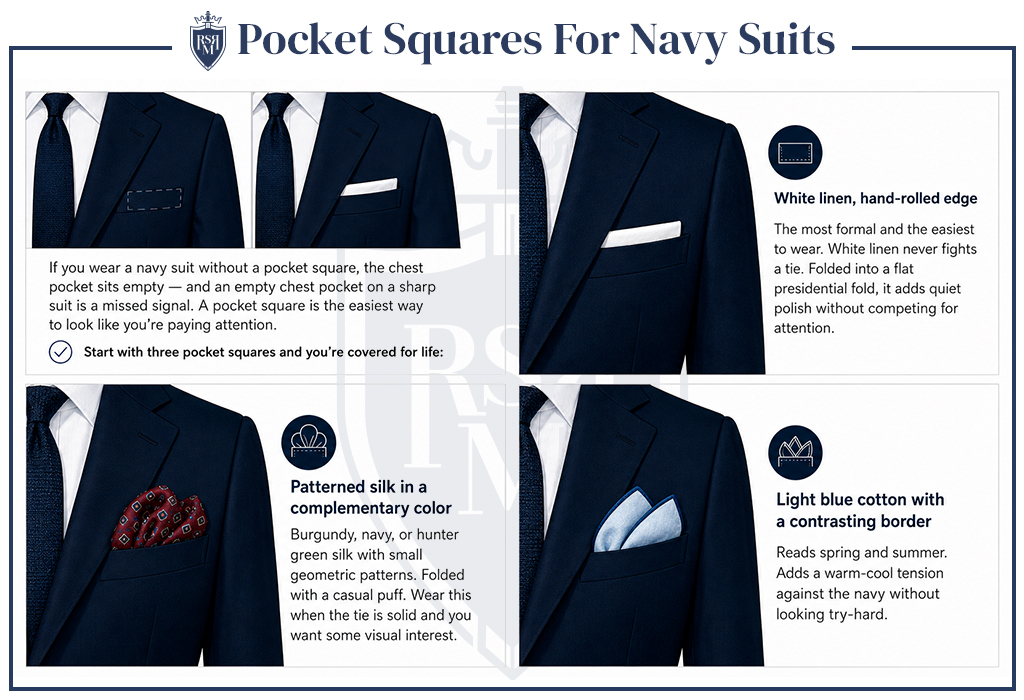
If you wear a navy suit without a pocket square, the chest pocket sits empty — and an empty chest pocket on a sharp suit is a missed signal. A pocket square is the easiest way to look like you’re paying attention.
Start with three pocket squares and you’re covered for life:
- White linen, hand-rolled edge. The most formal and the easiest to wear. White linen never fights a tie. Folded into a flat presidential fold, it adds quiet polish without competing for attention.
- Patterned silk in a complementary color. Burgundy, navy, or hunter green silk with small geometric patterns. Folded with a casual puff. Wear this when the tie is solid and you want some visual interest.
- Light blue cotton with a contrasting border. Reads spring and summer. Adds a warm-cool tension against the navy without looking try-hard.
The rule for matching: the pocket square should never exactly match the tie. A square that matches the tie reads like a kit you bought at the mall. Pick up a color from the tie or the shirt — don’t replicate it.
Expect to spend $25–$60 per square. Below that, the silk feels cheap and the hand-rolled edge is faked with stitching.
Belts With A Navy Suit
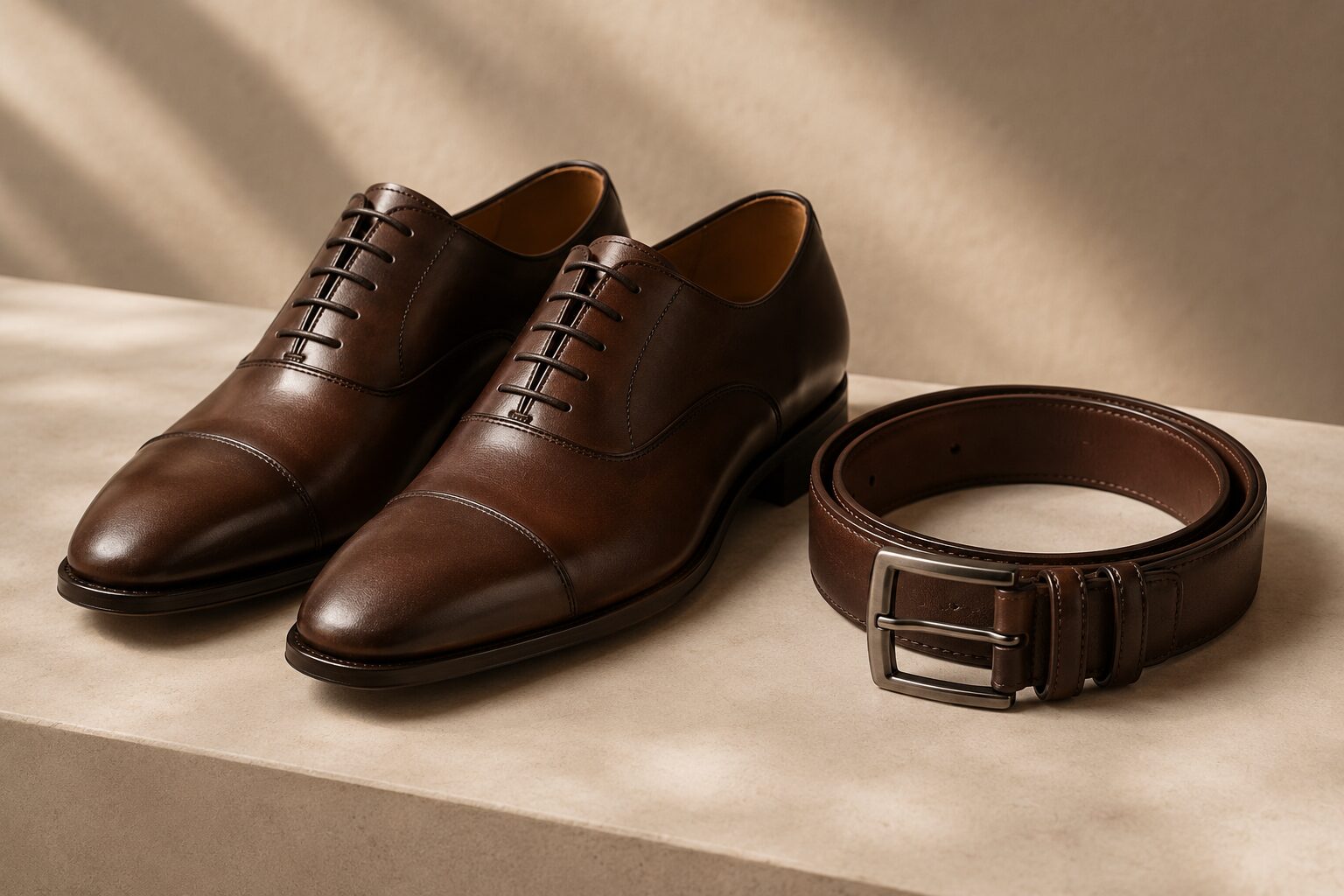
The belt rule with a navy suit is simple: the belt matches the shoes. Same brown, same finish, same general formality. If you’re wearing mid-brown brogue Derbies, you need a mid-brown leather belt to match.
When I was fitting bespoke clients, the belt was the accessory guys got wrong most often. A $1,500 navy suit, brown oxfords, and a cheap black belt picked up at the mall on the way to the wedding — that one mismatch undoes the whole outfit.
Three rules for a navy suit belt:
- Match the shoes. Same brown family. Don’t try to “balance” black shoes with a brown belt or vice versa — they need to match.
- Match the formality of the buckle. A simple gold or silver rectangular buckle for business wear. Skip ornate Western buckles, double-rings, and oversized hardware.
- Match the width. A 1.25 to 1.5 inch belt is right for a suit. Thicker belts (1.75 inch or 2 inch) read casual or Western and look wrong with formal trousers.
Spend $80–$200 on a leather belt. At that range you get full-grain leather that develops a patina over a decade. Cheaper belts crack and peel within two years.
If you can only own one belt, make it dark brown with a brushed silver buckle. It works with mid-brown and dark brown shoes, with navy and charcoal suits, and with most blazer-and-trouser combinations.
Tie Bars With A Navy Suit

The tie bar is the most overlooked navy suit accessory. It does two practical things: it keeps the tie from swinging when you lean forward, and it anchors the tie to the shirt placket so the front sits flat.
The rule: the tie bar should be shorter than the tie’s width. About three-quarters of the tie’s width is the sweet spot. A tie bar wider than the tie looks loud; one much shorter looks like a child’s pin.
Placement: clip the tie bar between the third and fourth buttons of your dress shirt, attaching the tie to the shirt placket underneath. Not too high (it gets in the way when you lean forward), not too low (it looks like a belt buckle for the tie).
The two styles worth owning:
- Silver, simple, no ornamentation. Matches a silver dress watch and silver cufflinks. Reads sharp and business-appropriate.
- Gold, simple. Warmer and slightly more formal. Pairs with a gold-cased watch and a brown leather strap.
Spend $25–$75. Avoid novelty bars, monogrammed bars, and anything with rhinestones or text.
A tie bar isn’t required with a navy suit, but adding one signals that you think about details. That’s the whole point of dressing up.
Socks With A Navy Suit
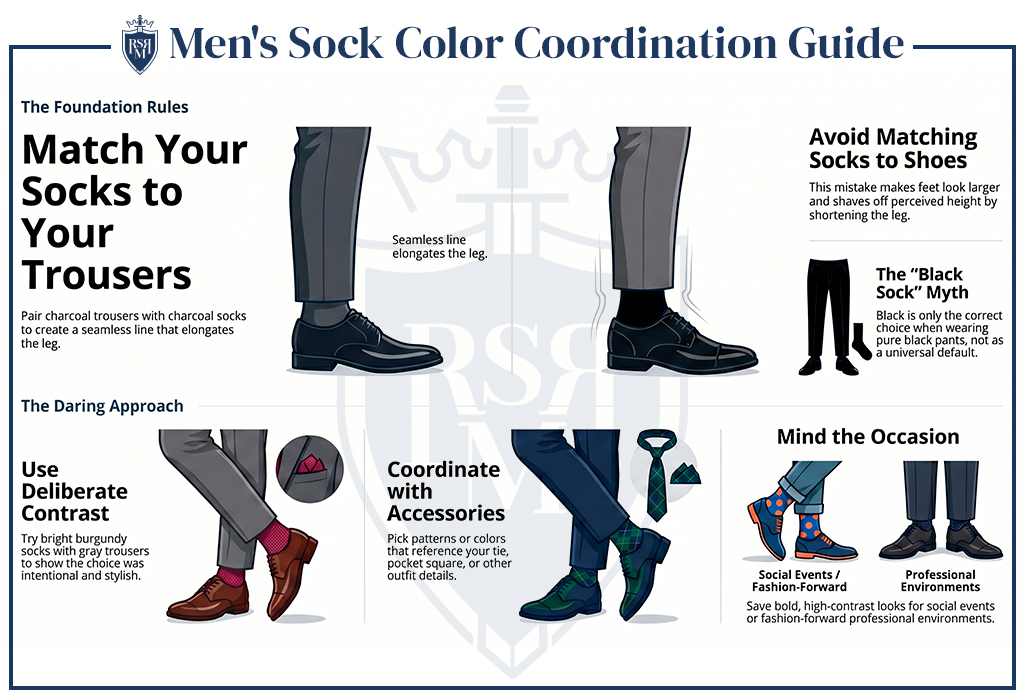
Socks bridge the trouser and the shoe. They shouldn’t draw attention to themselves — they should pull the lower half of the outfit together.
Three rules:
- Match the sock to the trouser, not the shoe. Navy trousers want navy socks. Black socks with a navy suit create a visible gap at the ankle and break up the leg line. Most guys default to black socks; most guys are wrong.
- Length matters. Wear over-the-calf socks (sometimes labeled “mid-calf” or “trouser socks”). When you cross your legs, no one should see your bare shin. Crew-length socks fall down within an hour and expose skin.
- Material: merino wool or fine cotton. Both breathe, both hold up after dozens of washes. Skip synthetic blends — they feel cheap and develop holes fast.
If you want a touch of personality, navy socks with a small contrast pattern (light blue or burgundy small geometric) work for a wedding or a smart event. Skip novelty patterns (cartoons, holiday motifs) — they read juvenile in formal settings.
Expect to spend $15–$30 per pair for the merino wool kind. Stock five identical pairs of navy and you’re covered for the year. Read: Men’s socks buying guide.
The One Anchor That Solves Half The Outfit
Most guys try to match a navy suit by building combinations from scratch every morning. That’s how you end up rotating five shirts, four ties, and two pairs of shoes and still feeling like nothing pulls together. When I was running my bespoke suit company, the sharpest-dressed clients weren’t the ones with the biggest wardrobes. They were the ones who’d locked in one or two anchor pieces and stopped second-guessing the rest.
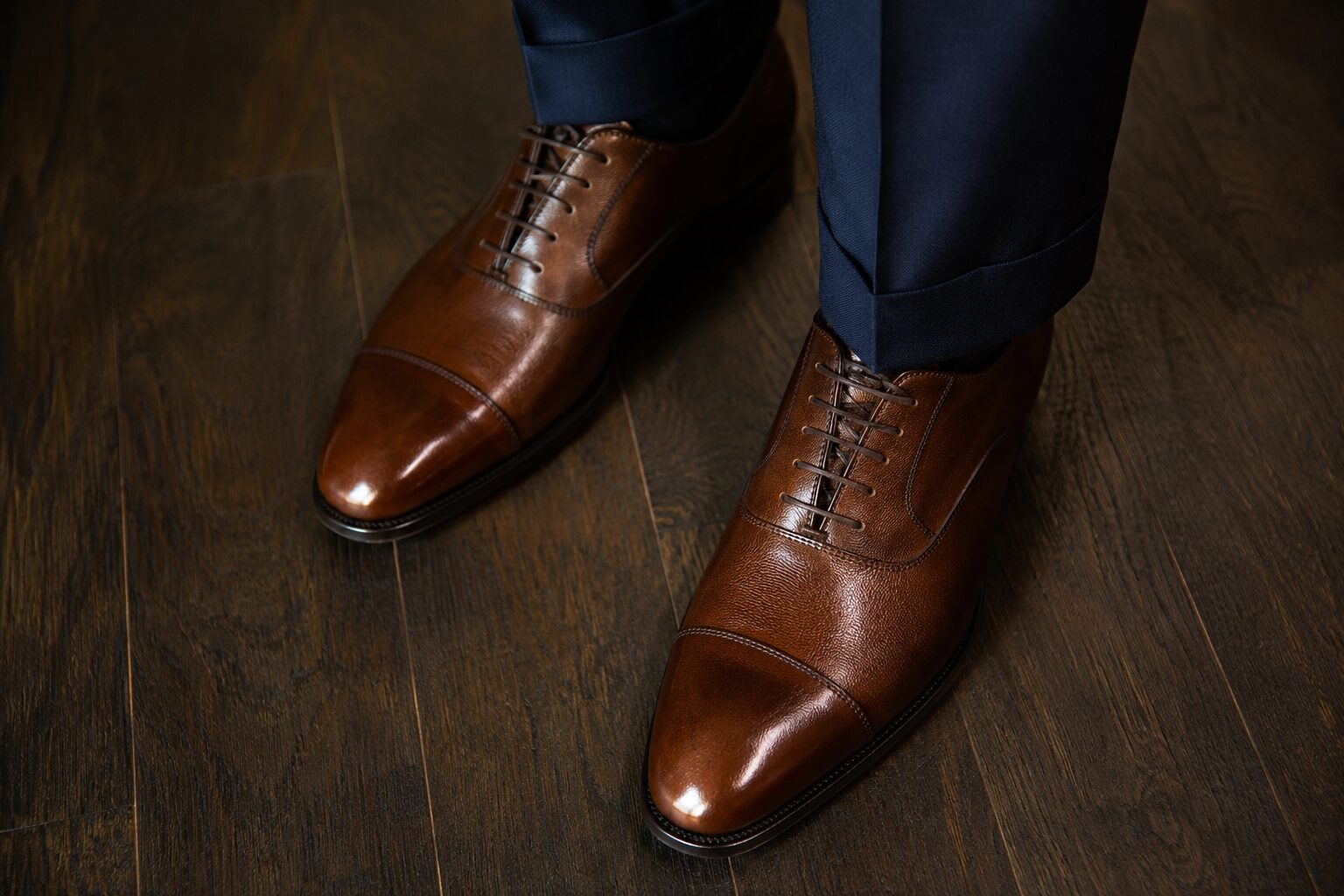
Here’s the shortcut. Buy one pair of mid-brown leather oxfords or Derbies in the $250–$400 range — Allen Edmonds, Loake, or Meermin all sit in that bracket. Not chocolate, not tan — the shade between a cooked steak and a saddle. Mid-brown sits warm against navy without competing with it.
That one pair sets the temperature for the rest of the kit. The belt and watch strap both match it — same warm brown, same finish. Shirts stay white or pale blue; ties stay in burgundy, dark green, or muted navy patterns. Half the outfit just got decided by one $300 purchase you make once and replace once a decade.
Wear that pair 70% of the time you wear navy. Polish them every Sunday night — five minutes with a brush and a tin of Saphir wax. When the heels wear down, take them to a cobbler, not the trash. The navy suit’s “versatility” isn’t free — the shoes are what you pay to unlock it, and once you pay, the rest of the wardrobe falls into line.
FAQ: Common Navy Suit Accessory Questions
What color shoes go with a navy suit?
Mid-brown to dark-brown leather shoes are the strongest pairing — brown contrasts the cool navy and warms the outfit up. Black works in strict business or formal settings but creates a stark, less-flattering contrast for most occasions. Tan and oxblood are also options for casual or wedding wear, but a single pair of mid-brown oxfords or brogue Derbies covers about 80% of navy suit occasions.
Can you wear a black belt with a navy suit?
You can — but only if you’re also wearing black shoes. The belt and shoes have to match. If the shoes are brown, the belt is brown. If the shoes are black, the belt is black. Never split them. A brown belt with black shoes (or the reverse) is the single most common navy suit accessory mistake.
What watch goes best with a navy suit?
A dress watch with a brown leather strap is the most formal and the easiest fit. A dive watch on a steel bracelet works for business settings and modern offices. An aviator watch on a brown leather strap covers semi-formal events like contemporary weddings. Whatever style you pick, match the strap to the belt and shoes.
Do you need cufflinks with a navy suit?
Only if you’re wearing a French-cuff shirt. Most navy suit occasions (office, daily business wear) don’t call for them. Reserve cufflinks for weddings, formal evening events, or settings where you want the suit to read more dressed-up. Silver or stainless steel cufflinks are the safest default.
Should the pocket square match the tie?
No. A pocket square that matches the tie exactly looks like a kit you bought at the mall. Pick up a single color from the tie or the shirt and use that as the dominant color in the pocket square — don’t replicate the tie’s pattern. A plain white linen pocket square also works with any tie.
The Bottom Line
How you wear a navy suit comes down to taste, budget, and attention to the small things. Get the accessories right — shoes, belt, tie, watch, pocket square, socks — and a $600 suit looks like a $1,500 one. Get them wrong and the math reverses.
Pay attention to the details and you’ll set a high sartorial standard wherever you walk.
Also read: