Quick answer: For most weddings, wear a black cap-toe Oxford (black tie or formal), a dark brown wholecut or cap-toe Oxford (semi-formal, or with a grey or navy suit), or a dark brown Derby for a relaxed daytime ceremony. Skip square toes, mall-shine plastic uppers, and brand-new shoes you haven’t broken in. Budget $200–$500 for a pair that lasts the next ten years.

I’ve spent over 25 years studying men’s style — five years fitting bespoke clients in Chicago after training at the Savile Row Academy in London, then 5,000+ articles and videos here at RMRS since 2010.
Along the way, I’ve stood next to grooms ten minutes before they walked down the aisle and watched their face change when they realized their shoes were wrong. The suit can be perfect. Hair, tie, boutonniere — all dialed in. If the shoes blow it, the photos remember.
So today, the shoes. Whether you’re the groom, a groomsman, the father of the bride, or just trying not to embarrass yourself as a guest, this is the piece I wish someone had handed me before my first wedding.
Why Wedding Shoes Carry More Weight Than Any Other Pair You Own
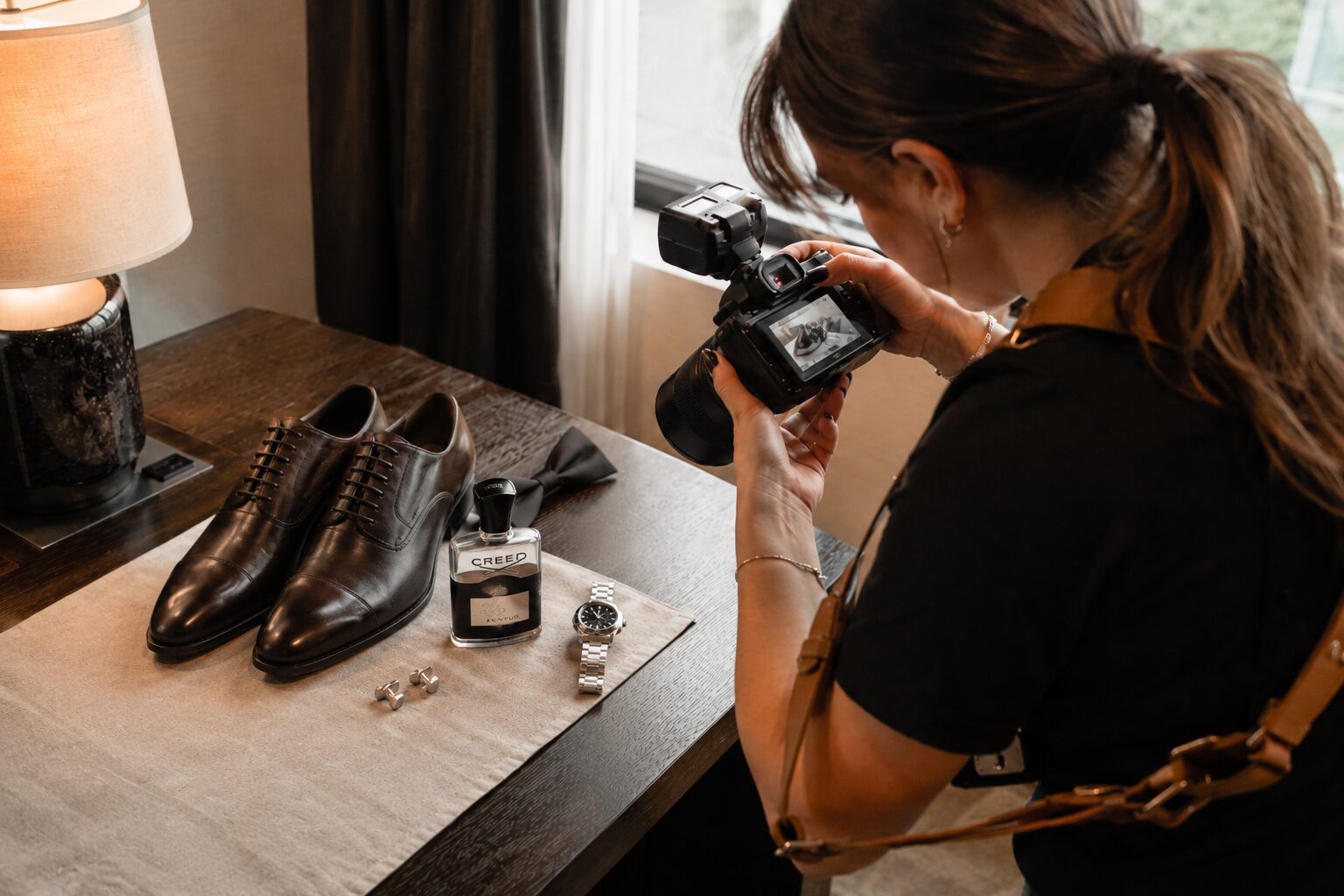
Most days, your shoes get glanced at and forgotten. Weddings work differently, and there’s a mechanical reason.
Start with the documentation. The photographer shoots 800–1,200 frames over the day. The videographer captures hours of footage. Family members fire off phone clips that get texted around for the next decade. Your shoes show up in roughly a third of every full-body and seated frame — and more than that if you’re in the wedding party.
Then think about the angles. Wedding photographers shoot low to make the couple look statelier. The kneel-at-the-altar shot. That first-dance frame where the bride’s dress sweeps out and your feet sit in the foreground. Bad shoes wreck those frames; great shoes carry them.
Here’s the second mechanism, the one most guys miss. Weddings telegraph care. When the venue costs $30,000 and the suit costs $1,500 and the shoes cost $80 from a mall, every guest with any eye at all will read the cheapest visible thing first. Shoes are usually it. The eye finds them faster than the watch, the tie, or the pocket square.
When I fit a groom for a bespoke suit, I tell him the same thing every time: budget your shoe spend on the same line as the suit, not after it. A $500 shoe with a $400 jacket reads better than an $1,800 jacket with $100 shoes. Every time.
The Dress Code Framework — Read The Invitation First
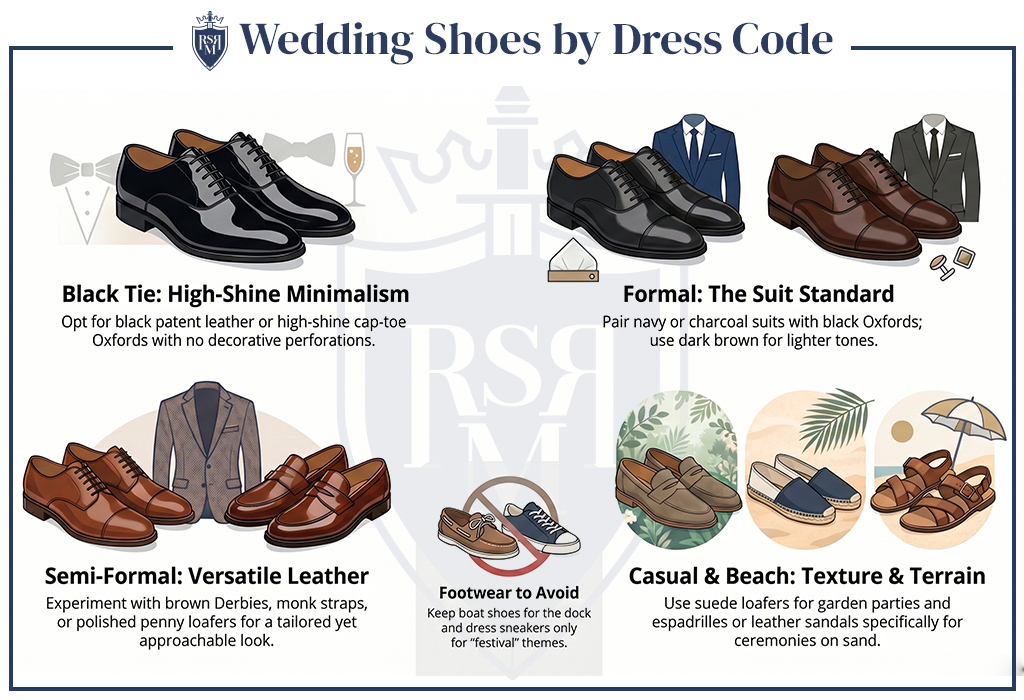
Before buying anything, look at the wording on the invite. It tells you nearly everything.
Black tie
Black patent leather Oxford, or a plain black cap-toe Oxford polished to a high shine. No broguing. No decorative perforations. No medallions. The shoe should disappear into the formality of the outfit, not announce itself. Patent is the most formal option because of its mirror finish, but a well-polished calf cap-toe Oxford passes at every black-tie wedding I’ve attended in the last fifteen years.
Formal (suit required, no tuxedo)
Black cap-toe Oxford if the suit is navy or charcoal. A dark brown wholecut or plain-toe Oxford works with mid-grey, lighter navy, or olive tones. Patent stays in the closet. Save it for the tux.
Semi-formal / cocktail
Now you have room to play. A dark brown Oxford, a brown Derby, a single monk strap, or a polished penny loafer all sit inside the dress code. Lean toward brown unless the suit is solid black or deep charcoal.
Casual or outdoor
Brown Derby, suede loafer, or a clean leather Chelsea boot. Dress sneakers only if the invitation genuinely says “garden party” or “festival” — most “casual” weddings still expect real leather on your feet. The bride spent eighteen months planning. Honor that.
Beach
The one venue where sandals can work, and only if the ceremony is on actual sand. Espadrilles in navy or tan, or a polished pair of Spanish leather sandals. Boat shoes don’t count. Sperrys belong on a boat or a dock, not at the altar.
The Six Shoe Styles That Actually Work At Weddings
Now the styles themselves. I’m going to give you opinions, not a buffet.
1. The Black Cap-Toe Oxford — Your Default
If you own one pair of dress shoes in your life, this is the pair. The cap-toe is a horizontal seam across the front third of the upper, and the closed lacing (Oxford, sometimes called Balmoral) reads more formal than open lacing.

Why it works: it’s appropriate at every wedding formality level from black tie down through semi-formal. Pair it with a charcoal or navy suit, and you’re done thinking. Your mind moves to the rest of the outfit.
What to buy: Allen Edmonds Park Avenue, around $445 in calf, made in Wisconsin and re-soleable. If you want a step up with more character, look at the Crockett & Jones Audley, $720, made in Northampton. On a budget, Beckett Simonon Cardenas runs about $229 with Goodyear welt construction — a steal if you can wait, because they’re made-to-order.
2. The Dark Brown Oxford — The Smart Second Pair

If your wedding is anything other than full black tie, this is probably the better choice. Brown reads warmer in photos than black. It also pairs better with the most common groom suit colors of the last five years: mid-grey, lighter navy, and the dusty earth tones that have crept back into wedding palettes.
Pick a dark brown — not a tan, not a cognac. The shade matters. A tan or cognac will fight a navy suit. Dark brown sits underneath the suit and lifts it.
What to buy: Allen Edmonds Strand in dark brown, around $445, with a wingtip pattern that reads slightly less formal than the Park Avenue but works at almost every wedding. For a sleeker silhouette, the Carmina wholecut on the Rain last, about $625, is the kind of shoe a father of the bride compliments at the bar.
3. The Brown Derby — For Wider Feet And Daytime Weddings
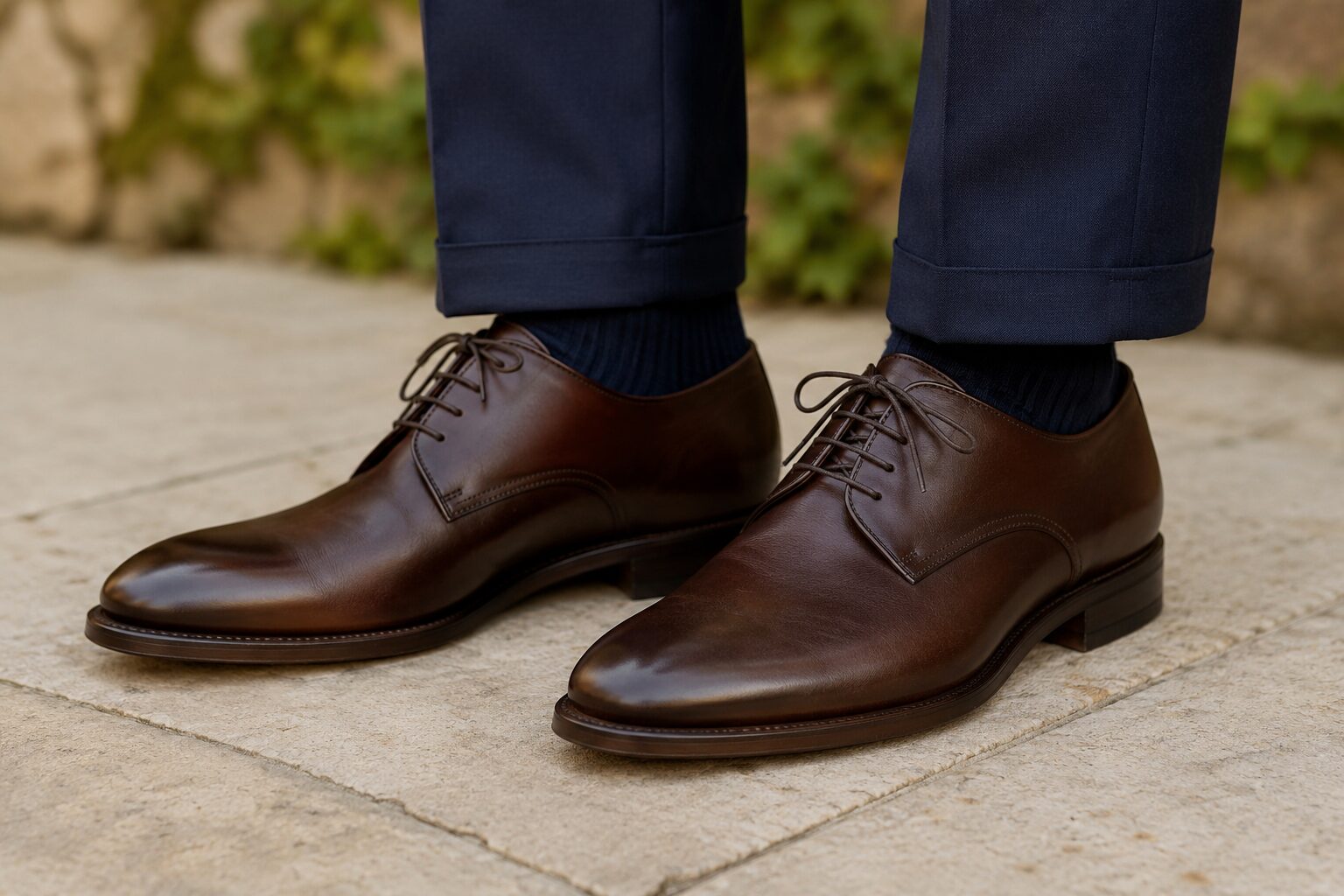
The Derby (sometimes called a Blucher) has open lacing — the lace flaps sit on top of the upper rather than under it. Sounds like a small detail. It does two things: it makes the shoe more forgiving for wider feet, and it reads slightly less formal than an Oxford.
For daytime weddings, garden ceremonies, or any wedding where the dress code is “festive” or “smart casual,” a dark brown Derby earns its place. Pair it with a navy or grey suit, no tie, top button undone if the vibe allows.
What to buy: Meermin Linea Maestro Derby in dark brown, about $245 from Spain, with surprisingly strong construction for the price. Or the Allen Edmonds Leeds, around $475, if you want American-made.
4. The Single Monk Strap — The Groom Statement Shoe
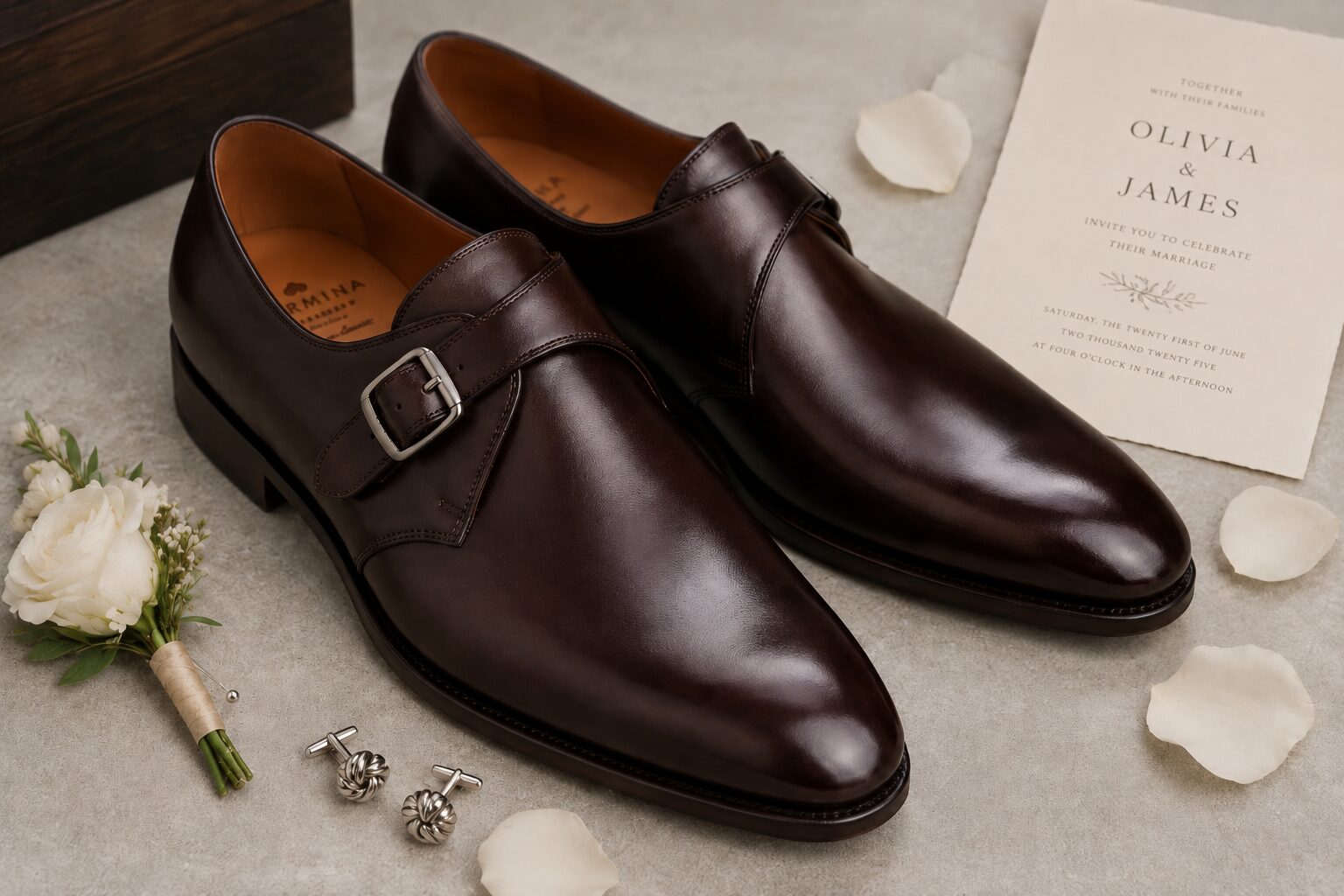
A monk strap closes with a buckle instead of laces. Single monk is one strap, double monk is two. It’s the most “look at me” of the appropriate wedding shoes, which is exactly why some grooms love it for their own wedding.
A word of warning: this is a confident man’s shoe. If you’re already nervous about the suit, the tie, the dance, and remembering your vows, don’t introduce a fifth variable. But if you wear monk straps regularly, a single monk in burgundy or dark brown looks fantastic in photos.
What to buy: Carmina single monk in dark brown calf, around $620. Spanish makers (Carmina, Meermin, Carlos Santos) build monk straps with a sleeker line than most English makers, which fits the wedding aesthetic better.
5. The Penny Loafer — For Summer And The Confident Guest
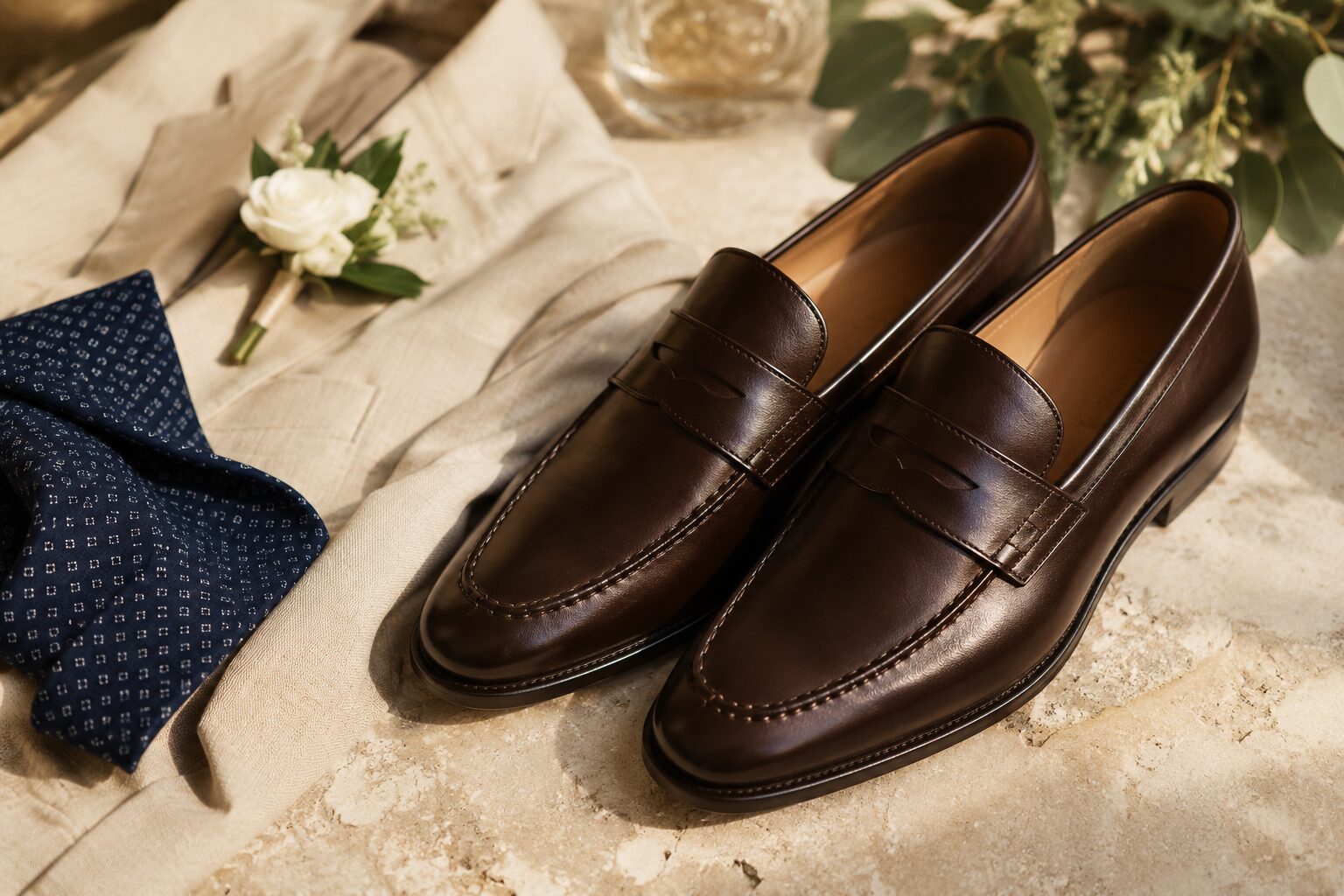
Loafers used to be controversial at weddings. They aren’t anymore. The penny loafer in dark brown leather or polished brown suede works for any non-black-tie summer wedding, especially in the South. Beefroll loafers go with khaki and seersucker; sleeker dress loafers go with a navy suit.
I wouldn’t wear a loafer at a black-tie or formal wedding. But I would wear one at most summer cocktail-attire weddings without thinking twice. An Italian penny in brown suede paired with a tan suit reads like Capri, in the best way.
What to buy: Alden full-strap penny loafer in dark brown, $670, the gold standard. On a budget, Meermin penny loafer at around $220.
6. The Chelsea Boot — Autumn And Winter Weddings
A clean leather Chelsea boot in dark brown or black works for autumn and winter weddings, especially the rustic-barn-meets-tailoring aesthetic that’s been everywhere since around 2018. The boot reads warm in photos, handles outdoor ceremonies on uneven ground, and pairs cleanly with cropped trousers.
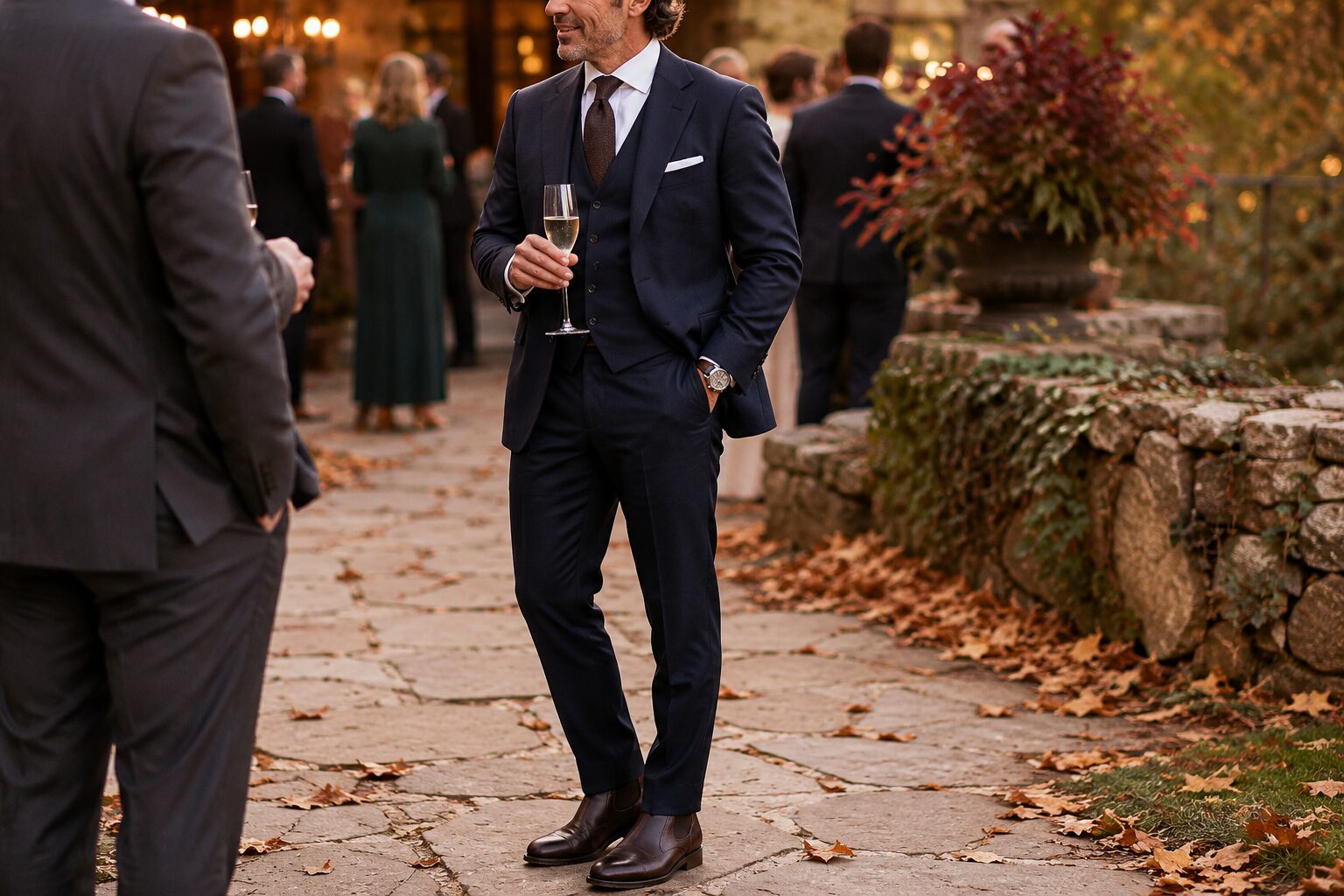
Pick a dressy Chelsea — leather upper, leather sole, slim silhouette. Skip the chunky-soled fashion Chelsea. You want it to read as a refined dress boot, not as a Doc Martens variation.
What to buy: Crockett & Jones Chelsea 8 in dark brown, $760. R.M. Williams Comfort Craftsman in chestnut, $645, if you want a more rugged Australian profile.
What About Dress Sneakers?
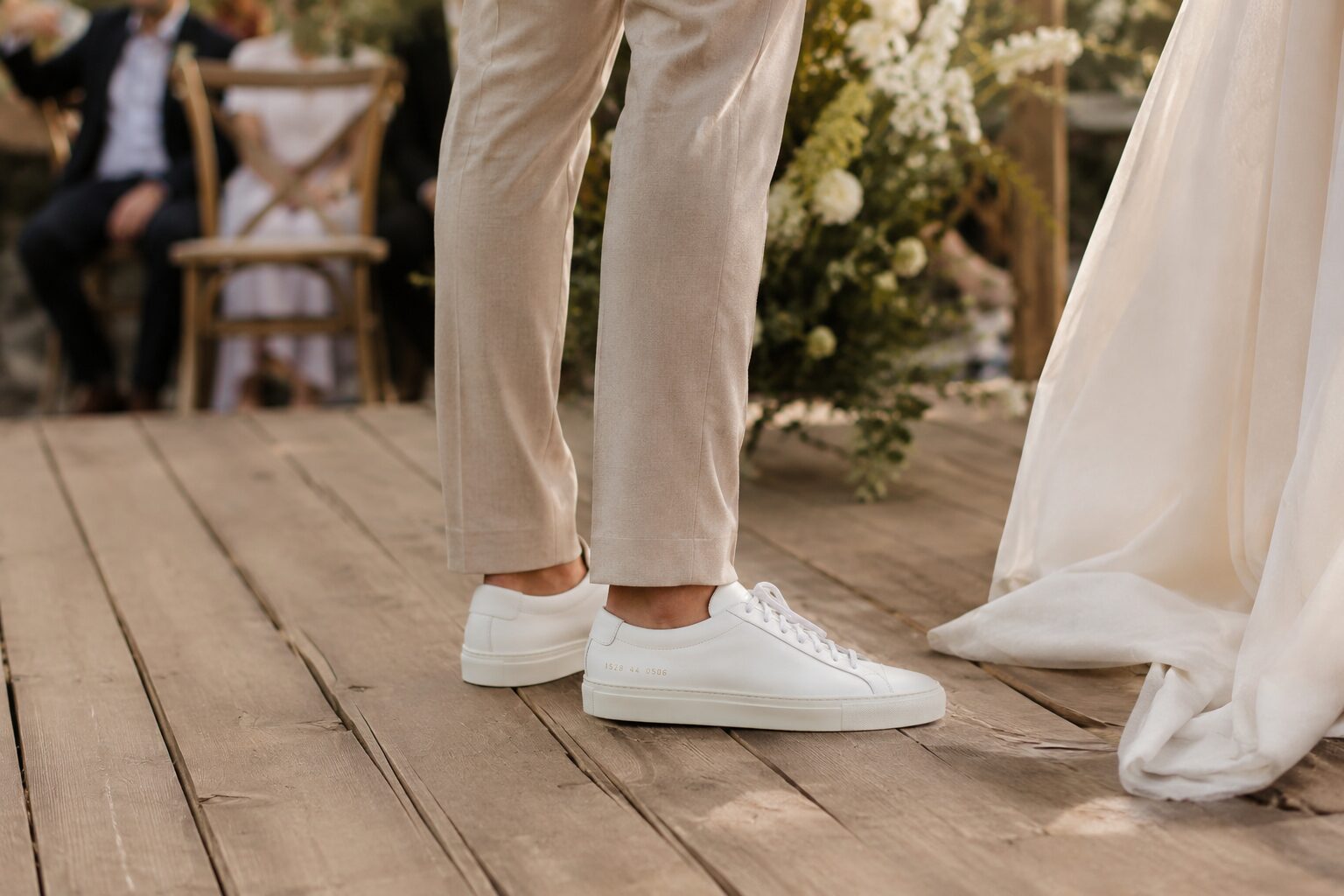
I’ll lose some of you on this one. Dress sneakers — clean white leather, minimalist, a Common Projects Achilles or a Koio Capri — can work at a genuinely casual wedding. Not a “casual” wedding where the bride is still in white and the groom in a suit. A real casual one. Backyard. Festival. Vineyard daytime in California.
If you’re a guest, ask yourself: would I wear sneakers to a job interview at the company hosting this wedding? If the answer is no, wear leather.
If you’re the groom, I’d say no almost every time. Dress sneakers date faster than leather dress shoes. The silhouettes that looked great in 2019 already look dated in 2026. An Oxford from 1955 still looks great. Bet on the longer arc.
The Color Rules, Translated

I get this question every week: “Antonio, what shoes go with a navy suit at a wedding?” Let me make it simple.
- Charcoal or black suit: black cap-toe Oxford. Period.
- Navy suit, formal wedding: black cap-toe Oxford. (Yes, black with navy. It works.)
- Navy suit, semi-formal or daytime wedding: dark brown Oxford or Derby.
- Mid-grey suit: dark brown beats black, every time.
- Light grey or tan summer suit: mid-brown or cognac, optionally suede.
- Burgundy or olive suit: dark brown, no exceptions.
- Black tuxedo: black patent or polished black calf, plain front, plain or grosgrain bow.
Also read: What Should You Wear With A Navy Blue Suit?
A simple “black tie / brown tie” mnemonic helps: if you’d wear a black tie with this suit, wear black shoes. If you’d wear a brown or burgundy-toned tie, wear brown shoes.

The Mistakes I See At Almost Every Wedding
Back when I was a Marine officer, I learned that uniforms reveal character. A scuffed boot at inspection didn’t mean a guy was bad at his job — it meant he hadn’t thought about details that morning. Weddings reveal the same thing.
These are the mistakes that show up at almost every wedding I’ve ever been to, in roughly the order I see them:
1. Square-toed shoes. They were dated in 2008. By 2026 they’re devastating. A square toe widens the foot visually, which throws the body’s whole proportion off. Round and almond toes are the modern silhouette.
2. Brand-new shoes on the day. A new pair of leather Oxfords takes three to five wears to soften. Break them in around the house. Take them to the rehearsal dinner. Don’t blister yourself on your wedding day because you wanted the leather to look pristine in photos.

3. Mall-shine plastic uppers. You can spot a $50 corrected-grain shoe from across a banquet hall. The leather looks like vinyl, the toe looks plastic, and it scuffs in straight lines instead of soft creases. Real calf leather creases organically and develops patina.
4. Visible white socks. This is the cardinal sin and it happens in nearly every wedding photo I’ve ever inspected. When you sit or kneel, your trouser leg rides up six to eight inches. If your sock is white or short, the bare leg shows in every seated photo for life. Wear mid-calf or over-the-calf dress socks in a color that matches your trouser, not your shoe.
5. Mismatched belt and shoes. If you wear a belt, it should match the shoe color closely. Black shoes, black belt. Brown shoes, brown belt of the same shade family. A black belt with brown shoes is the giveaway move of a guy who hasn’t thought about it.
6. Over-pointed Italian fashion shoes. I love Italian shoemaking. The long-point fashion Oxford that some guys reach for thinking it looks “elevated” — that one I don’t love. It looks like a cartoon. Stick with almond toe and classic proportions.
7. Showing up in the same shoes you wear to the office. If your daily-driver office shoe has a clear sole-edge wear pattern, polish them, but seriously think about buying a fresh pair for the wedding and demoting the old pair afterward. Photos catch sole edges.
Socks, Belt, And The Rest Of The Vertical Line
A wedding shoe doesn’t live alone. It connects upward through the sock, through the trouser break, through the belt or braces. Get the vertical line right and the shoe looks twice as good.
Socks: mid-calf or over-the-calf, solid color matching the trouser, not the shoe. The single best brand for the price is still Marcoliani — Italian merino, around $30 a pair, lasts forever.
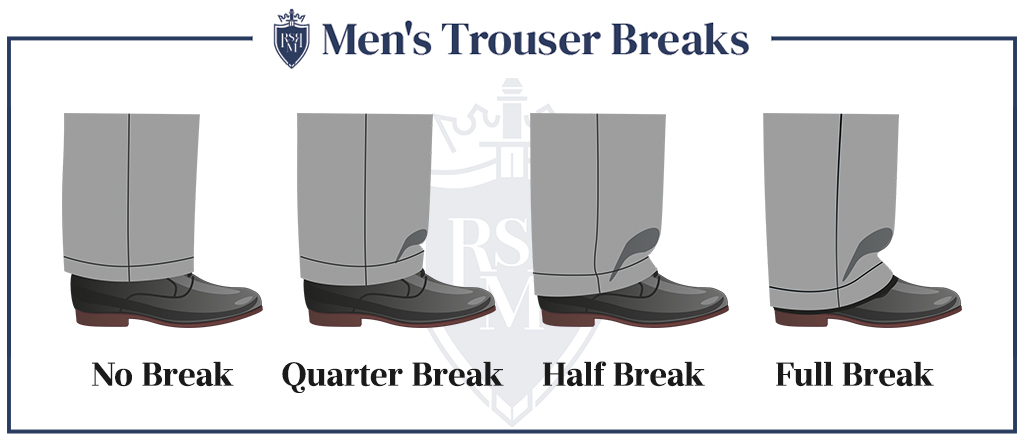
Trouser break: a slight break or a clean no-break for tailored suits. Cuffed trousers can work for casual weddings; uncuffed is more formal. The trouser should sit on the shoe with the lightest touch.
Belt: match the shoe family. If you’re wearing braces (suspenders), skip the belt entirely. Wearing both is a tell. See How To Wear Suspenders if you want the longer version.
Shoe trees: put cedar shoe trees in your wedding shoes the day after, and every day after that. They pull moisture out of the leather and preserve the shape. A $30 pair of Stratton cedar trees triples the life of a $400 shoe. The math is obvious.
How To Survive A 12-Hour Day In Dress Shoes
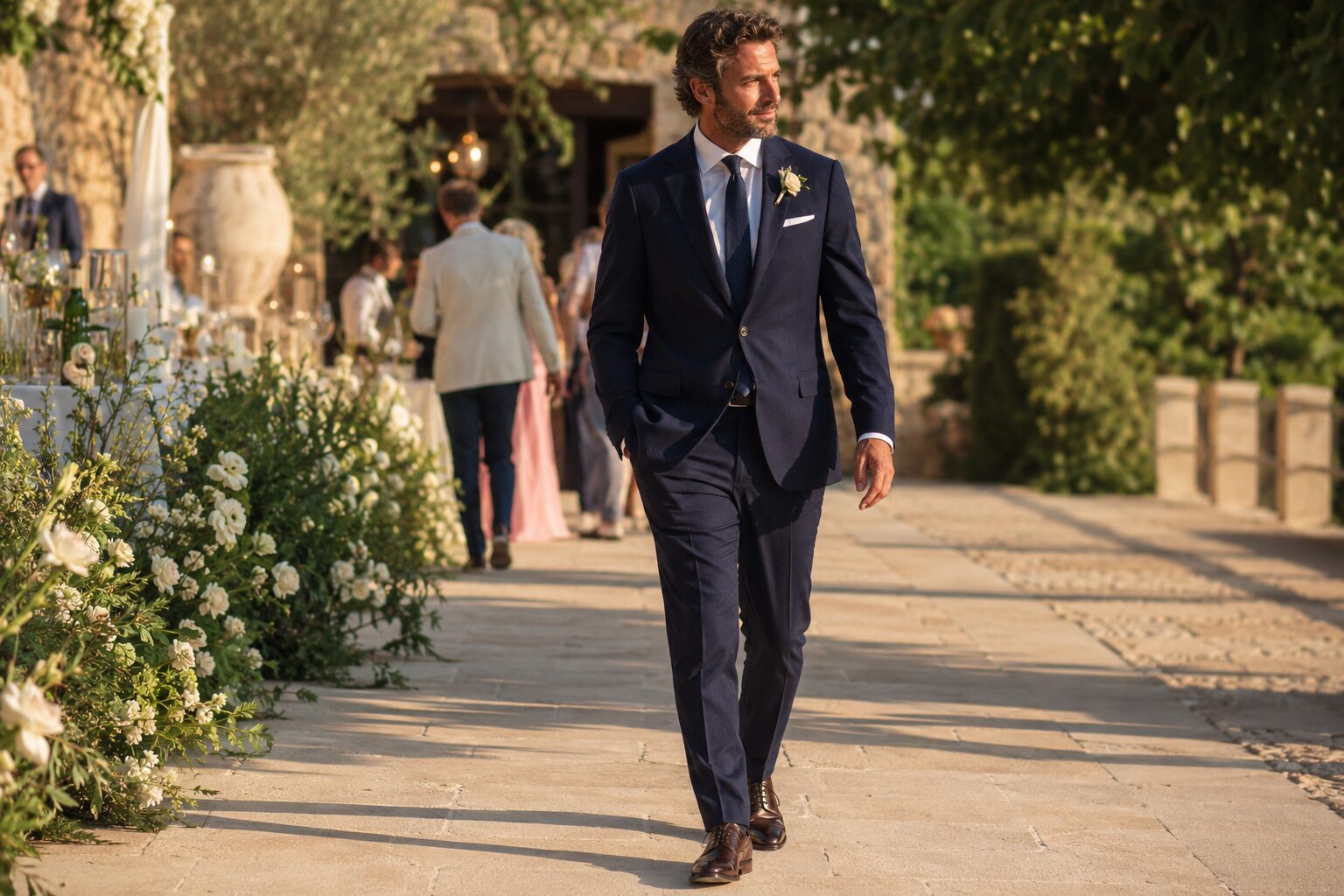
The wedding day is long. Ceremony, photos, cocktail hour, dinner, dancing — you’re on your feet for ten or twelve hours, much of it standing. A few moves that work:
Goodyear welted construction. A Goodyear welt has a leather strip stitched between the upper and the sole, with cork filling the gap. The cork compresses to your foot over the first dozen wears, creating a custom footbed. Cemented shoes (glued construction) never do this. Every shoe I’ve recommended above is Goodyear welted.
Break them in for at least three weeks. Wear them three or four full days before the wedding. Walk in them. Stand in them. Let the leather learn your foot.
Insoles. A thin leather insole — Pedag Viva or similar, about $25 — adds cushion no one sees and saves your feet by hour six. Don’t add a foam gel monstrosity. A thin shock-absorbing leather one is enough.
Slick the soles before the day. A brand-new leather sole on a polished dance floor is an ambulance call waiting to happen. Have a cobbler add thin rubber half-soles, or scuff the leather sole with sandpaper before the wedding. Either move saves you from doing the splits in front of two hundred people.
Budget Tiers — What To Spend And Where
Budget, the way I’d approach it today:
Under $250. Beckett Simonon Cardenas ($229, made-to-order, eight-week lead time, Goodyear welt). Meermin Linea Clasica ($225, faster shipping, Goodyear welt). Both real value. Both last a decade with care.
$250–$500. Allen Edmonds Park Avenue or Strand ($445, American-made in Wisconsin, re-soleable, the most common professional shoe in the United States for a reason). This is where most men should land for wedding shoes. The shoe is good enough to wear to the wedding and good enough to wear to work for the next ten years after.

$500–$1,000. Carmina on the Rain or Forest last ($600–$700, made in Mallorca, Spain, gorgeous proportions). Crockett & Jones Audley or Hallam ($720–$760, Northampton-made English benchgrade). At this tier shoes start to be heirlooms.
$1,000+. Edward Green, John Lobb, Gaziano & Girling. If you’re already at this level, you know what you want. Buy at this tier when the wedding is a once-in-a-lifetime moment and you want a shoe that will outlast you.
For the groom specifically, I’d push toward the $400–$700 range. Buy once. Wear it on the wedding day, then to every business meeting, court date, funeral, and important dinner for the next fifteen years. That’s the right way to spend.
A Quick Word For The Wedding Guest
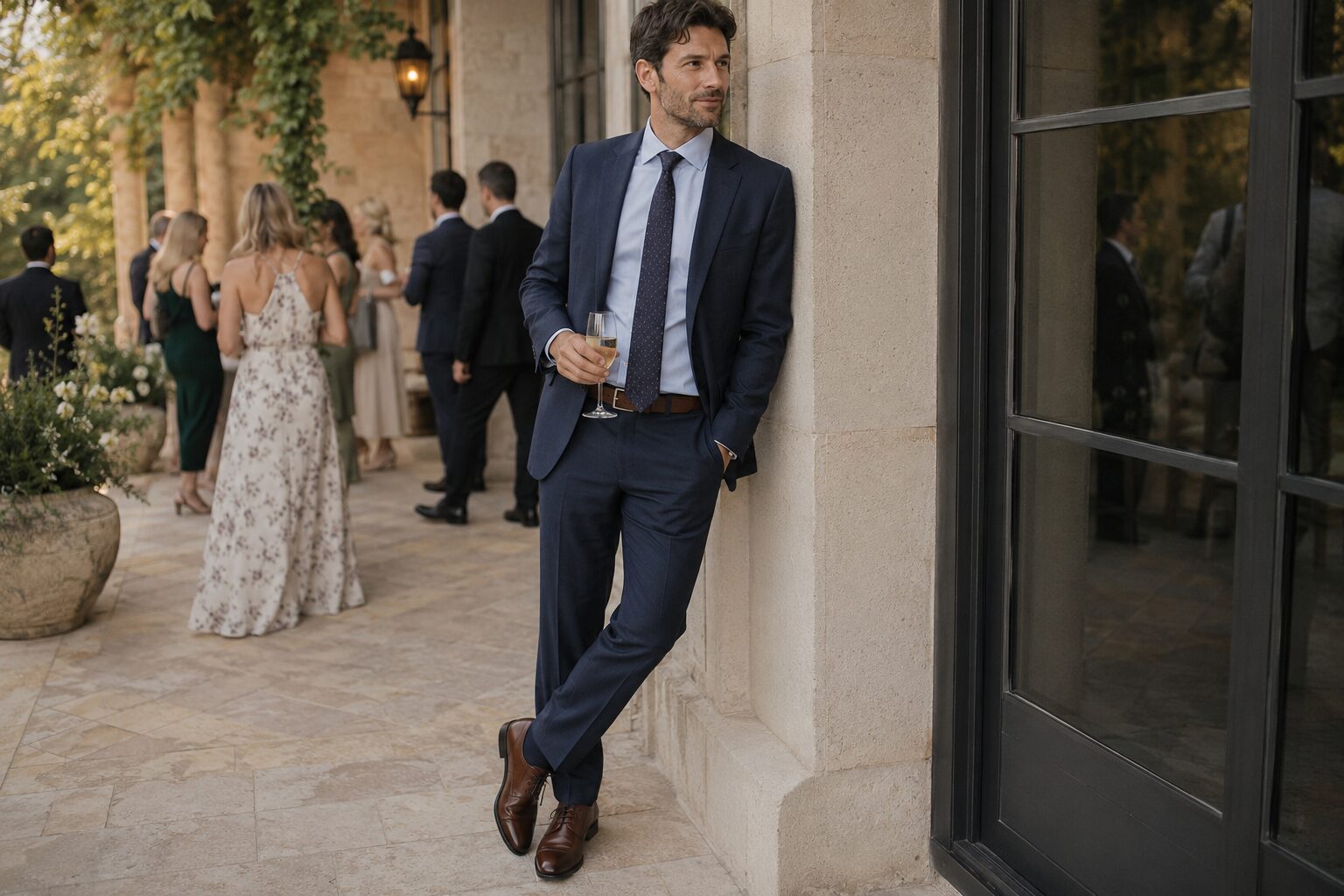
If you’re not the groom or a groomsman, your job is simple: dress to the invite, don’t outshine the wedding party, and look like a man who respects the day.
That means a dark brown Oxford or Derby for most weddings, a black cap-toe for formal or black tie, and clean leather no matter what. Spend $250–$450, take care of them, and you’ll wear them to every wedding for the next fifteen years.
The shoes you wear to a friend’s wedding will end up in their wedding album. Make peace with that.
The Cleanest Wedding Look — And Why It Works
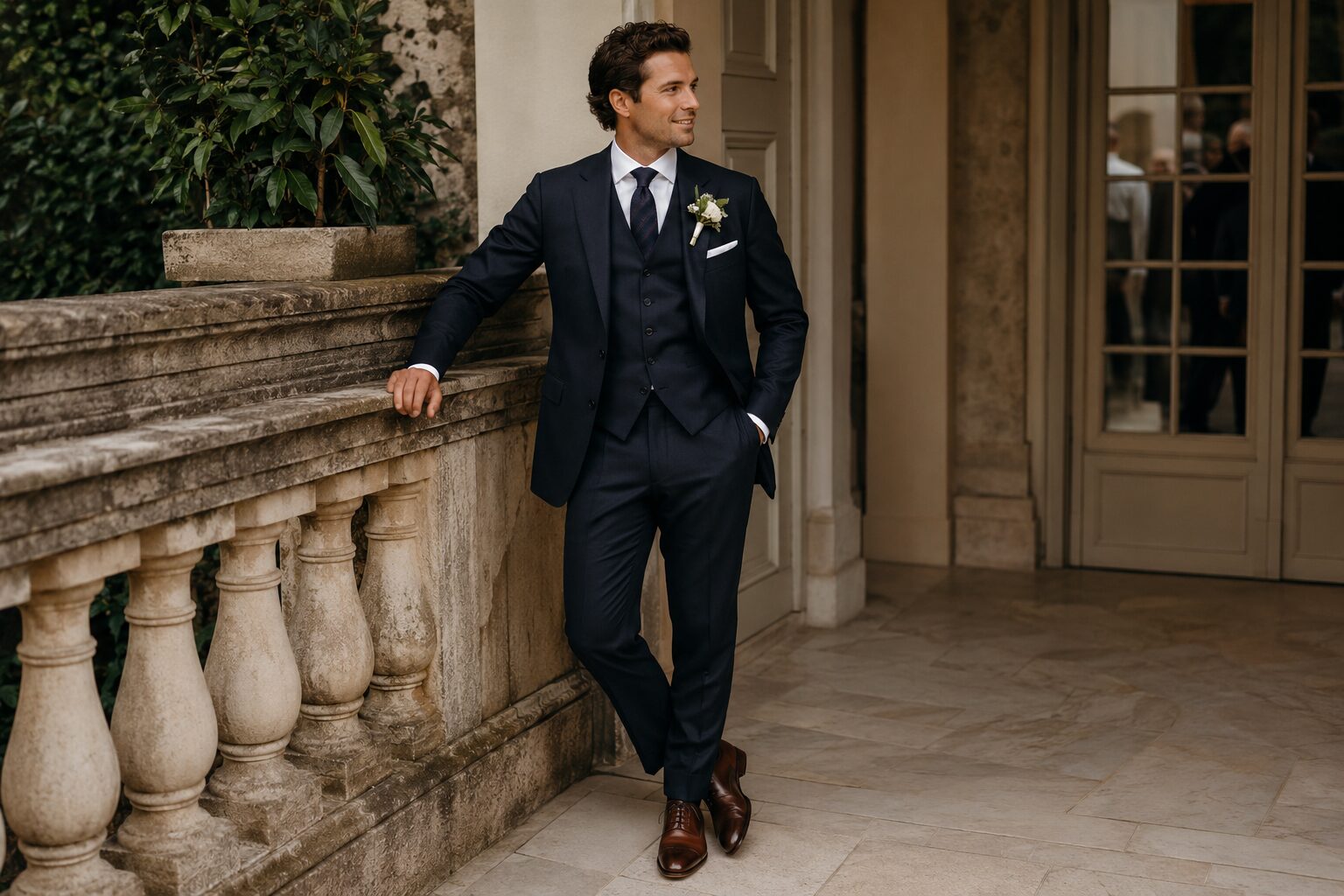
The pairing I steer most of my bespoke clients toward: a midnight navy or charcoal three-piece with a dark brown cap-toe Oxford. Here’s why.
A brown shoe softens the formality of a three-piece. Navy or charcoal photographs as deeper than black under most wedding lighting, especially indoor ceremonies. The cap-toe reads as the most timeless line in men’s footwear. Look at any wedding photo from a confident, well-dressed groom over the last fifty years and you’ll see some version of this pairing more than any other.
When the suit and the shoe are designed for each other from the start, the whole outfit elevates. That’s the difference between buying a suit and buying a wedding outfit.
The Bottom Line
The right wedding shoe for a man is a dark, leather, lace-up dress shoe with classic proportions, broken in before the day, paired thoughtfully with the suit and the dress code. Black cap-toe Oxford for formal and black tie. Dark brown Oxford or Derby for semi-formal and daytime. Suede loafer or Chelsea boot for casual or seasonal weddings. Spanish or English shoemaking for value. American for utility.
I’ve fitted hundreds of grooms over the years. The ones whose photos still look great twenty years later didn’t reach for trends. They reached for restraint and quality. Do the same.
Get the shoes right. The rest follows.
Also read:
Ultimate Guide to Wedding Attire For Men
The Proper Wedding Attire For Grooms
Wedding Guest Dress Attire