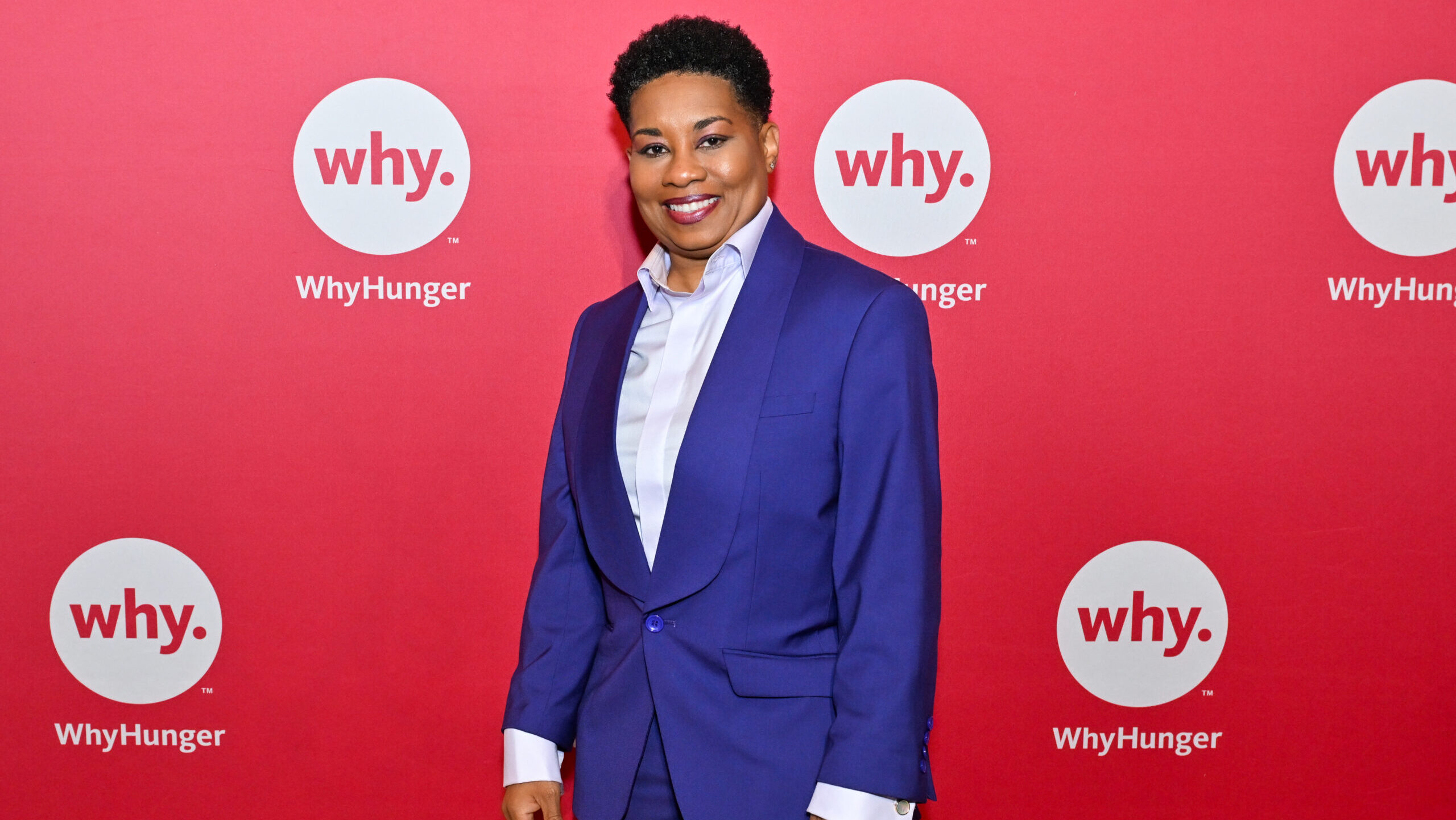
When Jenique Jones talks about hunger, she doesn’t start with statistics. She starts with memory.
In an exclusive conversation, the WhyHunger executive director traced her understanding of food inequity back to her childhood in Harlem during the crack epidemic, a time and place that revealed how uneven access to basic needs can be, even within a few subway stops.
“I attended school on the Upper West Side,” Jones told me. “And it felt like entering a different world.”
She described clean streets, stocked grocery stores, and fresh produce that simply weren’t as accessible in her own neighborhood. At the time, she assumed the difference came down to wealth. But that explanation didn’t hold.
“What I came to understand is that it wasn’t about individuals,” she said. “It was about who the system chose to invest in and who it did not.”
That realization continues to shape her work today as the leader of WhyHunger, the nonprofit founded in 1975 by Harry Chapin and Bill Ayres. The organization has connected millions to food resources while investing in long-term, community-led solutions.
“Hunger Is a Policy Choice”
Jones is clear: hunger in the United States is not inevitable.
“It’s the result of policy choices,” she said.
While recent headlines have focused on cuts to federal programs and delays around the Farm Bill, Jones pushed back on framing the issue as a series of urgent moments. That mindset, she argued, keeps advocates in a reactive loop.
Still, she acknowledged the real impact of current decisions. Changes to SNAP, including reduced benefits and stricter requirements, are expected to push millions off the program. At the same time, shifting costs to states creates uneven access depending on where someone lives.
“All of that matters,” she said. “But if we stay focused only on what’s urgent, we miss the bigger issue.”
For Jones, lasting change means strengthening social safety nets, investing in local food systems, and addressing the broader forces tied to food insecurity, including wages, housing, and healthcare.

Beyond Food Banks: Addressing Root Causes
WhyHunger operates a national hotline and tools that connect people to food in real time. But Jones is quick to point out that emergency relief is only one piece of the puzzle.
“If we only focus on getting food to people in moments of crisis, we’re not changing the conditions that created that need,” she said.
That’s where the organization’s long-term strategy comes in. WhyHunger supports small and BIPOC farmers, funds grassroots groups, and invests in local systems designed to keep food production and access within communities.
The goal is stability, not just survival.
“We’re connecting immediate relief with long-term change,” Jones said.
How Queer Identity Shapes Leadership
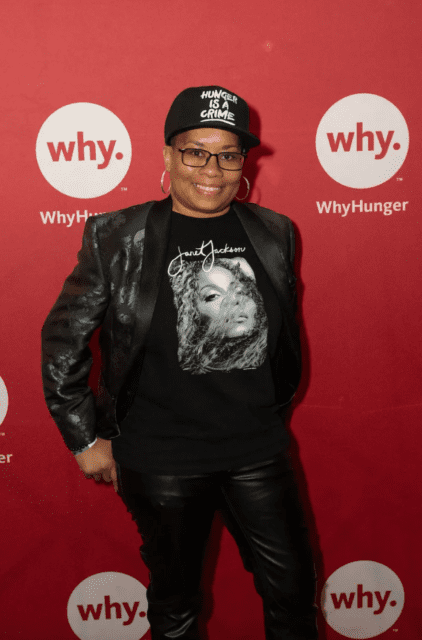
As a queer Black woman, Jones brings a perspective shaped by navigating multiple systems that weren’t built with her in mind.
“It sharpens how I understand inequity,” she said.
That lens influences how she approaches leadership, from who gets a seat at the table to how resources are distributed. She emphasized that equity requires more than intention, it demands accountability.
“It’s also about asking those with influence to examine how they show up,” she added.
For Jones, community-building isn’t just about gathering people. It’s about creating spaces where individuals feel seen and valued, with real power to shape outcomes.
The Role of Music and Culture
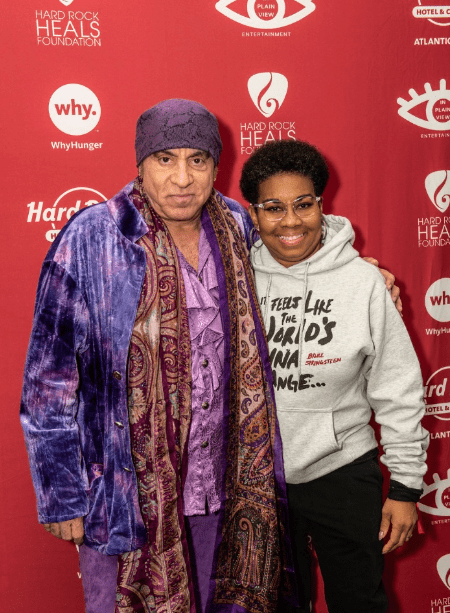
WhyHunger’s roots are tied to music, and that influence remains central today.
Jones pointed to artists like Bad Bunny as an example of how cultural figures can push conversations forward. His advocacy around Puerto Rico, she noted, shows how artists can use their platforms to address issues that might otherwise be ignored.
“Music connects with people in a way that feels personal,” she said. “It opens doors.”
That emotional connection has long been part of movement-building, from civil rights anthems to global campaigns like “We Are the World.” For WhyHunger, it’s not just history, it’s strategy.

What a Just Food System Actually Looks Like
For Jones, dignity is the missing piece in many conversations about hunger.
“We’ve normalized things that shouldn’t be normal,” she said, pointing to long lines and limited access as examples.
A more equitable system, she explained, would ensure that people can access healthy food without sacrificing time or autonomy. It would mean walking into a local store and being able to afford what’s needed, no stigma attached.
“Dignity looks like normalcy,” she said.
How to Get Involved
For those feeling overwhelmed, Jones emphasized that change doesn’t come from one perfect action.
“It starts with finding a way that feels real for you,” she said.
That could mean supporting community organizations, advocating for policy change, or engaging locally through mutual aid and food initiatives. For those interested in WhyHunger specifically, opportunities range from donations to volunteering with the hotline.
The key, she said, is consistency.
“Progress comes from sustained attention and action over time.”
As conversations around food access continue to evolve, Jones remains focused on the bigger picture. Hunger, she insists, is solvable, but only if the systems that shape it are willing to change.