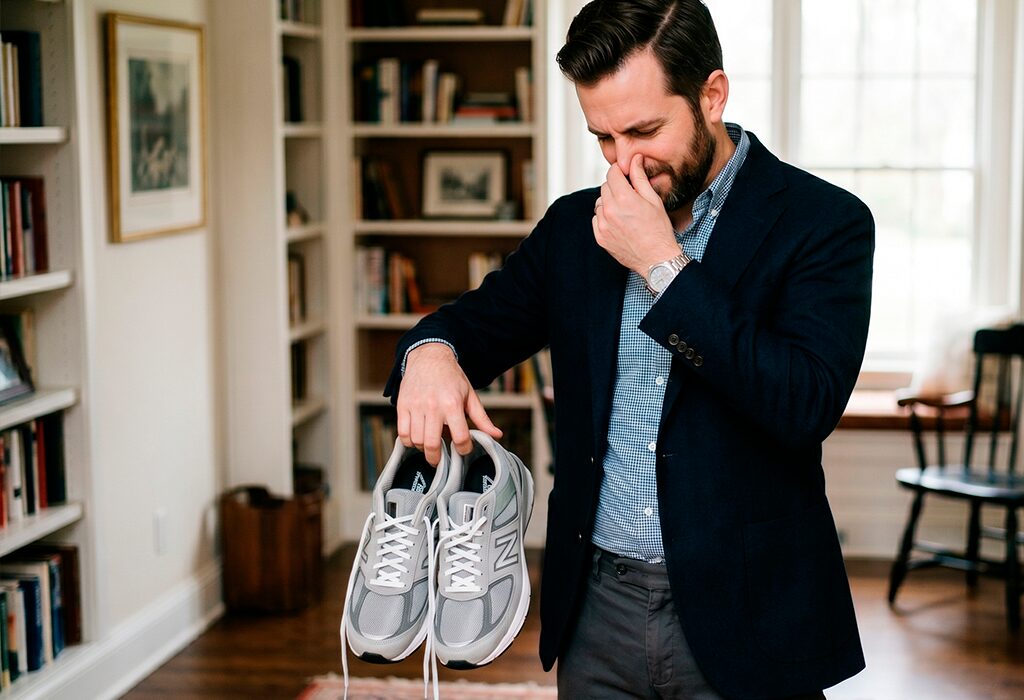
Few things are as embarrassing as going to a friend’s place, taking your shoes off, and realizing that your feet smell. Or worse — you’ve just brought someone special home after a great dinner date, and the moment your shoes come off, the mood evaporates.
These situations don’t make for great first impressions.
The worst part? At that point, it’s already too late.
But here’s the good news: smelly shoes are almost entirely preventable. In this guide, I’m going to walk you through exactly why shoes start stinking, what you can do to stop it before it starts, and a handful of quick home remedies when you need a fast fix.
Table of Contents
- What Causes Smelly Shoes?
- 8 Ways to Prevent Smelly Shoes
- 8 Best Home Remedies for Smelly Shoes
- When to Replace Your Shoes
- The Bottom Line
What Causes Smelly Shoes?

Closed spaces are a famous breeding ground for bacteria — and your shoes are no exception. Whether it’s winter or summer, your feet sweat because there’s almost no airflow inside a shoe.
Here’s what’s actually happening beneath the surface:
Your feet contain over 250,000 sweat glands — more than almost any other part of your body. When you’re moving around and your shoes trap heat, those glands go to work. Moisture builds up fast.
That moisture creates an ideal environment for bacteria to colonize the inside of your shoe and the surface of your skin. The bacteria feed on the sweat, and as a byproduct, they produce isovaleric acid — the compound directly responsible for that sharp, unpleasant odor.
Add in any untreated fungal issues (like athlete’s foot), and the problem compounds quickly.
The solution isn’t complicated — but it does require some consistency.
8 Ways to Prevent Smelly Shoes
1. Wash Your Shoes Regularly

This is the most obvious solution — and the one most men neglect.
You come home, kick off your shoes, and go straight to the couch. The shoes sit in the corner, bacteria quietly multiply, and a week later you wonder why they smell.
Get into the habit of washing your shoes regularly, especially in warmer months when your feet sweat more.
IMPORTANT: Always check whether your shoes are machine washable before throwing them in. Leather dress shoes, suede, and velvet footwear should never be put in a washing machine — water will destroy them. Stick to canvas sneakers and athletic shoes for machine washing.
2. Use a Foot Deodorant or Antiperspirant

This is one of the most underrated moves in men’s grooming.
There are dozens of sprays, sticks, and powders on the market specifically designed to reduce foot sweat and neutralize odor. They’re inexpensive, widely available, and effective when used consistently.
Apply antiperspirant to clean, dry feet — ideally the night before you need it, since it works best when sweat glands are less active. A clinical-strength formula will make a noticeable difference if you deal with heavy sweating.
3. Rotate and Replace Your Insoles

Your insoles absorb an enormous amount of sweat every day. Even if you keep the exterior of your shoe clean, a damp, bacteria-laden insole will keep the odor coming.
The fix: buy several pairs of insoles, rotate them regularly, and toss the used ones in the washing machine. Look for insoles with activated charcoal or antimicrobial treatments — they’re specifically engineered to fight odor at the source.
This is a cheap, easy upgrade that most men overlook.
4. Choose Leather or Canvas Shoes

Material matters more than most people realize.
Leather and canvas are both breathable materials — they allow air circulation that synthetic materials simply can’t match. When air moves through the shoe, moisture doesn’t build up as quickly, and bacteria have a harder time getting established.
Yes, quality leather shoes cost more upfront. But they last longer, look better, and cause far fewer odor problems over time. It’s an investment that pays off on multiple levels.
Pro tip: If you’re purchasing athletic shoes, look for mesh panels and moisture-wicking linings. These aren’t just marketing features — they genuinely reduce sweat buildup.
5. Always Wear Socks with Closed-Toe Shoes

I know what you’re thinking: “But it’s hot outside.”
Fair point. But here’s the reality — when you skip socks, your shoes absorb all of your foot’s sweat directly. That moisture soaks into the lining and insole, and it doesn’t come out easily.
Socks act as a barrier. They absorb sweat and can be washed and replaced. Your shoe lining cannot.
If you hate the look of socks with loafers or low-cut sneakers in summer, the solution is no-show socks — also called invisible or liner socks. They sit below the shoe’s collar, so from the outside, it looks like you’re going sockless. Inside the shoe, your foot is protected, and your shoe stays fresh.
It’s a small detail that makes a meaningful difference.
6. Let Your Shoes Breathe Between Wears

Never wear the same pair of shoes two days in a row if you can help it.
After a full day of wear, your shoes need at least 24–48 hours to fully dry out. Bacteria thrive in damp environments — giving your shoes time to air out disrupts that cycle.
When you take your shoes off, loosen the laces, pull out the tongue, and set them somewhere with good airflow. Avoid storing them immediately in a closed bag or box.
If you only own one pair of work shoes, this is a strong argument for building a small rotation. Two or three pairs worn in rotation will last longer and smell better than a single pair worn daily.
7. Use Cedar Shoe Trees

Cedar shoe trees do two things at once: they help your shoes retain their shape, and cedar wood naturally absorbs moisture and neutralizes odor.
Insert them immediately after taking your shoes off, while the shoes are still warm and the wood can draw out the most moisture. Red cedar specifically has natural antibacterial properties that make it particularly effective.
This is standard practice for anyone serious about taking care of their footwear — and once you’ve used them, you’ll wonder how you ever went without.
8. Store Your Shoes Properly
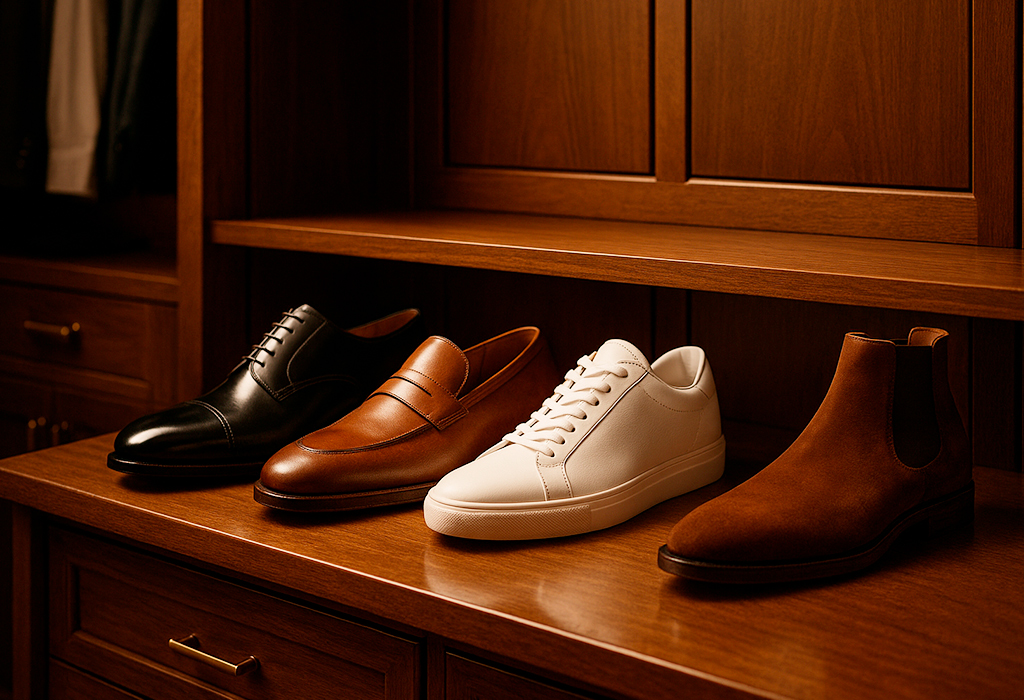
Where and how you store your shoes affects how they smell over time.
Avoid tossing them in a dark, enclosed space with no airflow — a gym bag, a sealed plastic tub, or a pile at the bottom of the closet. These environments trap moisture and accelerate bacterial growth.
Instead, store shoes in a cool, dry area with open airflow. Breathable fabric shoe bags are fine for dress shoes. Open shelving is better than closed bins. And if you’re storing shoes you won’t wear for a while, stuff them with newspaper (which absorbs moisture) or cedar blocks before putting them away.
8 Best Home Remedies for Smelly Shoes

Already dealing with the problem? These fixes use items you likely have at home right now.
1. Baking Soda
The classic. Sprinkle a generous amount into both shoes, spread it around, and leave it overnight. Baking soda is a natural odor neutralizer — it absorbs the acidic compounds causing the smell without adding any fragrance of its own.
Shake or tap out the residue in the morning before wearing.
2. Salt
Salt works on the same principle as baking soda — it draws out moisture and inhibits bacterial growth. Pour a tablespoon or two into each shoe, let it sit overnight, and shake it out in the morning.
3. Baby Powder or Foot Powder
The key difference here: apply foot powder or baby powder directly to your feet, not just the shoe. It absorbs moisture at the source before it ever reaches the insole.
Apply it to clean, dry feet before putting on socks. It’s a small step that significantly reduces how much sweat your shoes have to deal with.
4. Rubbing Alcohol
Alcohol is both a deodorizer and a disinfectant — it kills the bacteria that produce odor, not just masks the smell.
Either apply it with a cloth to wipe down the inside of your shoe, or pour it into a spray bottle and mist the interior. Let the shoes dry completely before wearing.
5. Black Tea Bags

Black tea contains tannins — natural compounds with antiviral, antibacterial, and antifungal properties. They attack the root cause of shoe odor rather than just covering it up.
Brew two tea bags in boiling water, let them cool completely, then place one inside each shoe for 15–20 minutes. Remove the bags, let the shoes air dry, and you’re done.
6. Fresh Citrus Peels
Baking soda neutralizes bad smells. Citrus peels go a step further — they replace it with a clean, natural scent.
Slice up a lemon, orange, or grapefruit and tuck the peels inside your shoes overnight. Remove them before wearing.
One important note: Make absolutely sure the peels are out before you put your shoes on. You will not enjoy the alternative.
7. Put Your Shoes in the Freezer
Cold temperatures dramatically slow bacterial growth. That’s why your winter boots rarely develop the same odor issues as your summer sneakers.
Seal your shoes in a zip-lock bag and place them in the freezer overnight. The bacteria that cause odor go dormant in the cold. This is especially useful for athletic shoes that are difficult to wash frequently.
Let them thaw and air out for 20–30 minutes before wearing.
8. White Vinegar Spray
Vinegar has a sharp smell on its own — but mixed with water and allowed to dry, it’s surprisingly effective at eliminating foot odor.
Combine equal parts white vinegar and water in a spray bottle. Mist the inside of your shoes thoroughly, focusing on the insole. Then let them air dry for several hours — do not put them on while still damp.
The vinegar smell will dissipate completely as the shoes dry. What you’ll be left with is a fresher interior.
When to Replace Your Shoes

Sometimes the problem isn’t fixable — it’s time to move on.
If you’ve deep-cleaned a pair of shoes multiple times and the odor keeps returning within a day or two of wearing, the bacteria have likely penetrated the lining and midsole in ways that home remedies can’t reach.
Other signs it’s time for a new pair:
- The insole has deteriorated and no longer holds its shape
- The lining has peeled or broken down
- Visible mold inside the shoe that keeps recurring
- Structural breakdown in the sole or heel
At that point, you’re better off investing in a new pair than fighting a losing battle.
The Bottom Line
Smelly shoes aren’t inevitable — they’re a maintenance problem. A few consistent habits (rotating pairs, wearing socks, using shoe trees, airing them out properly) will prevent the issue from developing in the first place. And when you need a quick fix, the remedies above work faster than most men expect.
Prevention is always easier than correction. But now you have both covered.
Speaking of smelling fresh — if your shoes are sorted but you’re still not confident about your overall grooming routine, here’s a breakdown of the 10 showering mistakes most men make.
Related Articles: