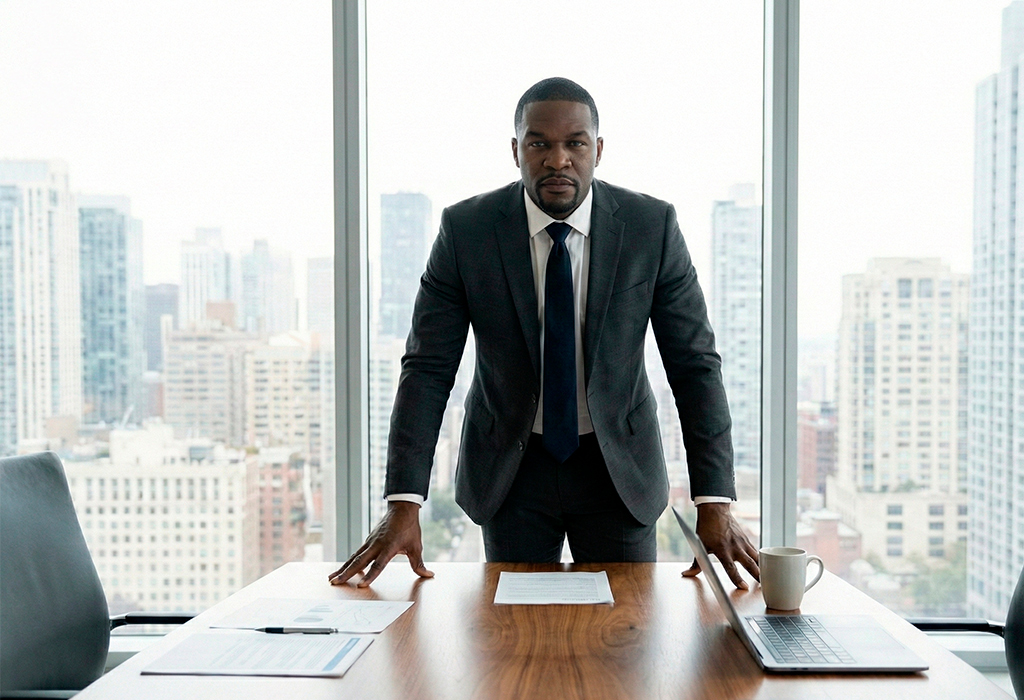
Walk into any room and you can spot it fast: the guy who’s trying too hard.
The loud logo across the chest. The “look at me” sneakers. The stacked bracelets, the oversized watch, the jacket with ten zippers, the haircut that needs its own support team. He might have spent serious money, but it feels like the outfit is wearing him.
And here’s the part most men don’t want to hear—when your clothes get busy, you look less certain. Less grounded. Less like someone people trust.
Powerful men don’t dress simply because they’re lazy. They dress simply because they understand something most guys miss:
Simplicity reads as control.
In the next few minutes, I’m going to show you why simple outfits for men project authority, how “noise” kills your presence, and the practical rules you can use to dress simply without looking boring—whether you’re headed to the office, a presentation, a date night, travel, or a wedding.
The Powerful Simplicity Checklist
Before we talk outfits, I want you to have a quick standard. If you can hit most of these, you’re already ahead of 90% of men.
Powerful Simplicity checklist:
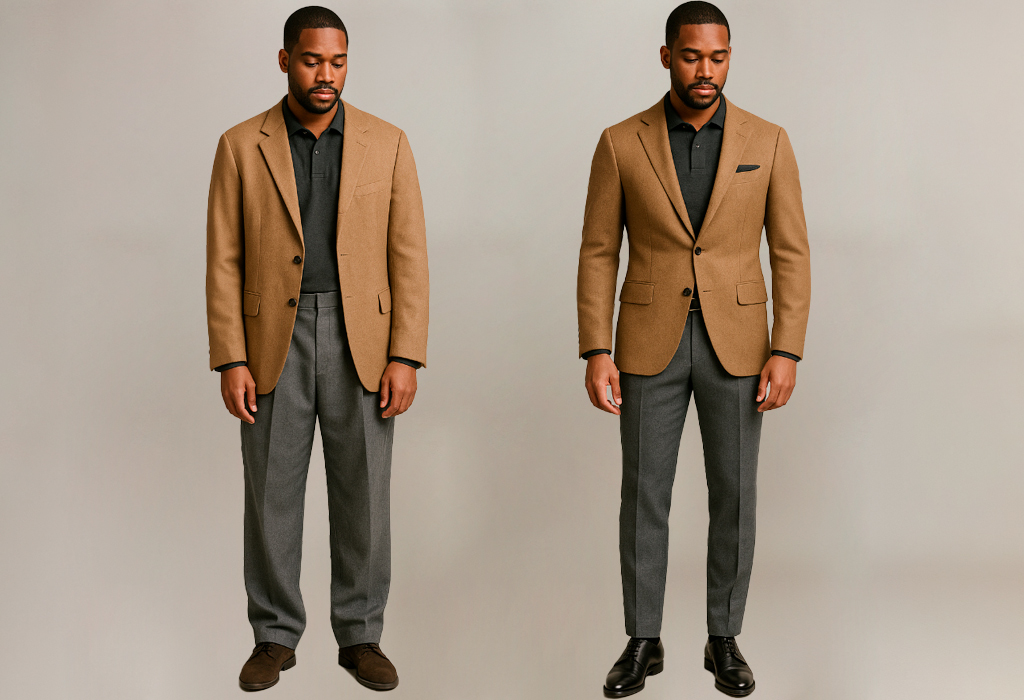
- Fit is clean: shoulders align, sleeves end right, pants break is intentional
- Grooming is handled: hair, shave/beard line, nails, scent—quietly sharp
- Color is controlled: two to three colors max, no random “extra” tones
- Quality signals show up: fabric drape, structure, shoes that look cared for
- Restraint is present: no pile of accessories, no loud graphics, no chaos
- Consistency: outfit looks like one decision, not five separate impulses
- Right for the room: you look like you belong there—and like you’re calm about it
That’s the game. And powerful men play it on purpose.
The Psychology: Why Simple Looks Confident

Most men think confidence is something you feel. In style, confidence is something you communicate.
When a guy dresses simply, he sends a few messages without saying a word:
- “I know what works for me.”
- “I don’t need attention to feel important.”
- “I’ve done this before.”
- “I can focus on the mission, not my outfit.”
Clean lines and fewer signals make it easier for people to read you. When your look is coherent, you appear more competent. Not because you’re magically smarter—but because you’ve removed distractions.
I noticed this years ago when I was in the Marines. You’d see two officers walk into the same building. One looked like he was trying to prove himself—brand-new gear, extra shine, too many add-ons. The other looked boring at first glance. Same uniform, clean fit, calm posture, everything handled. Guess who people trusted faster?
The second guy didn’t look flashy. He looked certain.
That’s what you’re chasing.
The “Noise” Problem: Why Loud Pieces Make You Look Unsure
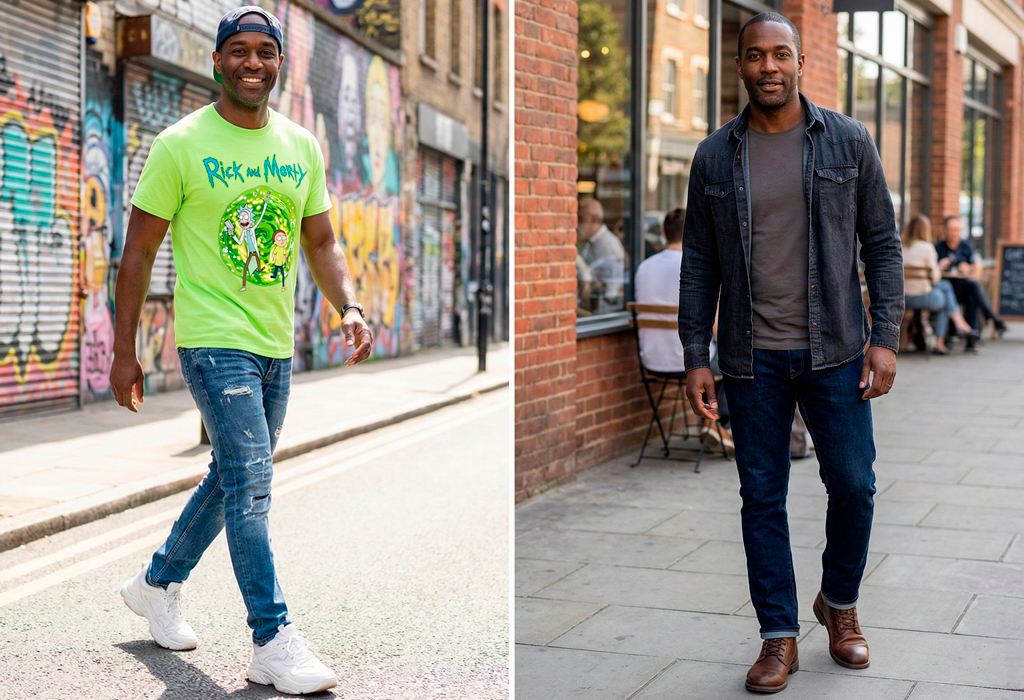
Here’s what happens when you stack statement pieces:
- Your outfit starts competing with itself
- People don’t know where to look
- You look like you’re asking for approval
When you wear loud items, you’re signaling insecurity more often than you’re signaling status. Not always—there are men who can pull off bold style—but most guys don’t have the fit dialed in enough to do it cleanly.
A simple outfit doesn’t beg for attention. It earns respect over time.
And respect compounds.
Simple vs Boring, Minimal vs Cheap, Classic vs Bland, Understated vs Invisible
Let’s clear the confusion. Dressing simply only fails when a man confuses “simple” with “lazy.”
Simple vs boring
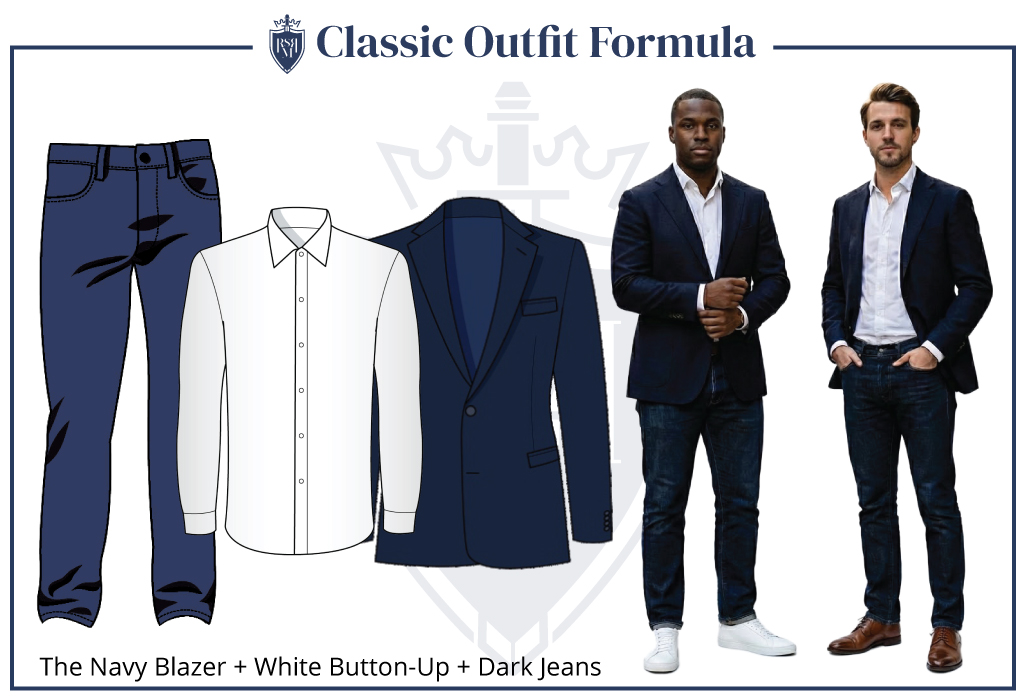
Simple means clean, intentional, repeatable.
Boring means no shape, no structure, no care.
A navy blazer with a white shirt isn’t boring. A wrinkled shirt under a sloppy jacket is.
Minimal vs cheap
Minimal style for men isn’t about owning fewer items. It’s about owning the right ones—and keeping them sharp.
A cheap-looking outfit usually comes from:
- thin fabric that clings weird
- shoes that look tired
- poor fit in the shoulders and waist
Classic vs bland
Classic menswear isn’t meant to entertain strangers. It’s meant to work in real life: meetings, dates, events, travel.
Understated vs invisible
Understated style still has presence. It just doesn’t shout.
Presence comes from fit, posture, and coherence—not from volume.
Where Powerful Men Spend Attention
Power doesn’t show up in five accessories. It shows up in five fundamentals:
1) Fit and tailoring
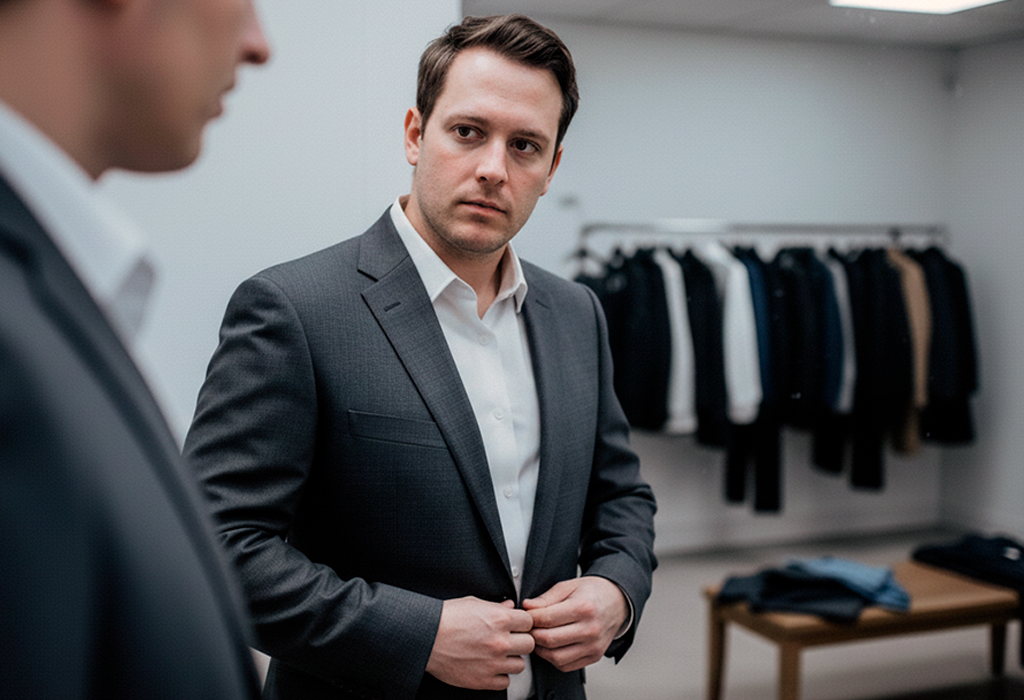
If your jacket collapses at the shoulder or your pants pool at your ankles, the outfit looks careless.
Powerful men look clean when they move, sit, and shake hands.
2) Fabric and structure
You don’t need luxury labels. You need fabric that holds its shape and drapes well.
A structured jacket beats a trendy piece every time.
3) Footwear
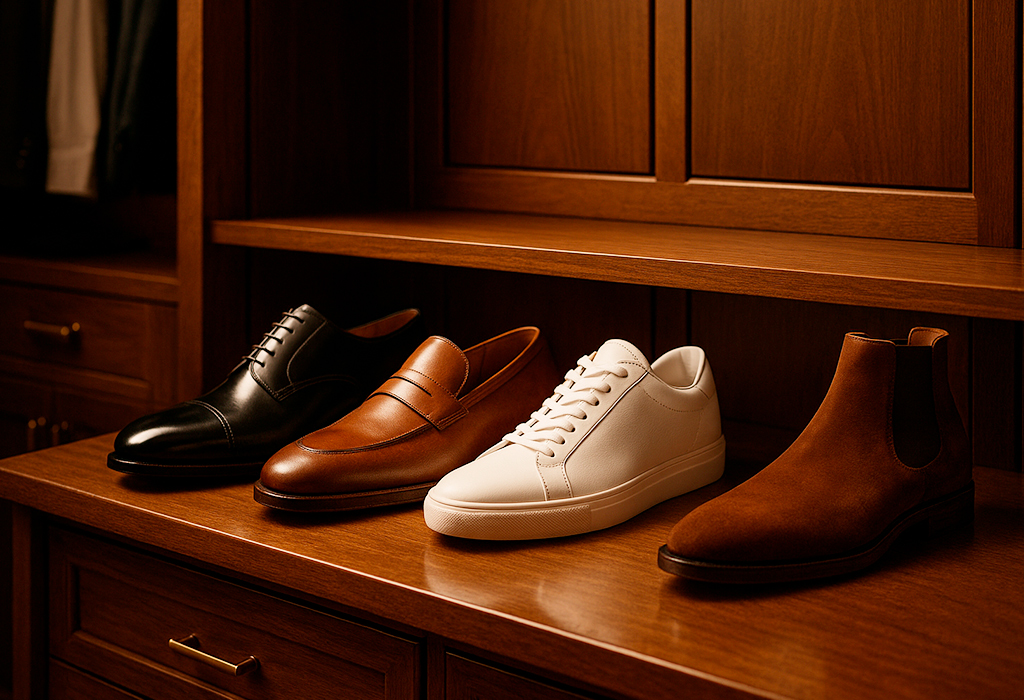
Shoes are a credibility test. People look down. They just do.
Well-kept leather. Simple sneakers that are clean. Boots that look intentional, not beat into the ground.
4) Grooming
You can’t out-dress bad grooming. Hair and facial hair that look maintained make simple outfits look sharp.
5) Posture and presence
The clothes support the man. The man doesn’t hide behind the clothes.
Stand tall. Move with control. Keep your hands calm. That’s a power signal.
Practical Rules You Can Use Immediately
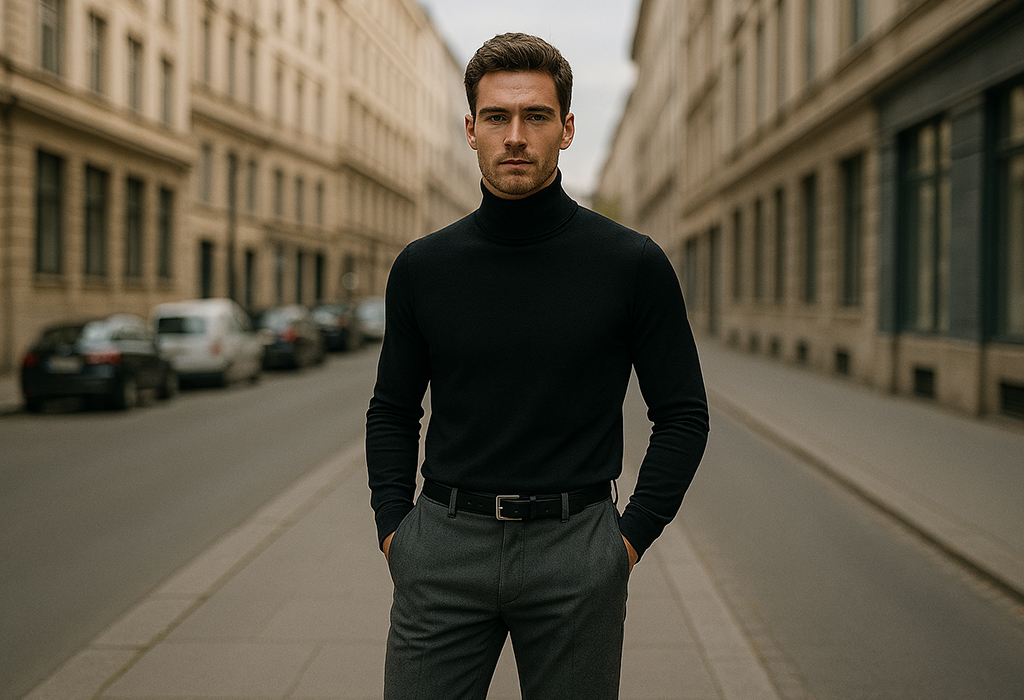
The 3-color rule (and when to go 2)
Most powerful men style stays inside a tight palette.
- 3 colors max for most outfits
- 2 colors when you want authority turned up
Example:
- Navy + white + brown
- Charcoal + black
- Olive + cream + tan
The moment you add a fourth color “just because,” your outfit starts looking accidental.
One statement max

You get one.
Pick one:
Not all three. When everything is the star, nothing is.
The clean silhouette rule
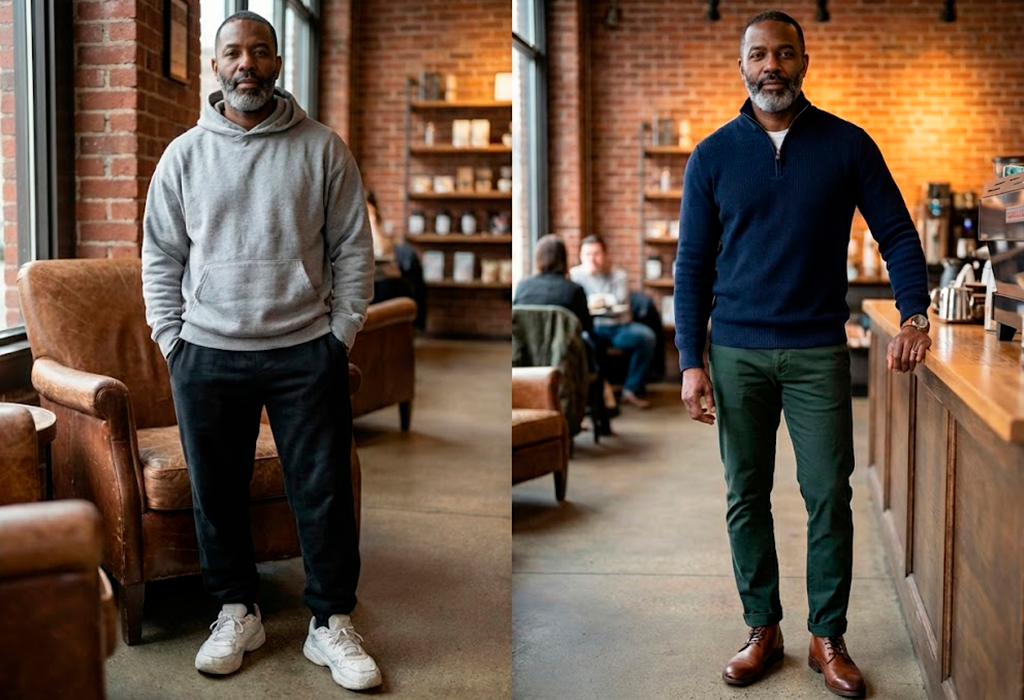
Avoid:
- bulky layers that add width in the wrong places
- random breaks at the ankle
- sloppy hems
- oversized fits that drown your frame
Your silhouette should look intentional from ten feet away.
The repeatable uniform concept
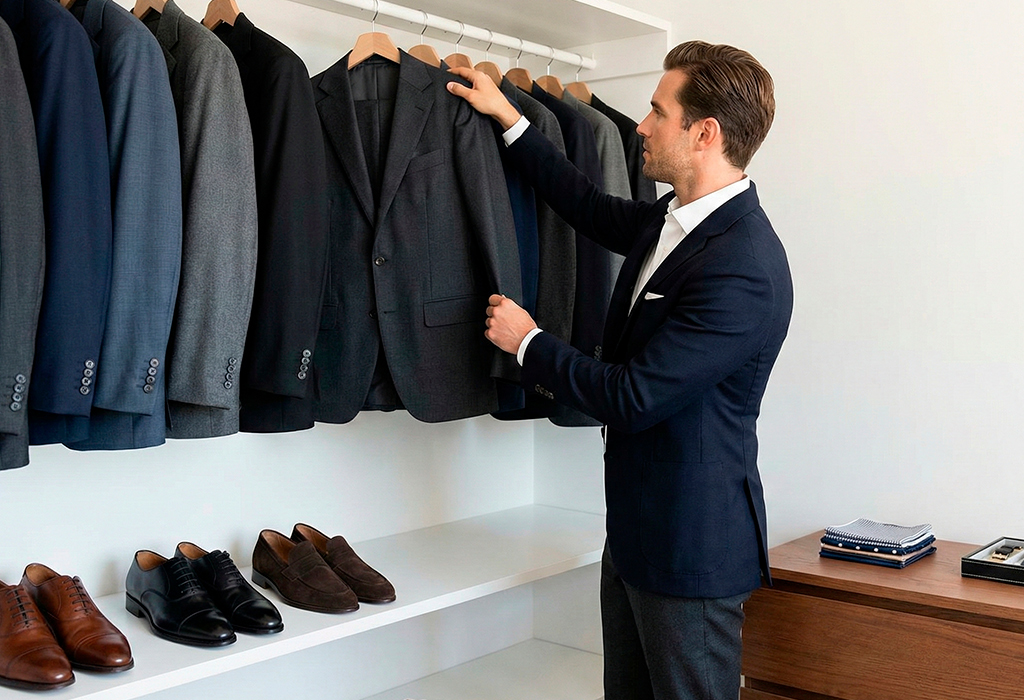
Powerful men reduce decisions. They don’t want to spend mental energy picking outfits.
A “uniform” isn’t wearing the same thing every day. It’s building a reliable formula:
- same color family
- same fit profile
- same shoe rotation
- small variations
It saves time and keeps your look consistent.
The upgrade order rule

If you want the biggest jump fast, go in this order:
- Fit (tailoring or smarter sizing)
- Shoes (and shoe care)
- Outerwear (jacket, coat, blazer)
- Basics (shirts, knits, trousers, denim)
Most men do it backward. They buy “interesting” pieces first and ignore the base.
Outfit Examples: Simple Versions That Look Powerful
I’m going to give you eight real scenarios. Steal these formulas.
1) Business casual office day

If you’re wearing chinos and a button-down, keep it tight:
- navy chinos, light blue shirt, brown belt/shoes
- add a simple watch
Why it works: controlled colors, clean lines, easy credibility.
2) High-stakes meeting / presentation
If you need executive presence style:
- charcoal suit, white shirt, dark tie, black shoes
Why it wins: nothing distracts from your message. You look calm and ready.
3) Date night
If you want attraction without trying hard:
- dark jeans, fitted black or navy crewneck, clean boots
Why it works: strong silhouette, simple palette, masculine and grounded.
4) Travel day

If you’re moving through airports:
- tapered joggers or dark jeans, neutral tee, clean bomber, minimalist sneakers
Why it wins: comfortable, but still structured. You don’t look like you gave up.
5) Weekend casual
If you’re doing coffee or errands:
- straight dark denim, white tee, chore jacket, simple sneakers
Why it works: classic menswear bones, nothing loud, still sharp.
6) Cold-weather layering

If it’s winter and you need warmth:
- merino sweater, wool overcoat, dark jeans or flannels, leather boots
Why it wins: texture adds interest without chaos.
7) Summer smart casual
If it’s hot but you still want to look put-together:
- tailored shorts or lightweight chinos, linen shirt, simple loafers or clean sneakers
Why it works: breathable, but still structured. You look intentional.
8) Formal event / wedding

If it’s a wedding and you want subtle power:
- navy suit, white shirt, solid tie, polished shoes
Why it wins: timeless menswear. Your photos won’t age badly.
Quick Fixes (For Guys Who Know They’re Doing Something Wrong)
If you over-accessorize

Swap three accessories for one:
- keep the watch
- drop the rest
Your outfit will instantly look more mature.
If you buy trendy loud pieces
Build around one quiet base:
- dark jeans + neutral top + simple shoes
Trends can sit on top of that, not replace it.
If your clothes don’t fit but are “expensive”

Expensive doesn’t matter if it hangs wrong.
Fix:
- tailor the jacket sleeves
- hem the pants
- get the shoulders right
Fit makes simple look powerful.
If you default to athleisure everywhere
Keep comfort, add structure:
- swap a hoodie for a clean knit
- swap running shoes for simple sneakers
- swap gym joggers for tapered dark pants
You’ll still feel comfortable, but you’ll look like a grown man.
If you want to look powerful on a budget

Spend where it shows:
- one solid pair of shoes
- one good jacket
- basics that fit
No logos required.
Questions Guys Always Ask (Straight Answers)
“Does dressing simple make me look boring?”
Only if you ignore fit and grooming. Simple with sharp fit looks confident. Simple with sloppy fit looks like you don’t care.
“How do I look expensive without logos?”
Fit, fabric, and footwear. People notice clean structure and well-kept shoes way more than they notice a logo.
“Can I dress simply if I’m younger / not a boss?”
Yes. Dressing simply doesn’t mean dressing old. It means dressing controlled. That reads as maturity at any age.
“What colors look the most powerful?”
Navy, charcoal, black, white, cream, olive. They’re easy to build with and they look consistent in different settings.
“How do I build a uniform without looking like I wear the same thing every day?”
Keep the same palette and fit profile, rotate textures and small pieces. Swap the shirt, swap the jacket, keep the base steady.
“Are statement sneakers ever worth it?”
Sometimes. But you need a clean base outfit and you need to pick your moment. Most guys wear statement sneakers when the rest of the outfit is already noisy.
“What’s the fastest way to look more powerful tomorrow?”
Wear fewer signals. Two colors. Clean shoes. A good jacket. Handle grooming. That’s it.
“Do I need to buy better brands to dress simply?”
No. You need better choices. Great fit beats a famous label every day.
Visual suggestions (placements only)
[Image: “busy outfit” vs “simple outfit” side-by-side with notes: fit, color, shoes]
[Graphic: Powerful Simplicity checklist]
[Image: 3 repeatable uniforms (work / casual / date night)]
[Image: shoe care before/after close-up]
[Graphic: 3-color rule examples with swatches]
The takeaway
If you want to dress simply and look powerful, remember this:
- Fit and grooming beat loud items every time
- Two to three colors keeps your look controlled
- One statement max
- Clean silhouette, clean shoes
- Build a repeatable uniform and stop chasing noise
Now tell me your job/lifestyle and what you usually wear day-to-day—and I’ll suggest a simple “power upgrade” that fits your life.