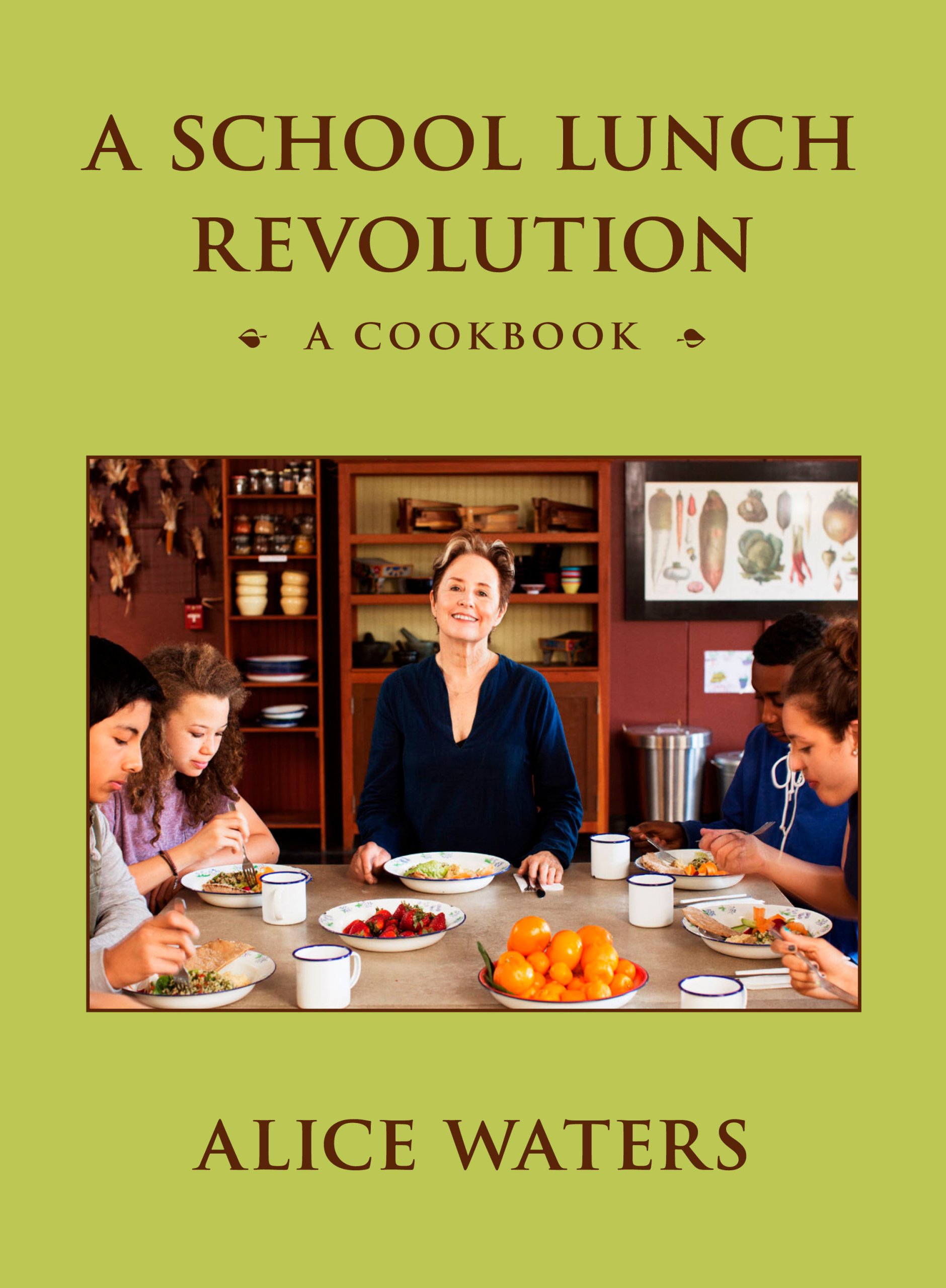
Culinary trailblazer Alice Waters (The Art of Simple Food) has long been at the forefront of the farm-to-table movement, sharing her passion for food advocacy through eating clean, local foods. This has trickled down into many different pathways, from opening Chez Panisse, her famous Provence-style restaurant in Berkeley, California, back in 1971 to writing numerous books, creating nutrition programs and advocating for children to have access to fresh, sustainably-sourced whole foods, which is the focus of A School Lunch Revolution.
“Education and food are two universal rights,” Waters writes in her introduction. “All children deserve to go to school. And everyone should have the opportunity to eat nutritious food.” This is the theme throughout this informative, inspiring book. Although A School Lunch Revolution is geared toward school-age children, it is really for everyone, with sections on the benefits of eating locally and seasonally, the affordability of fresh food and the advantages of eating foods that are simple, delicious and attractively presented. Waters also outlines her idea for school-supported regenerative agriculture, which establishes a direct, meaningful relationship between schools and farms.
The book covers a variety of food types, from salads, soups and noodles, and rice to breads and grains, beans and legumes, and meats and stews. There are also recipes featuring ways to enhance dishes, such as sauces, pickles and preserves, as well as a chapter on breakfast foods. Waters stresses the cultural understanding that results from eating diverse foods and the importance of this connection for children. As a result, many recipes are just a few simple ingredients combined with interesting seasonings and ingredient combinations, such as miso-sesame cucumbers, collard greens and a fall fruit cup. And although the book definitely has a plant-forward emphasis, there are dishes that include meat and dairy, such as barbecue chicken legs, spicy lamb meatballs and Chile braised pork tacos. All the recipes are presented with helpful explanatory headnotes, easy to follow directions and variations for substitutions.
It is a refreshing divergence from the foods typically offered in school lunches—no chicken nuggets, french fries or soggy, over-boiled vegetables in sight. Instead, Waters emphasizes taking the time to savor and appreciate nature’s bounty. A School Lunch Revolution will serve as a guidebook for schools and parents to help ensure the future preservation of American farms and foodways. And it is a great way to include children in the cooking process so they can really see where food comes from.